
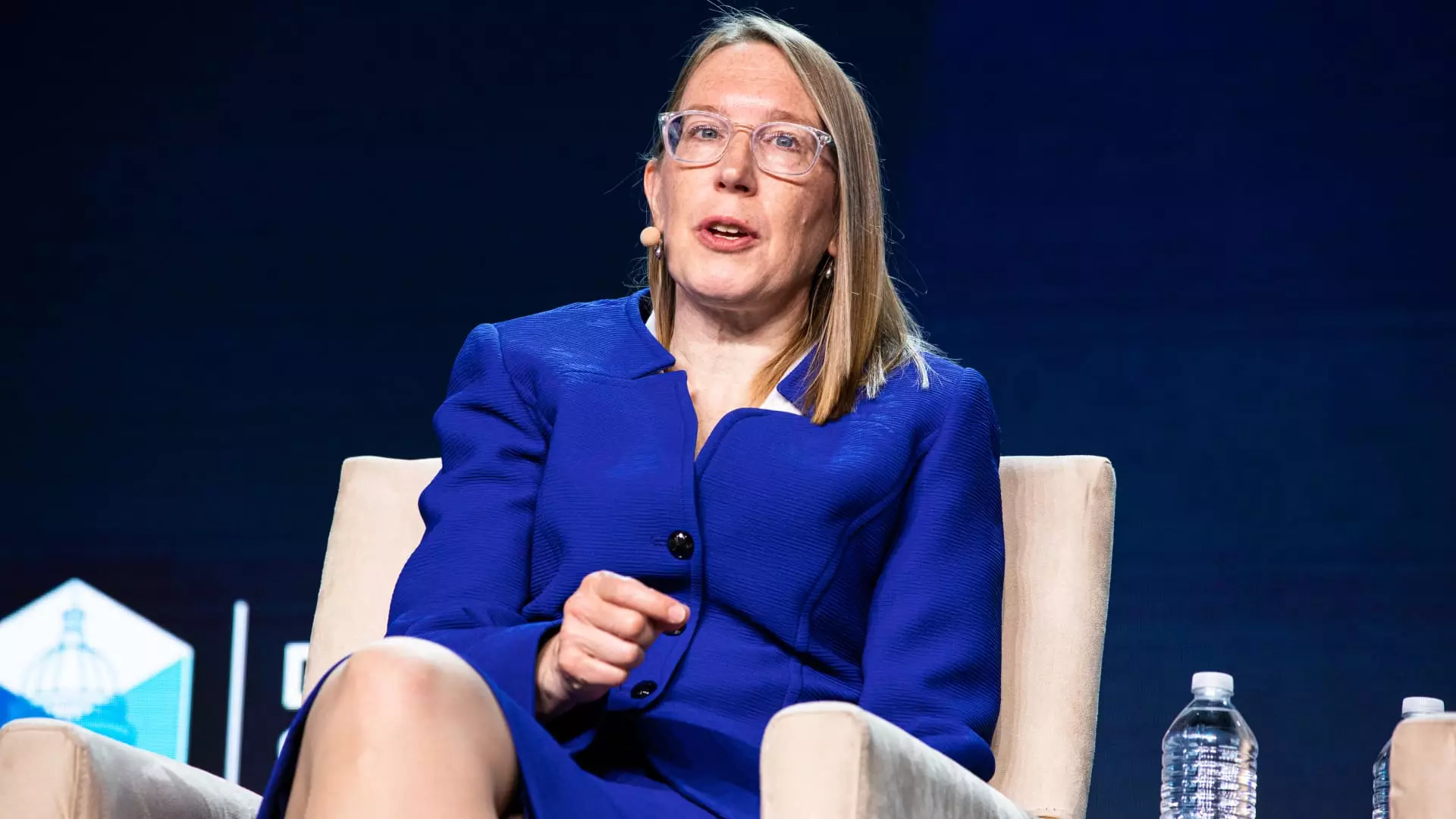
In a surprising shift, the U.S. Securities and Exchange Commission (SEC) has decided to step back from overseeing meme coins, a move that has left investors both curious and apprehensive. Veteran SEC commissioner Hester Peirce recently offered insight into this new landscape, emphasizing the lack of regulatory guidance concerning tokens like $TRUMP, which rose dramatically after its launch by former President Donald Trump. Peirce’s comments during an interview at Bitcoin 2025 in Las Vegas shed light on a broader trend within the SEC; she likens the current situation to the rise of non-fungible tokens (NFTs) a couple of years ago—popular yet devoid of security regulations.
Many crypto enthusiasts believe that this unregulated freedom can be beneficial, allowing innovation to flourish. However, this brings with it a myriad of risks. The absence of a guiding framework from the SEC may lead investors to mistakenly assume some safety net is still in place when, in reality, it’s a buy-at-your-own-risk environment.
Understanding the $TRUMP Phenomenon
The arrival of the $TRUMP token is not only a significant moment in crypto history but also a significant chapter in the intertwining of politics and finance. Launched right before Trump’s presidential inauguration, $TRUMP swiftly reached a staggering market cap of $15 billion, driven by social media hype and enthusiasm. Yet, just as quickly as it climbed, the token shed most of its value, which raises serious questions about the sustainability of such investments.
What’s particularly troubling is that $TRUMP primarily exists to benefit its creators through transaction fees, rather than as a viable financial product. The SEC’s retreat from regulating these types of assets does little to assuage concerns. For investors, the allure of quick profits may overshadow the fundamental lack of value behind these coin offerings. Consequently, the market becomes a breeding ground for speculation, creating an environment where the uninformed can easily lose their capital.
A Clash of Interests in Politics and Crypto
The intersection of politics and cryptocurrency has never been more pronounced. As regulatory oversight reduces, critics—including Democratic lawmakers—point out potential conflicts of interest surrounding the Trump family’s involvement in crypto. With 80% of $TRUMP controlled by entities connected to the Trump Organization, many are skeptical about the motivation behind such projects. They argue that the crypto venture may serve as a channel for foreign and corporate interests looking to influence U.S. politics—a concept that’s deeply concerning.
Moreover, the recent legal troubles of Binance and its founder, Changpeng Zhao, have raised eyebrows about whether regulatory bodies like the SEC operate under politically influenced circumstances. After a significant legal battle, the SEC dropped charges against Binance, a move hailed by some as a return to a more cooperative regulatory environment. However, the timing of Zhao’s growing associations with Trump-affiliated entities casts a shadow over the integrity of these developments.
Regulatory Tools and Challenges
Despite Peirce’s assertions that the SEC is moving towards a more industry-friendly approach, there’s a sense of ambiguity surrounding the agency’s direction. The rescinding of Staff Accounting Bulletin 121—a rule that previously hindered traditional financial institutions from engaging in crypto custody—suggests a broader attempt to open floodgates for legacy financial players into the crypto space. But what remains to be seen is whether this is a wise or prudent approach, especially without a structured regulatory framework guiding these transformations.
Peirce emphasized the need for definable rules that can govern emerging technologies, yet the delay in establishing such guidelines only exacerbates uncertainty. Industry players, while eager to evolve, require clear direction about how existing securities laws apply to new crypto activities. This lack of clarity leads to hesitance among traditional investment firms and banks, who fear stepping into a jurisdiction that remains nebulous at best.
A Wild West of Possibilities
Investors standing at the precipice of this newly reshaped marketplace must approach with caution, armed with the understanding that they are engaging in a high-stakes game where many rules have yet to be written. The unregulated nature of meme coins, combined with their volatile pricing influenced by social media and celebrity endorsements, has created an environment ripe for speculation, manipulation, and potential losses.
In an age where digital assets lure investors with promises of large returns, it’s imperative to recognize the inherent risks involved. The SEC’s withdrawal from regulatory oversight leaves the crypto space feeling like the Wild West—an arena thrilling but treacherous, and ultimately reliant on individual investors willing to brave uncharted waters. As we continue to witness the fusion of politics and cryptocurrency, the implications of these developments will be crucial in shaping the future landscape of the financial world.
Leave a Reply