
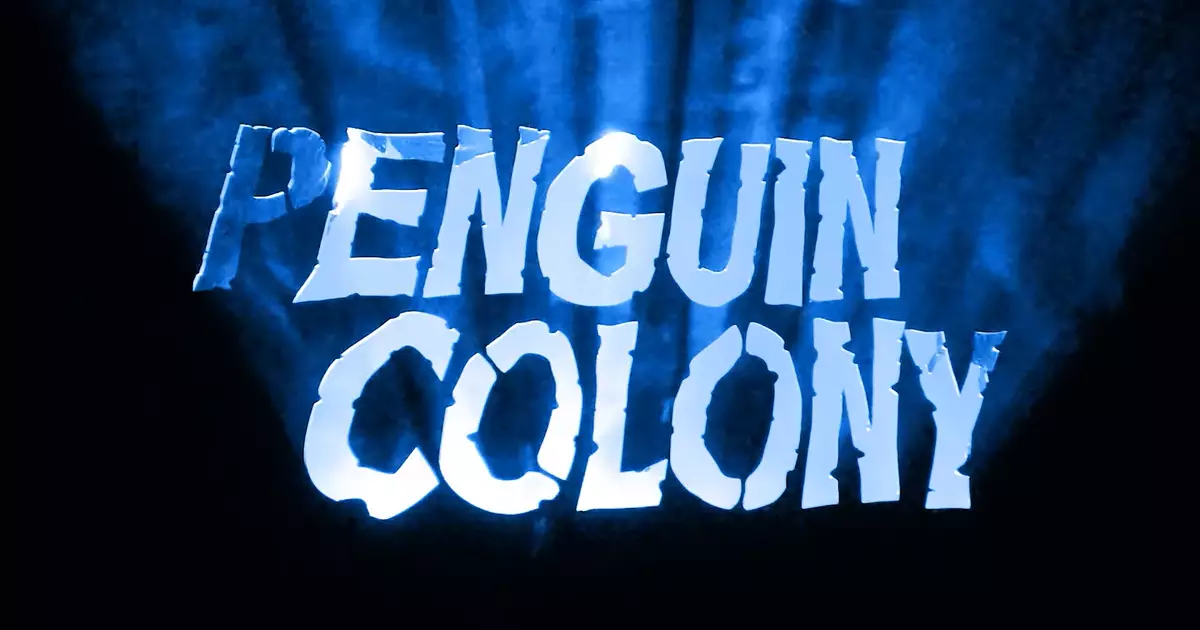
In the vast landscape of indie games, few titles push boundaries as daringly as Penguin Colony. At first glance, it appears to be a whimsical penguin adventure set amidst the icy wilderness, but a deeper analysis reveals an ambitious project that melds cosmic horror, environmental critique, and innovative gameplay. This game’s creators, known for the critically acclaimed Umurangi Generation—an artistic commentary on decolonization—are boldly venturing into a realm that challenges conventional notions of narrative and atmosphere. Their decision to incorporate a Lovecraftian motif, traditionally associated with eldritch terrors and human insignificance, into a playful penguin universe is both provocative and intriguing. It compels players to reconsider the veneer of innocence often associated with Arctic fauna and the stories we tell about nature and the universe.
What is most compelling about Penguin Colony is its refusal to be pigeonholed into a single genre. Instead, it appears to be a layered experience that combines survival mechanics, philosophical inquiry, and cultural critique. The imagery reminiscent of John Carpenter’s The Thing—stark, unsettling, and filled with paranoia—sets an ominous tone that starkly contrasts with the game’s adorable penguin characters. This creative choice acts as an aesthetic metaphor for the lurking chaos beneath the surface, hinting that beneath the charming exterior lies a universe teetering on the edge of cosmic disintegration. The game invites players to engage with multiple layers—on a surface level, they are sliding across icebergs, exploring vast icy expanses; at a deeper level, they confront existential fears rooted in the unknown.
Voicing the Madness: The Power of Narrative and Cultural Layers
A standout aspect of Penguin Colony is its deliberate use of voice and narration, notably employing Lenval Brown, famed for his work in Disco Elysium. His voice lends a gravitas that elevates the experience, transforming it from mere playful exploration into something more profound. The trailer, unmistakably echoing the tone of Lovecraft’s Mountains of Madness, also hints at cultural sensitivity. Notably, parts of the narration seem to be voiced in Māori—a language deeply intertwined with themes of connection to land, stories, and ancestral knowledge. This integration hints at an intention to critique colonial narratives and to reflect on indigenous perspectives, especially given the creators’ history with artworks centered around decolonization.
The decision to incorporate Māori language and cultural references complicates the game’s narrative fabric. It suggests that Pengiun Colony isn’t just a romp through the icy wilderness; it’s an allegory for resistance, resilience, and the unearthing of hidden truths beneath layers of colonialism and cosmic insignificance. The juxtaposition of the playful penguin universe with the darkly cosmic themes signals a deliberate challenge to the player—asking us to recognize the profundity lurking beneath surface-level appearances and to confront uncomfortable questions about history, ecology, and existence.
Gameplay as a Metaphor for Larger Cosmic and Cultural Struggles
The game offers an intriguing mechanic: unlocking different penguins with unique abilities that influence gameplay and narrative. For instance, playing as a baby penguin provides agility in tight spaces but hampers swimming—an expertly crafted metaphor for limitations and adaptations. This design choice symbolizes the broader human experience of navigating within constraints, whether those are societal, ecological, or cosmic.
Furthermore, the setting—beneath the ice and in proximity to ancient unknown beings—serves as a stark reminder of how fragile our understanding of reality truly is. The icy environment is not just a backdrop but a symbol of the unknown depths lurking beneath the familiar surface—a universe ripe with chaos and secrets that threaten to reclaim everything. The decision to frame this exploration through the lens of adorable penguins is a masterstroke: it contrasts innocence with existential dread, forcing players to grapple with the unsettling truth that beneath layers of cuteness lies an abyss.
The game’s nuanced approach to narrative, aesthetics, and mechanics reveals an underlying critique of traditional adventure games. It champions complexity and depth over simple entertainment, making a bold statement about the multiplicity of meanings embedded within a seemingly lighthearted world. It invites players not just to traverse icy landscapes but to peer into the cosmic void—meditating on our place in the universe, the stories we inherit, and the unseen forces that shape reality.
Final Reflections: An Invitation to Embrace Cosmic Curiosity
Penguin Colony positions itself as more than just an eccentric indie title; it is a bold philosophical statement. Its daring blend of Lovecraftian horror, indigenous culture, environmental commentary, and playful gameplay creates a multidimensional tapestry that urges players to look beyond surface appearances and confront the chaotic, mysterious nature of existence. By choosing penguins—symbols of resilience and adaptation—the game underscores themes of survival amid cosmic indifference, echoing the very essence of existential philosophy.
In essence, Penguin Colony is a call to embrace curiosity amidst chaos, to find humor and meaning in the absurd, and to acknowledge that beneath the veneer of innocence, there lies an infinite universe of unknowns waiting to be explored. It’s a testament to how games can serve as profound vessels for cultural critique, philosophical reflection, and artistic experimentation—all while sliding gracefully across icy surfaces in the company of some mischievous, cosmic-bound penguins.
Leave a Reply