
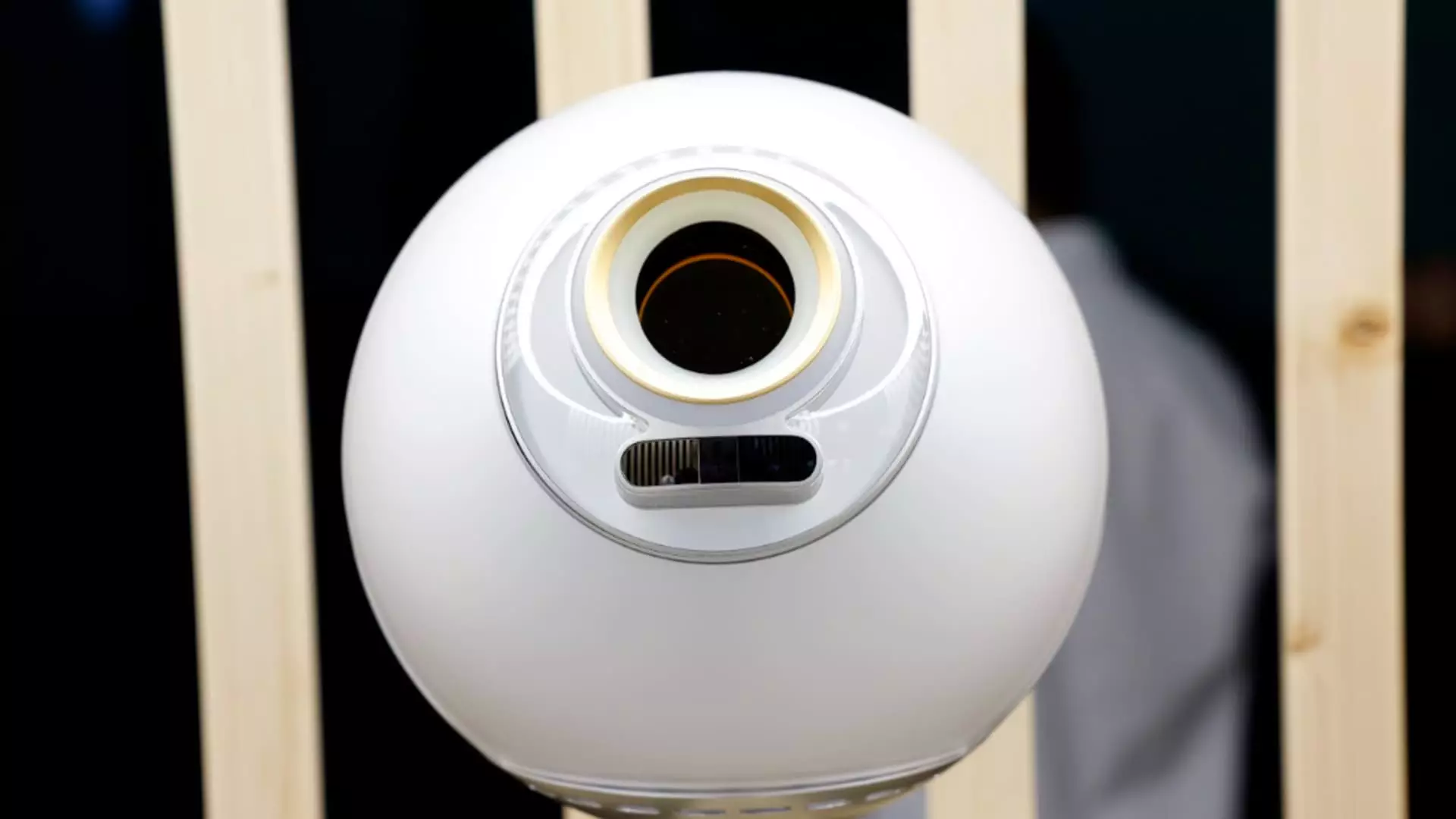
In an age where trust in digital interactions is paramount, the need for robust identity verification systems has never been more critical. Enter World, a biometric identity project spearheaded by Sam Altman, CEO of OpenAI, which is set to launch in the U.K. with the promise of transforming how we verify who we are. Equipped with cutting-edge technology, including a spherical eye-scanning device known as the Orb, World aims to combat fraud and elevate our understanding of human identity in a digital landscape increasingly populated by artificial intelligence.
Launching in London on Thursday and eyeing expansion to cities like Manchester, Birmingham, and beyond, World’s introduction raises fundamental questions about how far we are willing to go in harnessing technology to establish our identities. The Orb facilitates scanning of the face and iris to create a unique identification code for each user, effectively making them not just a username attached to an account, but an authenticated human being in the digital realm.
The Cryptocurrency Incentive Model
A fascinating aspect of World’s offering is its integration with the cryptocurrency landscape. Upon establishing their identity through the Orb, users are awarded WLD cryptocurrency, creating a circular ecosystem where digital identity is linked to a currency that can be used across various applications like Minecraft, Reddit, and Discord. This dual promise of identity and financial incentive raises eyebrows but also offers an intriguing glimpse into how users can engage with their digital selves.
Yet, while the allure of cryptocurrency may entice users, this model opens up a Pandora’s box of potential concerns. Users must consider the implications of associating their identities with a currency that fluctuates in value. Will participation in this system become more about securing one’s identity or merely leveraging the financial benefits offered?
Demand Meets Privacy Concerns
Adrian Ludwig, the chief architect of Tools for Humanity—a key player in this venture—indicates that demand for World’s services is surging as artificial intelligence becomes an ever-present threat. With incidents of AI-fueled fraud escalating across sectors like banking and online commerce, the urgency for effective identification methods cannot be overstated.
However, every coin has two sides. Privacy concerns loom large as World collects and processes biometric data. While the startup assuages fears with claims of data encryption and prompt deletion of original data, critics remain skeptical. In a world dominated by calls for data sovereignty and individual rights, the handling of sensitive biometric information raises the stakes significantly. Unlike conventional systems that rely on centralized data storage, World posits a decentralized approach for verifying identity, utilizing users’ smartphones rather than cloud data centers. This innovation could serve as a safeguard against data breaches but poses its own set of challenges — especially when considering tech behemoths like Facebook or TikTok, whose sheer size complicates decentralized verification.
Lessons from Global Identity Systems
Ludwig highlights a compelling parallel with existing digital identity frameworks. Governments worldwide are grappling with the transition from physical identification to digital systems, yet many initiatives have faced fierce scrutiny. India’s Aadhaar system, for example, despite its extensive adoption, has been criticized for its security deficiencies and potential exacerbation of social inequality. As Ludwig suggests, governments are increasingly viewing projects like World as avenues to enhance their own identity verification infrastructures, aiming to mitigate fraud and bolster trust.
While World has already verified 13 million users, its ambitious goal to exponentially increase this number within months demands rigorous attention to the concerns that accompany mass participation. It’s crucial to engage with regulatory bodies like the U.K.’s Information Commissioner’s Office to ensure that the ethos of privacy and user protection remains at the forefront.
The Road Ahead: Embracing Innovation
As World transitions from a conceptual undertaking to an operational network, it stands at the crossroads of innovation and ethical responsibility. The digital identity verification landscape is fraught with challenges, yet World’s proposition embodies a necessary evolution in how we perceive identity in an increasingly digital world. As they gear up for their U.K. launch and expand into other nations, the ability to effectively communicate their commitment to protecting users while ensuring stringent verification will ultimately dictate their success.
The introduction of World signals a pivotal shift in identity verification, one where innovation and vigilance must go hand in hand. With the benefits of digital identity systems trending towards exceptionally high ceilings, the imperative remains clear: authenticity must be preserved, and user privacy must be prioritized.
Leave a Reply