
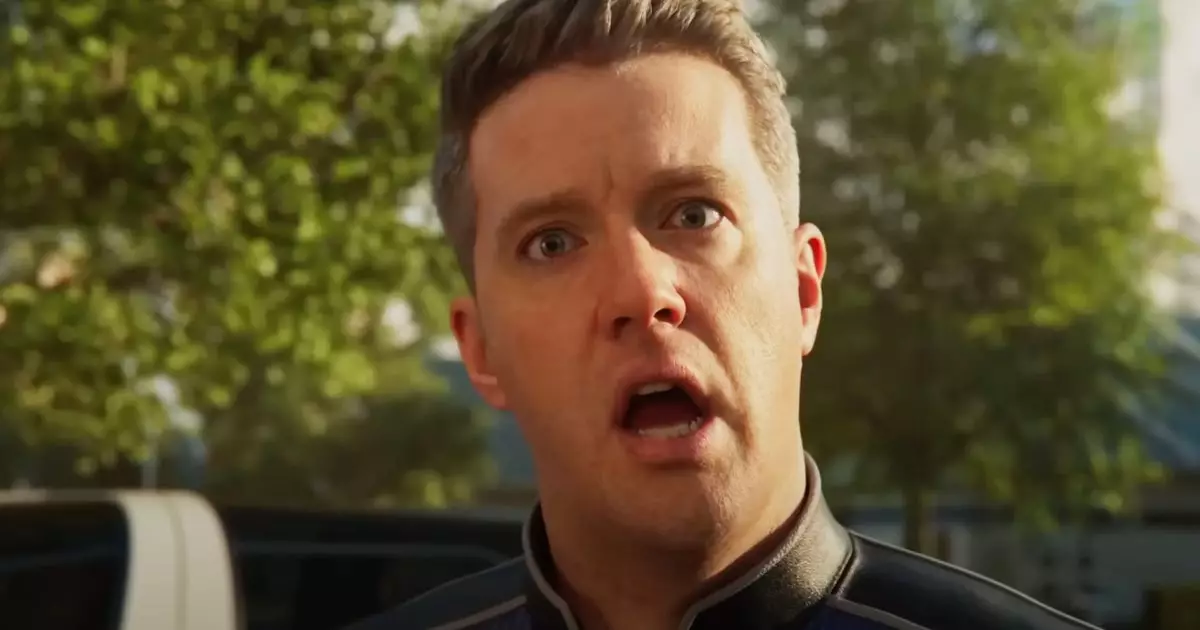
Helldivers 2, the latest installment from Arrowhead, isn’t pulling punches when it comes to demanding more from its community. Its developers have adopted a no-nonsense stance, issuing a commanding order that’s essentially a call to arms — and I mean that literally. The game’s narrative, layered with satirical tone and sharp political commentary, urges players to dive headfirst into violent clashes to restore a fractured society on Super Earth. Unlike typical game updates that focus solely on content, this one shapes itself as a test of resilience, pushing players to justify their existence in a bleak universe where survival hinges on relentless slaughter.
This newfound directive is more than just a gameplay mechanic; it’s a bold statement on the nature of conflict and authority. By framing the enemies—Shriekers, Impalers, Leviathans—as entities that most haunt citizens’ nightmares, Helldivers 2 elevates violence to a societal necessity. The players aren’t merely milling about in a shooter; they are tasked with confronting anxieties, fears, and despair through sheer firepower. It’s a stark commentary wrapped in an action-packed veneer, suggesting that sometimes, the only way to rally a civilization is to resort to brutal, unyielding combat.
What’s truly provocative is the message that this isn’t a paradoxical victory lap. The game openly portrays the aftermath of prior failures—cities in flames, citizens in disarray—as the harrowing consequence of battles lost. This gives the latest update a sense of gravity, as if to say: “You need to do better, or your world will crumble.” It reflects a cynical view of leadership, resource management, and the limits of military might—issues that resonate far beyond the virtual battlefield.
Corrosive Propaganda and the Myth of Strength
The social media campaigns accompanying this update are rich in satire and dark humor. The imagery, the language of “max security cities,” and the staggering kill targets serve more than gameplay objectives—they form part of a larger critique on propaganda and state power. The game’s narrative suggests that citizens’ fears—of invasion, disenfranchisement, and personal loss—are exploited on a massive scale through relentless warfare. The sheer scale of the enemy metrics (20 million Shriekers, 12.5 million Impalers, among others) isn’t just gameplay—it’s a reflection of how governments or organizations inflate threats to justify apocalyptic responses.
This playfulness with hyperbole underscores a deeper message: in the face of chaos, authority finds justification through spectacle. Helldivers 2, whether intentionally or not, mirrors real-world propaganda tactics—amplify danger, diminish hope, and mobilize action through fear. It forces players to confront the unsettling notion that the chaos they participate in is, at least superficially, manufactured or exaggerated, blurring the lines between heroism and nihilism.
The cosmic carnage depicted isn’t merely for entertainment; it’s an allegory for the performative nature of war and authority. The game’s developers seem to suggest that in facing these massive threats, players are complicit in a cycle of self-fulfilling violence, designed to maintain societal control and justify the escalation of conflict.
Rewarding Loyalty in an Environment of Chaos
Meanwhile, Arrowhead’s decision to reward loyal players with a symbolic token—the Ingress-81 cape—is an astute move that taps into human psychology. Rather than resting on laurels or relying solely on the spectacle of destruction, the developers reinforce community engagement through exclusive, cryptic rewards. The cape isn’t just cosmetic; it’s a badge of honor for those who contributed to unraveling an alternate reality game, highlighting the importance of community participation in a universe drowned in turmoil.
The design itself—vibrant purple with braille patterns that read “DCON DCON”—serves as a subtle nod to strategic planning, espionage, and the clandestine nature of military and political operations. It transforms a simple in-game accessory into a symbol of resilience and unity, subtly suggesting that those who stand together—through puzzles, through battles—are the real heroes, not just the relentless killers.
This kind of reward system hints at a layered approach to player engagement, blending combat with storytelling, community building, and mystery. It’s a reminder that even amid chaos, human connection and collective effort hold intrinsic value. The developers, in weaving this narrative, are perhaps urging players to see themselves not just as berserk warriors but as crucial actors shaping a complex universe of conflict and survival.
From Satire to Reflection: What Helldivers 2 Really Says About Modern Warfare
Ultimately, Helldivers 2’s latest update isn’t just about hitting kill counts or earning cosmetic upgrades; it’s a reflection of an unsettling truth about contemporary society. The game taps into our collective consciousness—our fears, our reliance on violence as a solution, and our fascination with spectacle—to present a universe where chaos is both a weapon and a reflection of our own societal tendencies.
By framing their campaign as a necessity to restore faith and stability through mass destruction, Arrowhead is forcing players to confront uncomfortable questions: Is violence ever truly justified? Does constant escalation serve as a means of control? And are we, as players, unwittingly complicit in perpetuating cycles of conflict that dehumanize all involved?
In this context, the game becomes a mirror—an exaggerated but insightful commentary on how societies willingly embrace spectacle and violence to mask underlying fragility. It challenges players to analyze not only their in-game actions but also the broader implications of conflict in our real world. Helldivers 2 may be a shooter, but it’s also a provocative artifact urging us to reflect on the true cost of unwavering loyalty to a cause built on destruction.
Leave a Reply