
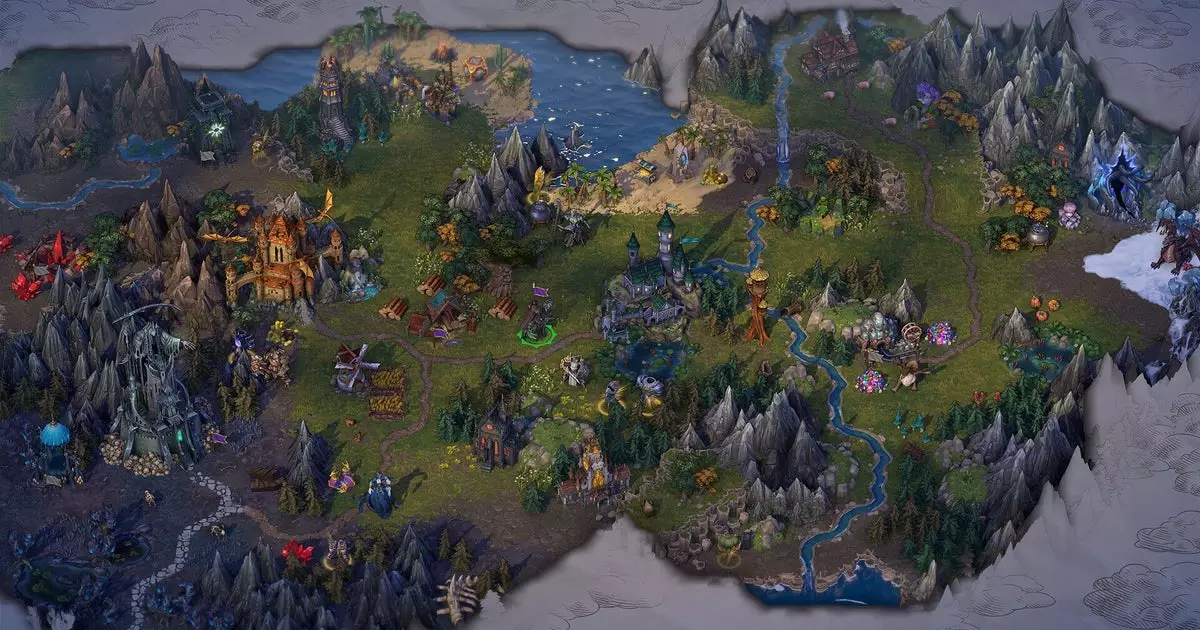
The recent decision by Ubisoft to assign the publishing of *Heroes Of Might And Magic: Olden Era* to Hooded Horse signifies more than just a simple shift in logistics—it reflects a broader industry trend where legacy titles are being reevaluated amidst evolving market pressures. Historically, Ubisoft has been synonymous with maintaining control over their flagship franchises. Entrusting a third-party publisher like Hooded Horse signals a strategic pivot, one rooted in practical necessity rather than creative concern. This choice invites us to question whether such reassignments are merely budgetary concerns or part of a calculated effort to breathe new life into a storied series.
It is undeniable that the gaming industry is currently at a crossroads. The closure or downsizing of traditional AAA development operations, combined with the need for niche expertise, often drives publishers to delegate marketing and distribution to specialized firms. Ubisoft’s decision, therefore, may be less about abandoning the franchise and more about leveraging Hooded Horse’s strategic niche—an entity known for revitalizing niche tactics titles and carving out a dedicated following. In doing so, Ubisoft hands over the day-to-day operational burdens, freeing internal resources for newer projects or more profitable endeavors.
Strategic Alliances and Industry Surprises
What is particularly intriguing about this arrangement is the delicate balance of control being maintained by Ubisoft. While Hooded Horse takes charge of publishing, the intellectual property rights remain with Ubisoft, positioning this alliance as a symbiotic, rather than transformative, partnership. Such arrangements are becoming increasingly commonplace in an industry where publishers recognize the value of specialized publishers’ expertise without relinquishing ownership. It’s a calculated risk—one that can deliver increased visibility without compromising the franchise’s legacy.
Yet, the motivations behind this move stretch beyond resource allocation. Given that Ubisoft has undergone internal restructuring—splitting into separate entities to manage different intellectual properties—it might be more about strategic realignment than financial desperation. The delays, cost-cutting measures, and internal reorganizations suggest a broader attempt to adapt to a competitive landscape where scarcity of resources, market saturation, and shifting consumer expectations compel traditional publishers to diversify their publishing strategies.
Reviving Nostalgia or Repeating the Past?
The *Heroes Of Might And Magic* series enjoys a fiercely loyal fan base, largely because of its roots in classic turn-based strategy gameplay that deeply reflects its mid-90s origins. The new *Olden Era* aims to revisit those origins, but the challenge lies in balancing nostalgia with modern gaming expectations. The delay in early access release indicates complexity and care, but also signals uncertainty—whether this project can truly capture the magic of its early predecessors remains to be seen.
From a strategic standpoint, Ubisoft’s decision might be a cautious gamble: rather than divert internal resources to ensure this title’s success, they have chosen to trust Hooded Horse’s proven tactics and niche reputation. This allows Ubisoft to hedge their bets while still capitalizing on the franchise’s enduring appeal. For fans, this could mean more targeted marketing and a more dedicated push into niche markets, which could ultimately revitalize the series’ legacy if executed correctly.
Broader Industry Implications and Personal Perspectives
In my critical view, Ubisoft’s move signals a willingness to reconsider traditional publishing roles. While some may view handing over the reins as a sign of retreat or devaluation, I see it as an adaptive strategy suited for an era where the digital marketplace rewards agility and specialization. Large publishers that once relied solely on their own publishing arms are recognizing the undeniable benefits of collaboration with niche experts—a trend that might redefine how legacy titles are managed in the future.
However, I remain skeptical about whether this switch will genuinely benefit *Heroes Of Might And Magic* in the long run. The series’ revival hinges not just on marketing but on faithful game design and community engagement. If the collaboration with Hooded Horse can deliver on those fronts, it could represent a new blueprint for revitalizing dormant or struggling franchises. If not, it risks diluting a beloved brand amid corporate maneuvering.
In the end, Ubisoft’s strategic pivot underscores an industry that’s increasingly fluid, where traditional roles are being reshaped. While the motivations remain partly opaque, one thing is clear: in a universe where legacy and innovation collide, agility and partnership might be the keys to survival. Whether or not *Heroes Of Might And Magic: Olden Era* will stand as a testament to this new era remains to be seen, but the message is unmistakable—adapt or fall behind.
Leave a Reply