
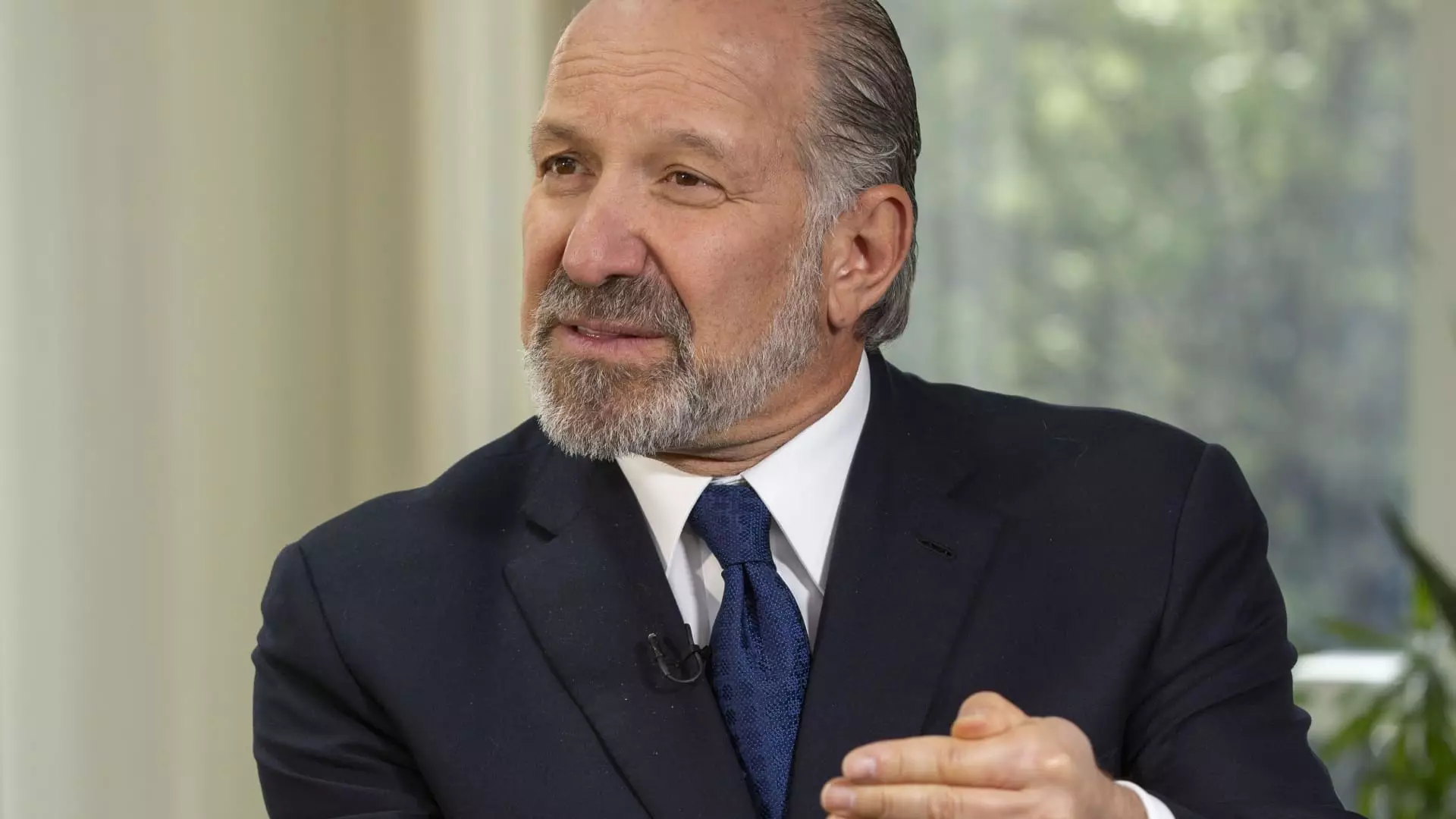
In recent developments, the U.S. government’s approach to supporting the domestic semiconductor industry has taken a notable turn. Traditionally, government grants and subsidies have been viewed as charitable boosts, designed to stimulate growth without immediate expectation of profit or control. However, recent statements from Commerce Secretary Howard Lutnick reveal a strategic shift: converting these financial supports into equity stakes. This move signifies a deeper belief that taxpayer money should be directly linked to tangible ownership, transforming funding from a passive financial resource into an active tool for national leverage.
Lutnick’s assertion that the government expects an equity stake in Intel—specifically, “non-voting” shares—embodies this paradigm shift. Instead of simply granting billions in subsidies, the government aims to hold a financial interest, essentially turning its support into a form of strategic investment. This approach underscores a growing perspective that public funds should be akin to a partnership, aligning the interests of the nation with those of key industry players. The suggestion that the government will negotiate to obtain a 10% stake echoes a larger narrative: the U.S. intends to regain control over critical technological assets, ensuring that investments serve national security and economic resilience.
The Political and Strategic Implications
This strategic realignment is not merely about economics; it reflects an intense geopolitical game. Until now, the U.S. has largely relied on grants and partnerships, but the shift toward equity stakes echoes a desire to reshape the competitive landscape of global chip manufacturing. Given the ongoing semiconductor supply chain vulnerabilities and the dominance of foreign players like Taiwan Semiconductor Manufacturing Co. (TSMC) and Samsung, the U.S. government appears eager to assert greater influence over these strategic assets.
The potential for the government to become Intel’s largest shareholder—an idea floated amid reports of a possible 10% stake—is an audacious step that blurs traditional lines between private enterprise and public interest. While Intel’s executives have clarified that they seek non-voting shares, the symbolic weight of such a move is significant: it asserts a form of strategic influence without overt control. Still, this raises crucial questions about the future of private enterprise autonomy and the role of government in dictating industry direction.
Furthermore, Lutnick’s comments hint at a broader political agenda. The Trump administration’s emphasis on reshoring manufacturing and securing supply chains aligns with these financial maneuvers. By turning grants into equity, the government gains not just financial returns but also influence, which could shape corporate decision-making in ways that prioritize national interests over shareholder value. Such a policy could serve as a blueprint for future industry support mechanisms but also risks setting a precedent for governmental interference in corporate governance.
Corrosive Power Dynamics and Industry Ramifications
While the immediate appeal of gaining an equity stake might seem pragmatic, it also introduces a dangerous precedent: that public funds may be used as leverage for political and strategic goals rather than purely economic ones. The implications extend beyond Intel, influencing how governments worldwide might reconfigure their approach to industrial policy. The notion of turning grants into equity stakes effectively shifts power dynamics, positioning the government as a stakeholder rather than a supporter.
The core issue lies in the delicate balance between incentivizing industry growth and risking government overreach. Should this strategy become widespread, it could undermine investor confidence, leading to fears of political meddling and reduced corporate independence. This approach also invites skepticism regarding the true motives: is this an investment in technological sovereignty or an effort to exert control under the guise of national security?
In the long term, such moves could either catalyze the resurgence of a robust domestic chip industry or sow the seeds of political interference and market distortions. The Biden and Trump administrations’ different philosophies on public-private collaboration are evident here—one prefers grants, the other demands ownership. Ultimately, the success or failure of this strategy will hinge on the ability to balance political intent with market realities, a task that requires cautious foresight and genuine commitment to technological independence.
Leave a Reply