
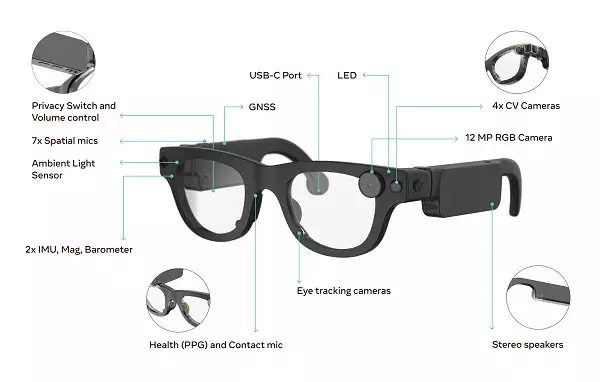
Meta, the tech giant formerly known as Facebook, is making significant strides in the world of augmented reality (AR) with its upcoming second-generation “Aria” glasses. This innovative device is not just a gadget; it represents a fundamental shift in how technology is woven into our daily lives. As Meta gears up for what is expected to be a landmark retail launch, the enhancements to the Aria glasses signal a commitment to both functionality and user experience. The idea is not just to create a fashionable accessory but to revolutionize the way we engage with technology.
The Pursuit of Wearability and Practicality
One of the standout aspects of the Aria Gen 2 glasses is their impressive wearability. These glasses are specifically designed for people of all shapes and sizes, catering to diverse facial structures and ensuring comfort for prolonged use. Meta has taken a thoughtful approach by introducing eight variations in size, which acknowledges the need for inclusivity in tech design. The fact that these devices weigh only around 74 to 76 grams further emphasizes Meta’s ambition to make AR technology accessible and conducive to everyday life.
The addition of folding arms is a noteworthy innovation. This seemingly simple feature becomes significant in the face of the sophisticated systems being integrated into the glasses. As technology advances, users have come to expect sleek, multipurpose devices that can blend seamlessly into their routines, and the folding mechanism is a testament to Meta’s understanding of these evolving consumer demands.
Breaking Barriers: Advanced Features and Functionality
The technical specifications of the Aria Gen 2 glasses reveal a device that is truly ahead of its time. With improved camera sensors designed to perform adeptly in varying light conditions, users can expect a versatile tool capable of capturing their surroundings in rich detail. Moreover, the expanded field of view sets a new standard in AR experiences, allowing users to immerse themselves more fully in the augmented environment.
Audio capture has also received an upgrade with the integration of a contact microphone in the nosepad. This feature is particularly important for those who live in noisy urban environments, as it helps to pick up on critical sounds while minimizing background noise. The inclusion of eye and hand tracking capabilities further enhances user interaction, paving the way for more intuitive engagement with digital content. These advancements showcase how Meta envisions a world where AR not only assists but also enhances human interaction.
Rethinking the Future of Connectivity
Mark Zuckerberg’s assertion that AR glasses could one day replace smartphones underscores a bold vision for the future. The notion of “functional connected glasses” as a “holy grail” speaks volumes about the potential for AR technology to transform social interaction. Though the idea of people waving their hands and engaging with invisible interfaces may seem eccentric, it could very well become the norm as society adapts to these new ways of connecting with each other and with technology.
Meta’s strategic decision to open up its platform to external developers later this year indicates a proactive approach to fostering innovation. By allowing creative minds to contribute to the AR ecosystem, Meta is not just creating a product; it’s initiating a movement. This collaborative mindset is vital for unlocking the full potential of AR technology, as diverse applications can cater to different user needs and interests.
A Glimpse into the Future
Looking ahead, the projected consumer launch of the Aria glasses in 2027 is a date that tech enthusiasts should mark on their calendars. By giving users a taste of the capabilities that lie ahead, Meta is effectively drawing a line in the sand for its competitors. The development of the Aria Gen 2 glasses signifies more than technological progress; it represents a new frontier in digital interaction, one where the boundaries between the physical and digital worlds increasingly blur. As AR glasses continue to evolve, they will undoubtedly change our understanding of connectivity, engagement, and interaction in profound ways.
Leave a Reply