
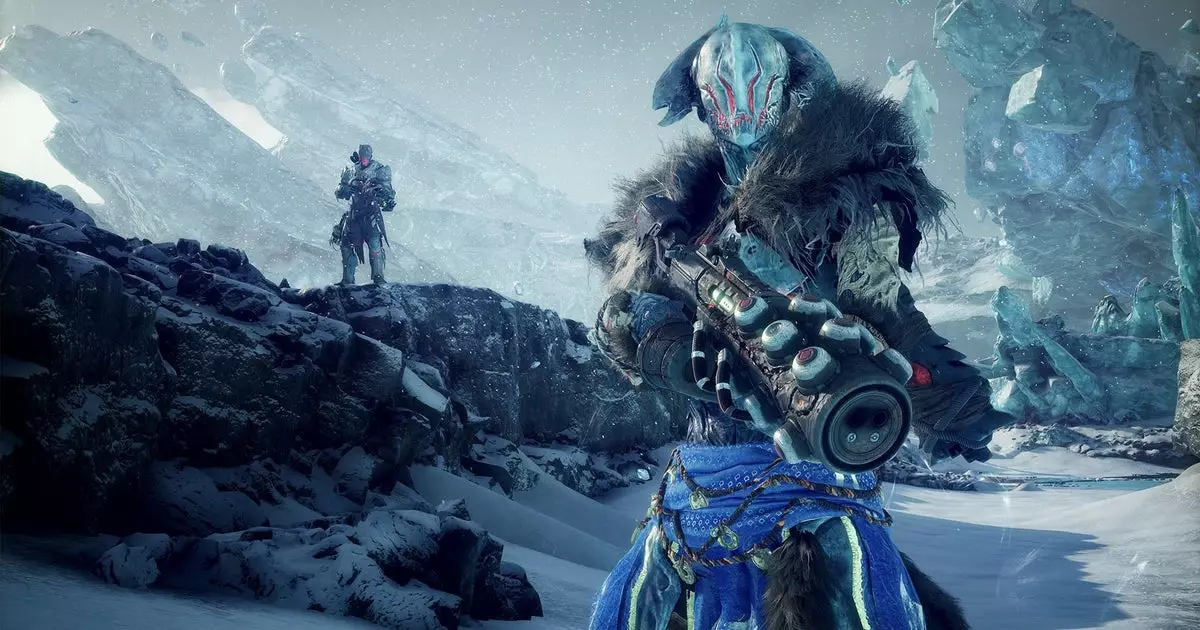
In the ever-evolving landscape of video game development, the news emanating from People Can Fly, the studio behind hits like Gears of War: E-Day and Outriders, is a dispiriting echo of familiar industry challenges. Recently, the studio has publicly announced the cancellation of two ambitious projects, codenamed Gemini and Bifrost, paired with significant layoffs affecting their talented workforce. At the heart of these decisions lies a narrative of disconnect; a “lack of communication” with a publisher and the stark reality of constrained financial resources.
The Publisher Dilemma
The specific circumstances surrounding the cancellation of the Gemini project are particularly enlightening. According to CEO Sebastian Wojciechowski, difficulties arose when the publisher failed to present necessary documentation that would have delineated terms and conditions essential for continued development. Essentially, the communication breakdown translated into a disarray concerning the publisher’s commitment to the project. This revelation casts a broad shadow over an industry where transparent dialogue between developers and publishers is paramount. It begs the question: what are the repercussions of insufficient communication on creative outputs? The consequences can be dire—creative labor reduced to uncertainty, and projects with untapped potential ultimately pushed into the abyss.
The stark reality for many developers is that financial backing is crucial to sustaining creativity. For Bifrost, the project’s suspension was attributed not only to publisher relations but also a lack of clarity regarding cash flow and resource allocation. Wojciechowski’s acknowledgment of needing to “significantly regroup” emphasizes the vast implications of such financial constraints. For a studio that once burgeoned to over 600 employees while managing multiple projects, the retrenchment speaks to the fragility of labor structures in the gaming industry.
A Cycle of Layoffs and Cancellations
Adding insult to injury, People Can Fly’s recent setbacks are part of a larger trend reflecting a troubling cycle within the gaming industry. The layoffs are not isolated incidents; they represent a continuing spiral where ambitious projects are squandered due to insufficient managerial support and shifting priorities. Looking back, the studio has had its share of underperformance and turmoil, as evidenced by the 30 employees laid off in January of the previous year, followed by the cancellation of Project Dagger in mid-2024, and ultimately more than 120 layoffs in late 2024. The historical context amplifies the ongoing dread that persists in this realm—where one moment a studio flourishes, and the next, it flounders under its burdens.
The unique chaos within People Can Fly is troubling but, unfortunately, not unique. Developers pour creative energy into projects that may never see the light of day, leaving them grappling with the emotional and professional impacts. Former employees of Bifrost and Gemini took to LinkedIn to express their sentiments, reflecting a strong sense of camaraderie among the staff. Their testimonials reveal an underlying reality—the brilliance of ideas caught in a system rife with instability.
The Struggle for Industry Integrity
The narrative unfolding at People Can Fly raises critical ethical concerns about the treatment of creative talent within the gaming industry. It lays bare the vulnerabilities that accompany creative endeavors where funding, communication, and organizational stability are seldom guaranteed. Ambitious developers are often left navigating an environment where their livelihoods hinge on complex partnerships that can turn sour without warning.
While collaborations between developers and publishers can ignite groundbreaking creativity, the current environment evokes skepticism. There’s a pressing need for transparency and mutual respect to foster resilience amidst robust ambitions. The situation at People Can Fly threatens to overshadow the creativity that lies at the heart of game development and instead draws focus to the fragility of these artistic enterprises.
Ultimately, the ongoing saga of People Can Fly serves as a sobering reminder that even the most talented teams must navigate a landscape often dictated by financial machinations and strained partnerships. As the industry moves forward, it’s essential to reflect on these lessons and advocate for better communication and fair practices that truly support the creative spirit.
Leave a Reply