
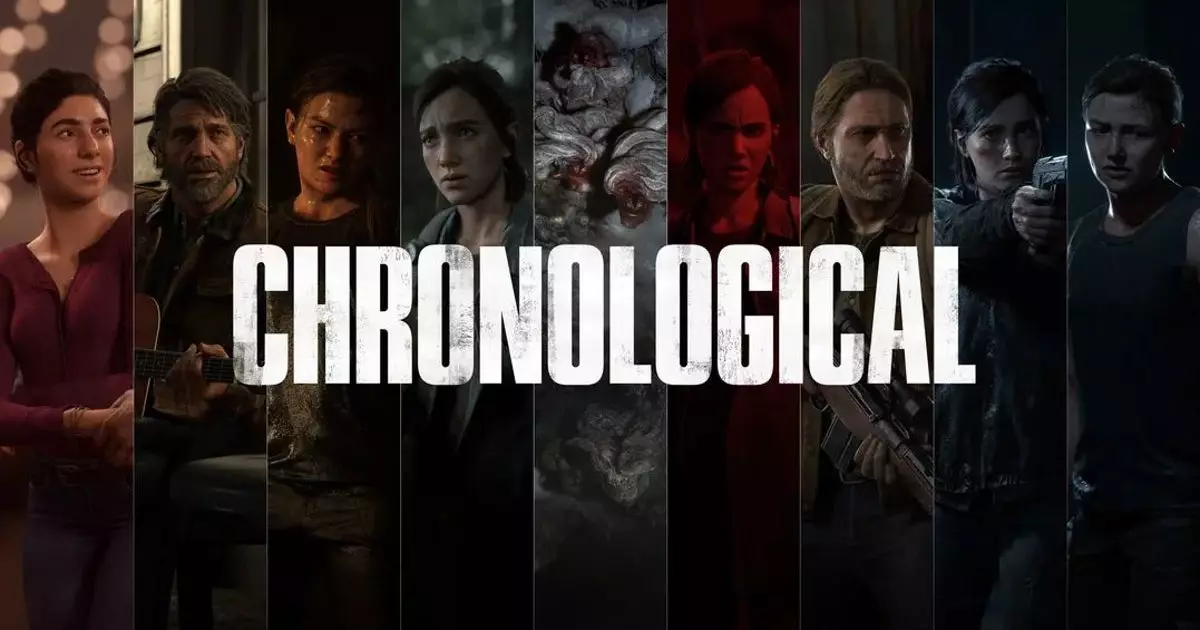
In the world of storytelling, especially within interactive media like video games, narrative structure is fundamental. It shapes how players connect with characters, interpret themes, and ultimately experience the story. The recent release of a new mode for The Last of Us Part II, which allows players to experience the game’s events in chronological order, exemplifies a troubling trend: the obsession with reordering stories for novelty’s sake rather than respecting their original artistic intent. While some argue that this provides a fresh perspective, it often undermines the narrative complexity that made the game compelling in the first place.
By dissecting the studio’s rationale, it becomes clear that the move is less about enhancing storytelling and more about catering to a curiosity that may have little grounding in storytelling efficacy. Naughty Dog claims that viewing the narrative sequentially might deepen understanding. However, this overlooks the importance of story structure—non-linearity in The Last of Us Part II is designed to reflect the chaos and emotional disorientation of its characters. Forcing the story into a chronological timeline risks diluting the emotional impact that the original, layered delivery achieved.
Deconstructing the Myth of Narrative Clarity
Storytelling is an art form that thrives on ambiguity, mystery, and the deliberate withholding of information. The Last of Us Part II’s non-linear approach is a testament to this philosophy, mirroring real-life trauma and emotional growth. When players are forced through a chronological version, the narrative’s delicate weave unravels, revealing a less nuanced, more predictable story. It’s akin to watching a film in reverse—a technique that can sometimes work—yet often strips away the suspense and moral complexity that define compelling storytelling.
Continuing to experiment with chronological modes in a game renowned for its layered storytelling suggests a denial of why its initial structure worked. It’s an abdication of the artist’s original vision, driven by a misguided desire to provide clarity that may not serve the story but rather serve the tastes of an impatient audience seeking linearity. Most importantly, it assumes that storytelling in games must be straightforward, ignoring how complex narratives are what set the medium apart from passive forms like film or television.
The Implications of Over-Experimentation
The addition of seemingly frivolous features, such as allowing Joel and Tommy to cosplay as characters from Uncharted, points toward a troubling pattern of needless gimmickry. These inclusions suggest that Naughty Dog is prioritizing entertainment value over narrative integrity, attempting to turn a serious, emotionally charged story into a playground for superficial fun. While marketability and fan service may have their place, they shouldn’t come at the expense of storytelling artistry.
The studio’s claim that the chronological mode offers a “fascinating new way” to enjoy the game reflects a fundamental misunderstanding of what storytelling fundamentally entails. It’s not about reordering scenes like a puzzle; it’s about understanding, emotional resonance, and thematic development. By presenting their story as something that can be easily reassembled at will, Naughty Dog diminishes its own creative achievements, reducing a complex narrative to a mere plaything.
Why Innovation Should Respect the Artform
Innovation in storytelling is vital, but it must be rooted in a profound respect for the art. Experimenting with narrative structures can push boundaries and deepen engagement—if done thoughtfully. However, treating a story as malleable, something to be “played” with like a toy, risks trivializing the very craft that makes it meaningful. The Last of Us Part II was a mature, emotionally charged exploration of grief and revenge precisely because of its structure. Altering it—without considering the narrative’s core—threatens to turn a poignant experience into a disjointed puzzle.
Rather than forcibly chronological storytelling, studios should focus on exploring new formats that complement the narrative, not distort it. Video games have the potential to offer unique storytelling experiences, but that potential is best realized through thoughtful experimentation that honors the narrative’s integrity. In this case, Naughty Dog’s latest move feels more like a superficial gimmick than a genuine attempt to evolve storytelling in interactive media.
The trend of reordering narratives—especially in a medium as dynamic as gaming—must be approached with critical caution. Disregarding the power of storytelling conventions for mere novelty risks eroding the emotional depth and thematic richness that define compelling narratives. As creators and consumers, we should advocate for stories that challenge and engage without undermining their core essence, not stories that are reshaped at will to satisfy fleeting curiosity.
Leave a Reply