
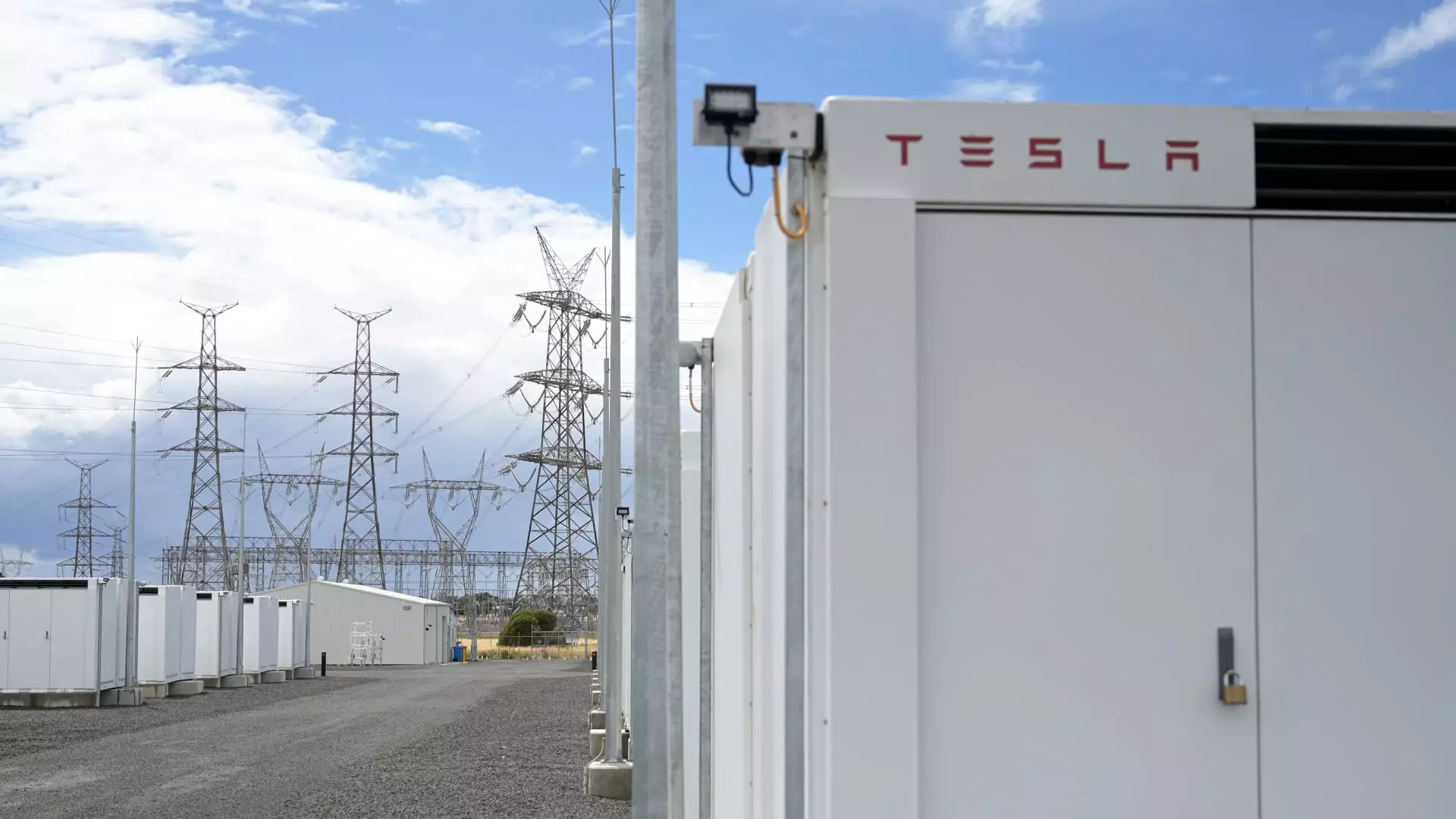
In a bold move that defies geopolitical tensions, Tesla is set to revolutionize energy storage on a grand scale in China. Having made headlines with its recent commitment to construct a grid-scale battery power plant, Tesla is not merely expanding its footprint in one of the world’s largest markets; it is positioning itself at the forefront of a seismic shift in how energy is harnessed and distributed. The partnership with local Shanghai authorities and China Kangfu International Leasing for a staggering investment of 4 billion yuan (approximately $556 million) represents more than just financial gain for Tesla; it symbolizes a commitment to sustainable innovation and infrastructural evolution in urban electricity management.
The grid-scale battery energy storage systems at the heart of this initiative are pivotal for modern electricity grids, particularly as they face the growing challenge of balancing supply and demand amid the increasing adoption of renewable energy sources like solar and wind. With wind and solar notoriously intermittent, such storage solutions are essential for managing the power flow and ensuring a reliable energy supply. Tesla’s Megapacks, capable of delivering fundamental power in urban settings, will undoubtedly function as the ‘smart regulators’ that urban energy systems need, solving the complexities of urban power supply with unprecedented efficiency and stability.
Navigate the Competitive Landscape
Tesla enters the ring amidst fierce competition from domestic giants such as CATL and BYD, who have significantly advanced battery technology and manufacturing capabilities. With CATL holding a robust 40% of the global market share, Tesla’s endeavor will be an essential indicator of its resilience in a market ripe with rivalry. The company’s move to enhance its production capacity for Megapacks in Shanghai reflects strategic foresight; by bolstering local manufacturing, Tesla not only meets domestic demand but strengthens its global supply chain. It is critical to note that while Tesla leverages its innovation, it must also navigate an intricate landscape shaped by trade barriers and shifting policies.
Strategically, this deal arrives at a time when the trade relationship between the U.S. and China has been particularly rocky. Former President Trump’s tariffs on imports from China have amplified the scrutiny on American businesses, complicating their operational strategies. However, by securing this deal in spite of these tensions, Tesla demonstrates not just resilience but also an ability to adapt to an unpredictable regulatory environment. CEO Elon Musk’s close association with Trump during the trade war adds further layers of complexity and intrigue regarding how U.S. businesses will operate in China moving forward.
The Demand Surge for Energy Storage
Crucially, the demand for grid-scale energy installations in China is becoming increasingly apparent. The Chinese government aims to add an ambitious 5 gigawatts of battery-powered electricity supply by 2025, ramping up its total capacity to an impressive 40 gigawatts. This ambitious target illustrates the nation’s commitment to sustainable energy solutions, creating a vital opportunity for Tesla to not only contribute to but also lead the charge in energy storage innovation. The capacity for global battery energy storage systems surged by 42 gigawatts in 2023 alone, potentially doubling the growth seen in the previous year—an indicator of the global pivot towards renewable energy. This urgency for energy storage solutions signifies a ripe environment for Tesla’s strategic entry.
Manufacturing and exporting its Megapacks from Shanghai to Europe and Asia further demonstrates Tesla’s commitment to meeting global energy demands. This cross-continental strategy allows the company to solidify its relevance, not only within China but also on a global stage. The ability to scale production dynamically in response to global demand is a cornerstone of Tesla’s business model, reflecting a forward-looking approach to energy distribution that prioritizes both innovation and market responsiveness.
Tesla’s foray into the Chinese grid-scale battery market portends major implications for the future of energy storage, addressing not only domestic supply challenges but also positioning itself as a global leader in an increasingly competitive landscape. As the world accelerates toward a more sustainable future, Tesla’s innovative spirit might just be the spark that ignites a new era in energy management.
Leave a Reply