
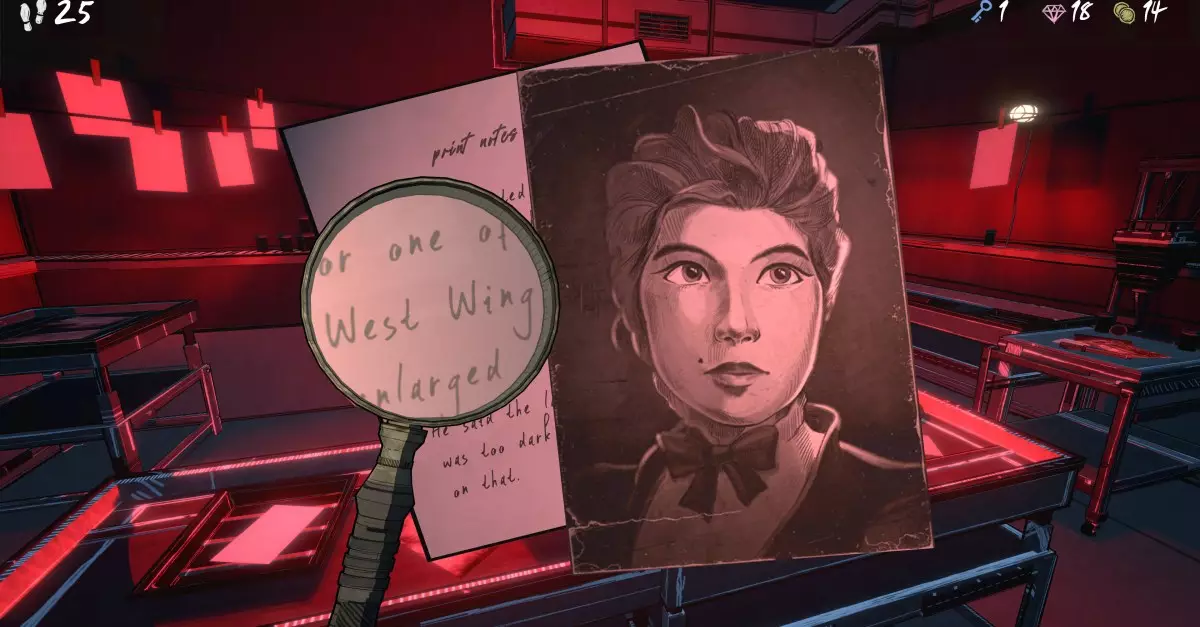
In a surprising twist that highlights the murky waters of mobile game distribution, an unofficial version of the hit game “Blue Prince” made its fleeting debut on the Apple App Store, only to vanish shortly after public attention turned to it. This event not only underscores the vulnerabilities within the App Store’s review process but also the challenges developers face in protecting their intellectual property against rampant piracy in the digital age. The episode serves as a case study revealing how both consumers and publishers grapple with the complexities of unauthorized ports and the implications of digital ownership.
The Rise and Fall of the Blue Prince Clone
Developed by the indie studio Dogubomb and published by Raw Fury, “Blue Prince” has garnered attention on platforms like Steam, Xbox, and PlayStation. Yet, despite not existing on iOS, an amusement of sorts transpired when an unverified mobile adaptation appeared on the App Store. The unofficial listing seemed convincing at first glance — complete with a game icon and screenshots mirroring those of the original. But beneath the surface, the details were telling: the dubious seller name, “Samet Altinay,” and the misspelled copyright attribution of “DogBomb” indicated that not all was as it seemed.
Finding the app was surprisingly easy. In an age where unauthorized adaptations abound, it raises the question of how many casual gamers were unaware they were interacting with a cloned version rather than the legitimate product. This incident illustrates that the barriers to access quality gaming experiences are often shattered by the ineffectiveness of digital storefronts to filter out counterfeit offerings.
A Test Run Gone Wrong
The piece de resistance of this curious case came when a tech editor purchased and tested the unauthorized version. For $9.99, one would expect a credible experience, yet the reality proved disillusioning. It wasn’t long before he encountered significant game-breaking bugs, including an unexpected glitch where the character fell through the floor while trying to pass through a door. Such malfunctions not only tarnish the gameplay experience but also raise ethical questions regarding consumer rights and the responsibility of platforms like Apple’s App Store to uphold a standard of quality in the products they offer.
While these unauthorized ports can sometimes be entertaining, they often cater to a niche audience within the broader gaming community — one that values accessibility over quality. This is where the dilemma lies: are developers obligated to sanction or retaliate against these adaptations? It appears the latter might be necessary, as this unauthorized clone briefly climbed to the #8 position in the Entertainment category before its eventual removal.
The Role of Apple and Developer Accountability
In an era where digital legitimacy is paramount, the unreliable App Store review process has been a recurring theme. Apple has faced criticism for allowing unauthorized ports to slip through the cracks, as evidenced in this incident. It reflects a broader concern about the due diligence required from tech giants in safeguarding both their brand and the developers they employ. The quick disappearance of the Blue Prince port serves as a reminder that the lion’s share of accountability often rests not only on the creators of the original game but on the platform which enables its distribution.
Dogubomb and Raw Fury have not indicated any plans for an official iOS release, making the existence of this clone even more perplexing. In their public statement, they acknowledged awareness of the app’s appearance, yet remain silent on plans for competing against such piracy. It brings forth an urgent question: how can developers better protect their creations in a world where digital replication occurs at the click of a button? Their silence on a potential iOS port perpetuates uncertainty in the marketplace, leaving users disillusioned by unauthorized offers.
The Continuation of a Systemic Issue
Ultimately, the saga of the Blue Prince iOS clone exemplifies the ongoing issues that plague mobile gaming distribution. It points towards a larger narrative where unauthorized versions prosper in the shadows of legitimate offerings. The reactive measures taken by both Apple and the developers highlight the necessity for a robust framework that can preemptively shield against piracy while still encouraging innovation within the gaming industry. As the digital landscape continues to evolve, one must wonder how many more such clones will surface, and what innovative strategies companies will adopt to confront this pervasive issue. The landscape of digital gaming is vast and fraught with complexities, revealing the need for more stringent protective measures against the threats posed by unauthorized adaptations.
Leave a Reply