
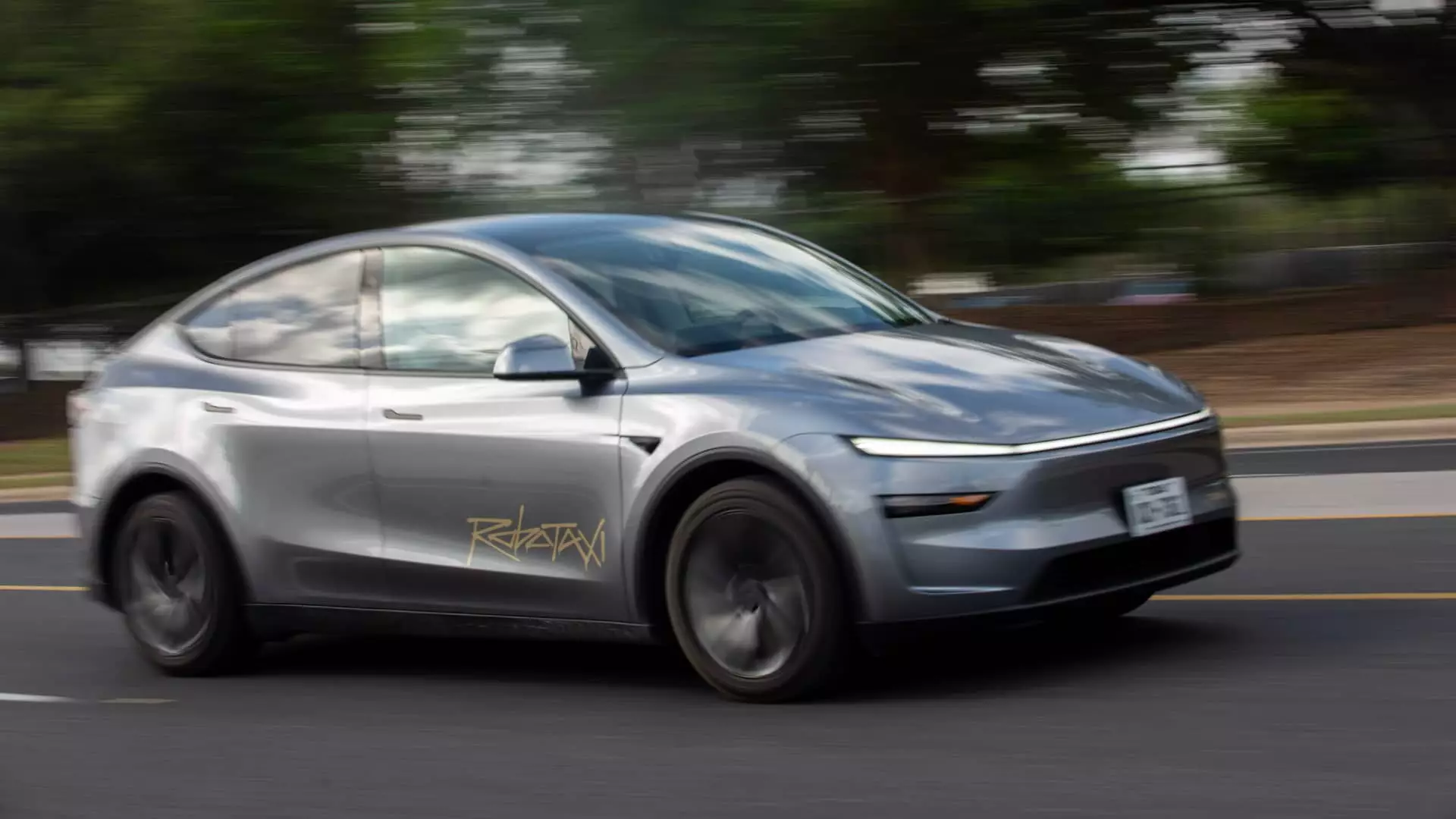
Tesla has long been a pioneer in electric vehicles, but its recent stride into autonomous ride-hailing services—commonly known as robotaxis—marks an ambition that could reshape urban mobility. Elon Musk’s announcement about expanding Tesla’s robotaxi service to the San Francisco Bay Area signals a bold vision: a future where self-driving cars operate seamlessly on public roads. However, beneath this ambitious veneer lies a complex web of regulatory, legal, and community hurdles that expose the raw realities of deploying autonomous vehicles at scale. Tesla’s enthusiasm often outpaces regulatory reality, revealing deep gaps between technological aspirations and legal permissions. While the company may tout its technological ingenuity, in California, it faces stiff regulatory constraints that prevent it from deploying fully autonomous, passenger-carrying services without human oversight.
Legal Roadblocks and the Reality of Regulatory Limits
California’s regulatory bodies—particularly the Public Utilities Commission (CPUC) and Department of Motor Vehicles (DMV)—have set clear boundaries for Tesla’s autonomous vehicle activities. Despite Tesla’s claims of making autonomous ride-sharing a reality, the state unequivocally states that Tesla is not authorized to legally operate autonomous vehicles transporting the public on public roads. All Tesla can legally do, under current permits, is operate non-autonomous vehicles with human drivers. The discrepancy here is stark: Tesla’s aspirations to launch a robotaxi service are still confined within the bounds of a permit that essentially allows a traditional, driver-in-the-car model, not an autonomous, driverless fleet.
Tesla’s permits clearly delineate the company’s limitations. The DMV’s “drivered testing permit,” valid since 2014, permits Tesla to test autonomous vehicles, provided a human safety driver is present. However, it does not authorize the collection of fees or the operation of driverless services. The CPUC’s charter-party carrier permit allows Tesla to run private car services—similar to limousines or sightseeing tours—but only with human chauffeurs and not as autonomous services. This regulatory framework underscores the gap between Tesla’s technological push and what regulators are willing to permit, exposing the often overly optimistic narrative clouded by corporate ambitions.
Community Engagement and Transparency: The Community’s Voice
The lack of communication from Tesla to local communities exemplifies a broader issue with the deployment of disruptive transportation technologies. In regions like Marin County, officials are left out of the loop regarding Tesla’s plans. Local representatives, such as Stephanie Moulton-Peters and Brian Colbert, acknowledge Tesla’s potential benefits but criticize the opaque nature of Tesla’s rollout strategies.
This dearth of transparency not only fuels skepticism but also fosters concern among residents who worry about safety, regulation, and the broader implications of autonomous vehicles. Community engagement becomes increasingly vital as these technologies threaten to disrupt established urban landscapes, yet Tesla’s approach seems more focused on rapid deployment than aligned with local governance or community interests. If Tesla truly believes in its vision of universal autonomous mobility, it should prioritize transparent, collaborative relationships with local authorities and residents to foster understanding rather than suspicion.
Moreover, Tesla’s approach shows an obsession with technological bragging rights rather than responsible stewardship. Unlike Waymo, which secured comprehensive permits and maintained open communication with regulators and local authorities, Tesla’s approach appears hurried and regulatory non-compliant, at least in the eyes of California’s authorities. This suggests that Tesla might be trying to leapfrog regulatory hurdles through technological claims, risking conflict and setbacks.
The Vision Versus Reality: The Future of Autonomous Vehicles
Tesla’s current predicament reveals that autonomous vehicle technology has not yet matured to the point where widespread, self-sufficient robotaxi operations are feasible under existing legal frameworks. Unlike Waymo, which methodically secured the necessary permits and engaged with regulatory authorities, Tesla seems to view its technology as a license to bypass established rules. This approach not only jeopardizes its fleet deployment efforts but also risks public trust.
In Austin, Texas, Tesla is conducting a limited robotaxi service that resembles a controlled pilot. It operates during daylight hours, with safety supervisors in the vehicle, and only among invited users. This cautious approach indicates that Tesla recognizes the limitations of its technology and the regulatory hurdles it faces, yet publicly, it markets a more aggressive narrative about rapid expansion—one that doesn’t fully align with reality.
The distance between Tesla’s narrative and the regulatory and community realities highlights a recurring theme in Silicon Valley: technological hubris often disregards the socio-legal context. Building autonomous vehicle fleets capable of replacing traditional taxis at scale requires navigating complex legal landscapes, ensuring safety, and maintaining public trust—all of which Tesla seems to underestimate in its drive for fame and innovation.
Competitive Dynamics and the Road Ahead
In this landscape, Tesla is not alone. Companies like Waymo have already taken measured steps to legitimize their autonomous ride services by securing permits, conducting extensive testing, and engaging with regulatory authorities early. The results speak for themselves: Waymo’s autonomous vehicles in California are operating with driverless permissions, charging customers, and maintaining transparency.
Tesla’s tendency toward rapid, sometimes reckless expansion, contrasts sharply with Waymo’s cautious, methodical approach. While Tesla’s star power attracts attention and media buzz, it remains bound by the realities of governance, safety, and community acceptance. The road ahead for Tesla’s autonomous ambitions is uncertain—without regulatory compliance and community trust, its vision risks remaining aspirational rather than actualized.
As the industry evolves, it’s clear that the future of autonomous ride-hailing will depend heavily on regulatory evolution, technological validation, and community partnerships. Tesla’s current path reveals that technological prowess is not enough; it must be complemented by responsible governance, transparency, and a willingness to build trust—elements it has yet to demonstrate convincingly.
Leave a Reply