
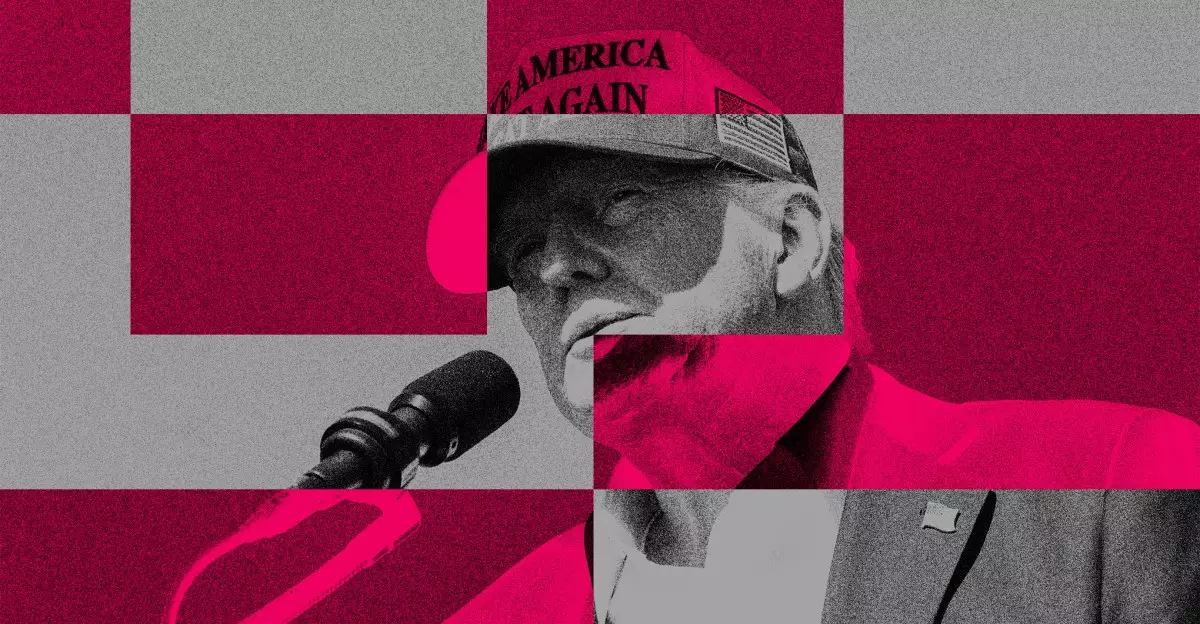
In an era where social media shapes political narratives as much as traditional platforms, the Trump administration’s recent foray into TikTok exemplifies a complex dance between authority and opportunism. Initially, the push to ban TikTok reflected a profound concern over national security and data privacy. Yet, the administration’s inconsistent stance reveals a strategic ambiguity: simultaneously seeking to suppress the platform’s influence while exploiting its virality for political gain. This contradictory approach underscores a fundamental question—can a government truly control digital landscapes that are inherently decentralized and user-driven? The act of creating an official White House TikTok account, despite ongoing legal battles and unresolved deals with ByteDance, exposes an opportunistic side of authoritarian governance, recognizing the power of TikTok’s audience even as it seeks to clamp down on its control.
Reactive Policies Masking Underlying Political Calculations
The turbulence surrounding TikTok’s legal status highlights the administration’s reactive rather than proactive stance towards emerging technology. Originally, the Trump administration’s attempt to ban TikTok was rooted in national security fears—an understandable concern in a world increasingly threatened by cyber espionage. However, the subsequent delays and mixed signals reveal a deeper political calculation: maintaining leverage over China while manipulating public opinion domestically. The fluctuating deadlines and the shift from ban to potential deal betray an indecisive leadership that oscillates between confrontation and diplomacy, often driven by public sentiment and electoral strategy rather than coherent policy. The fact that the administration has yet to finalize a deal or fully implement the ban suggests that political expediency outweighs policy consistency, effectively turning TikTok into a pawn in the ongoing ideological chess game with China.
The Power of Digital Propaganda and Viral Politics
Despite legal uncertainties, the Trump administration has understood the strategic value of TikTok as a propaganda tool. The creation of @WhiteHouse, as well as the Trump campaign’s command of the platform, exemplifies how political actors are increasingly reliant on viral digital content to shape narratives and mobilize supporters. The staggering follower counts—2.8 billion for Trump’s campaign account versus 2.2 billion for Harris’s—are indicators of TikTok’s potential as a political battleground. Moreover, Trump’s own charismatic, reality-TV persona translates seamlessly into short, engaging videos that garner attention and reinforce his image. This phenomenon demonstrates that modern political dominance depends less on traditional media and more on mastery of social platforms where authenticity and entertainment often overshadow policy substance. Consequently, TikTok has become not just a tool for communication but a weapon for influence, with the lines between genuine outreach and political spectacle becoming increasingly blurred.
Leverage, Legitimacy, and the Illusion of Control
By creating a government account amidst a legal quagmire, the Trump administration appears to be constructing a facade of control and relevance. This strategic move confuses the narrative—are these efforts purely defensive or deliberately provocative? The administration’s stance of “Why would I want to get rid of TikTok?” signals a pragmatic recognition that the platform offers unparalleled engagement opportunities. It reveals a nuanced understanding: complete prohibition is politically risky, while selective engagement allows them to stay relevant and maintain influence. The broader implication is a subtle redefinition of legitimacy: the government’s presence on TikTok, despite the legal dispute, transforms the platform into a legitimate venue for political discourse and image-building. This paradox invites us to reconsider the nature of digital sovereignty—control is not outright suppression but strategic participation in the platform’s ecosystem.
The Trump administration’s handling of TikTok exemplifies a new paradigm where political actors harness the power of social media’s viral nature to serve their aims—challenging traditional notions of authority and control. While some will dismiss these moves as opportunistic or superficial, they reflect an evolving awareness that digital platforms are integral to modern political influence. The question is whether this oversimplified engagement ultimately strengthens genuine democratic dialogue or merely sustains a spectacle of power. Regardless, what is clear is that TikTok’s intersection with politics signals a profound shift: influence in the digital age depends less on institutional authority and more on mastery of the viral, ephemeral landscapes that define contemporary communication. As the legal battles rage and political narratives adapt, one thing remains certain—TikTok is now a fixture in the arena of political power, whether through suppression or engagement, and its significance will only grow.
Leave a Reply