
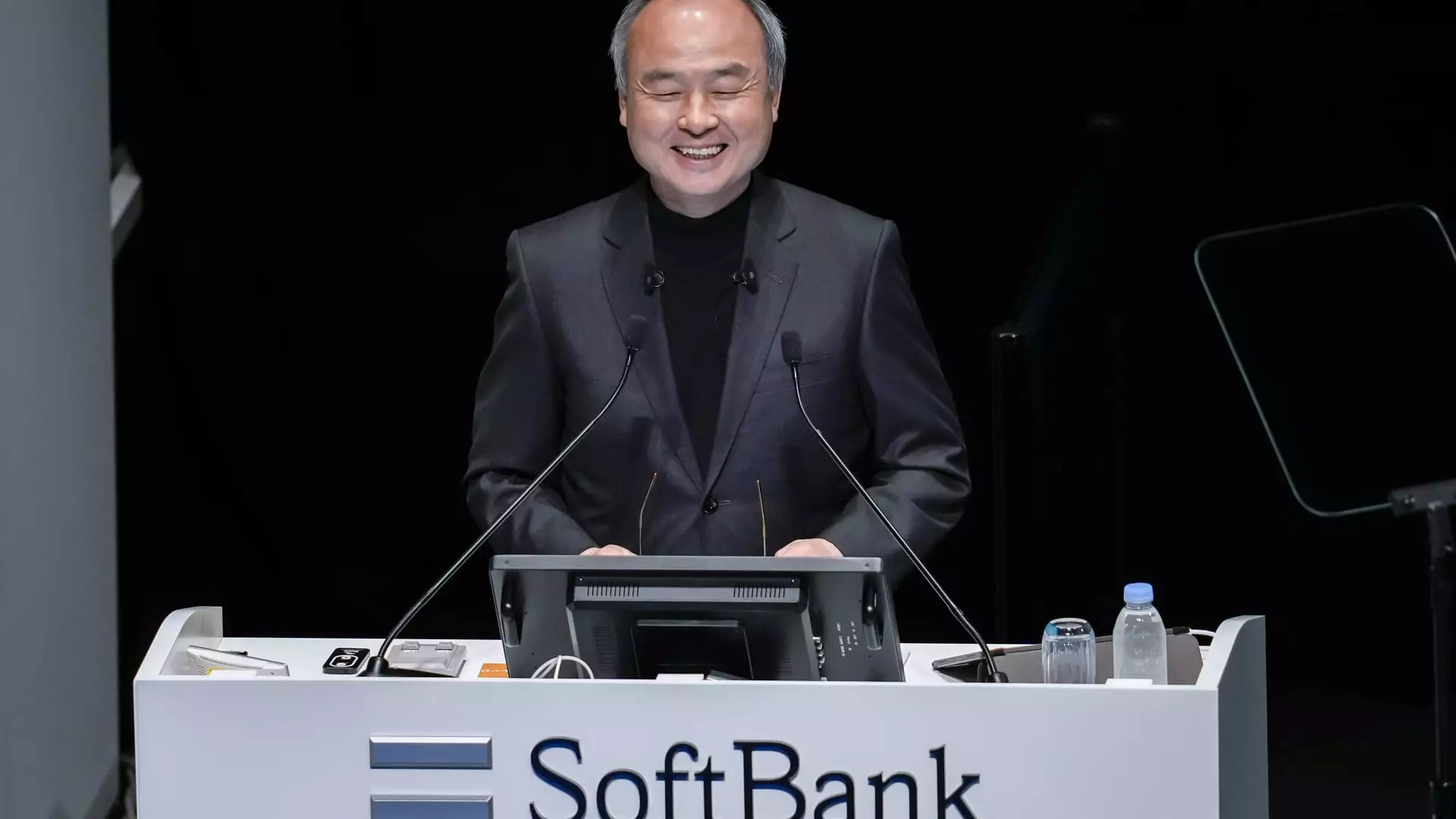
SoftBank, spearheaded by CEO Masayoshi Son, has made no secret of its unwavering commitment to OpenAI, marking an aggressive and visionary leap toward what Son calls “artificial superintelligence” (ASI). Unlike many corporations that favor incremental advancements, SoftBank appears radically all-in, pledging an astronomical investment of roughly $33 billion despite OpenAI’s current unlisted status and lack of profitability. This reflects Son’s deep conviction that OpenAI is not just an exciting AI startup but a destined future titan in the global technology landscape.
This commitment goes far beyond mere financial backing; it encapsulates a strategic alignment with OpenAI’s mission and long-term potential. Son’s vision is clear: positioning SoftBank as a central orchestrator in the forthcoming AI ecosystem. His aspiration for SoftBank to spearhead this “superintelligence era,” where AI capabilities vastly exceed human intellect, is a proclamation of ambition that few in the corporate world dare to articulate so boldly.
Evaluating Timing and Strategy: Was Microsoft the Better Choice?
The background of SoftBank’s relationship with OpenAI surfaces a fascinating glimpse into strategic decisions in the tech sphere. Notably, Son disclosed that before 2019, OpenAI’s CEO Sam Altman sought a $10 billion investment from SoftBank. Son was prepared then, buoyed by Vision Fund’s success to back this huge commitment. Yet, OpenAI eventually partnered with Microsoft, which secured exclusivity over computing infrastructure—an arrangement crucial for OpenAI’s growth.
With hindsight, Son’s reflections carry a mix of restrained regret and respect. He acknowledges Microsoft’s robust global infrastructure and brand weight, but suggests SoftBank’s distinct value proposition was overlooked. Could SoftBank’s direct, possibly more flexible approach have better suited OpenAI’s evolving structure? This question remains speculative but highlights the intricate balance between capital, technical capability, and cultural fit in tech investments.
Breaking Away from Exclusivity: The Changing Dynamics of Cloud Providers
A seismic shift occurred early this year when Microsoft lost its exclusive cloud provider status with OpenAI. This unbundling reflects deeper strategic uncertainties, exacerbated by Microsoft’s hesitation to endorse OpenAI’s transition into a conventional for-profit company. Reports indicate tensions over governance and company restructuring that may strain this alliance.
In contrast, SoftBank seems unconcerned by Microsoft’s wavering role. Rather than scaling back, Son vows to deepen SoftBank’s engagement, signaling a readiness to absorb risks many would shy from. This stance exemplifies not just financial optimism, but a philosophical commitment to fostering innovation unconstrained by traditional corporate frameworks.
Synergizing Hardware and AI: SoftBank’s Broader Industrial Vision
SoftBank’s strategy transcends pure software investment; it encompasses a comprehensive ecosystem involving hardware and chip design. The acquisition of Arm in 2016 and Ampere’s chip design purchase recently illustrate SoftBank’s intention to control essential AI infrastructure components. This holistic approach positions SoftBank not just as an investor but as an architect of next-generation AI platforms.
Son’s rumored plan to establish a US-based $1 trillion industrial complex underscores this ambition. Such a mega-project, if realized, could dramatically reshape the industrial and technological geography, anchoring global AI innovation around SoftBank’s expanding empire. In this sense, SoftBank isn’t content merely participating in AI’s evolution—it is staking a claim to shape the very foundation of a new technological order.
Bravery as a Catalyst: The Risk and Reward Paradigm
Masayoshi Son’s repeated emphasis on “bravery” in investment encapsulates his worldview that transformational tech breakthroughs require boldness that most companies lack. Betting against an unlisted, unprofitable company to become the world’s most valuable is a wager few would take without hesitation. This insistence on courageous risk-taking as a prerequisite for monumental success is a rare ethos in today’s cautious corporate culture.
While some may critique this bravado as recklessness, the history of innovation is littered with calculated gambles that changed the game. SoftBank’s readiness to scale its stake independently of Microsoft’s frustrations reflects a deeper belief that leadership in artificial intelligence demands not just capital and technology but unyielding confidence in the future it seeks to create.
Final Thoughts: A Moment of Reckoning for AI and Investment Strategy
SoftBank’s saga with OpenAI embodies a fascinating case study where vision, timing, and risk tolerance collide. It challenges the orthodoxy of conservative investment and partnership models in the tech world. Through embracing uncertainty and leveraging both hardware and AI platform strategies, SoftBank is staking a claim on what could become the next industrial revolution.
Its aggressive posture may invite criticism regarding prudence, but it undeniably pushes the boundaries of what corporate investment can look like in the age of AI. If Masayoshi Son’s vision of artificial superintelligence materializes, SoftBank will have cemented itself as not merely a player but a defining force in the evolution of intelligence itself.
Leave a Reply