
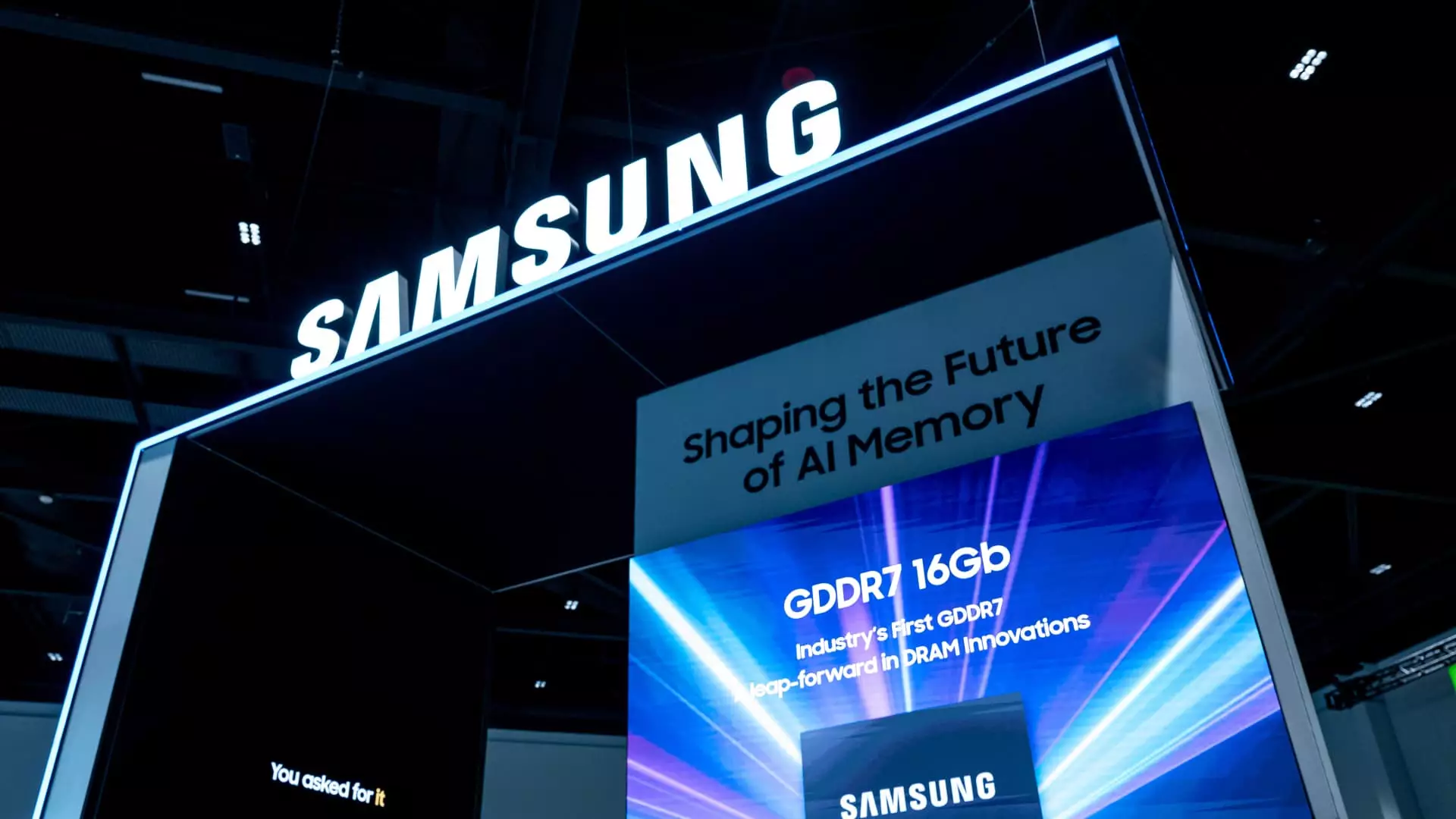
Samsung Electronics, once an impervious titan in the global technology landscape, now finds itself grappling with a series of formidable challenges that threaten its longstanding dominance. Recent forecasts reveal a bleak outlook: a projected 56% dive in second-quarter profits, reflecting not only a declining demand but also the competitive hurdles that have intensified in recent years. This downturn is emblematic of a larger industry reckoning—where innovation is no longer enough to secure a leading edge, especially amid the rise of AI-centric hardware played by industry giants like Nvidia.
Historically, Samsung has thrived on its versatile portfolio, from memory chips to smartphones, yet the tectonic shifts in the semiconductor industry have exposed vulnerabilities. The company’s inability—so far—to capture the blazing demand for high-bandwidth memory (HBM) chips and advanced AI processors reveals deeper strategic flaws. This crisis isn’t solely about slipping market share; it’s about mounting pressure to innovate faster and more effectively in an ecosystem increasingly dominated by specialized players. In such a climate, sticking to traditional product lines no longer guarantees prosperity; instead, agility and foresight are crucial.
Innovation Gaps: Falling Behind in the Race for AI-Ready Memory Technology
A key indicator of Samsung’s struggles lies in its lagging position in the high-bandwidth memory segment, which is vital for AI applications. Despite its well-established reputation, Samsung has been unable to secure a decisive lead in HBM technology necessary to satisfy Nvidia’s stringent qualification standards. As Nvidia commands roughly 70% of the world’s HBM demand, being even marginally behind in certification can significantly hamper revenue prospects — a reality Samsung is only beginning to grapple with.
In contrast, SK Hynix has cemented its role as a critical Nvidia supplier, underscoring the company’s pivot toward specialized, high-margin chips that cater precisely to AI and data center needs. Meanwhile, Samsung’s delayed certification process—reportedly pushed to at least September—creates a widening gap that competitors are eager to exploit. The implications are twofold: not only does this delay risk losing lucrative contracts, but it also hampers Samsung’s reputation as an innovator capable of delivering cutting-edge memory solutions at the right moment.
This situation exposes a vital question: has Samsung underestimated the speed at which AI-driven hardware demands evolve? The industry’s shift towards AI-centric chips intensifies the stakes, accentuating the importance of rapid development, certification, and deployment. Samsung’s ongoing struggles to get its top-tier HBM chips approved highlight a troubling disconnect between R&D and market execution—a gap that can be detrimental in an era where milliseconds and technological superiority define leadership.
Operational Challenges and Strategic Missteps
Beyond technological hurdles, Samsung’s financial outlook reveals operational strains rooted in strategic misalignments and market conditions. The company’s foundry division, a critical breadwinner, is mired in operating losses amidst stiff competition from Taiwan Semiconductor Manufacturing Company (TSMC). TSMC’s outsized scale and technological edge continue to dominate, gradually eroding Samsung’s share in a sector where precision manufacturing and tight supply chains matter immensely.
Moreover, Samsung’s recent internal directives—such as instructing subsidiaries worldwide to cut staff by 30%—paint a picture of a company in distress, attempting to pare costs amidst declining revenues. Such measures, while necessary in the short term, risk stifling innovation and agility in an industry that rewards rapid adaptation and strategic investment.
While the company’s annual stock performance remains impressive, rising over 16%, the underlying vulnerabilities loom large. Investor optimism may overlook the mounting operational challenges that could, if unaddressed, undermine long-term stability and growth. The upcoming release of third-quarter results will serve as a litmus test for whether Samsung can recalibrate in time to reclaim its pioneering spirit.
The Road Ahead: A Critical Juncture for a Tech Icon
Samsung stands at a pivotal crossroads. It has historically demonstrated the resilience and innovation capacity to reshape markets, but current circumstances demand more than incremental adjustments. To regain its footing, the company must accelerate its HBM certification process, invest heavily in cutting-edge AI chip development, and rethink its strategic priorities in a rapidly evolving semiconductor landscape.
While competition intensifies, Samsung’s brand equity remains formidable; however, reputation alone cannot sustain a leader in a fiercely competitive industry. The firm must embrace a proactive, disruptive approach—racing not just to catch up but to leap forward, reimagining its traditional business models. The ability to pivot decisively will determine whether Samsung will sustain its legacy or become a cautionary tale of complacency in the age of AI revolution.
In essence, Samsung’s current predicament underscores a vital truth: in the relentless race for technological supremacy, yesterday’s giants must continually reinvent themselves, lest they become relics of a bygone era. The coming quarters will reveal whether Samsung can transcend its setbacks and emerge as a true innovator in the AI and memory chip domains or whether it risks fading into the background as newer competitors take the spotlight.
Leave a Reply