
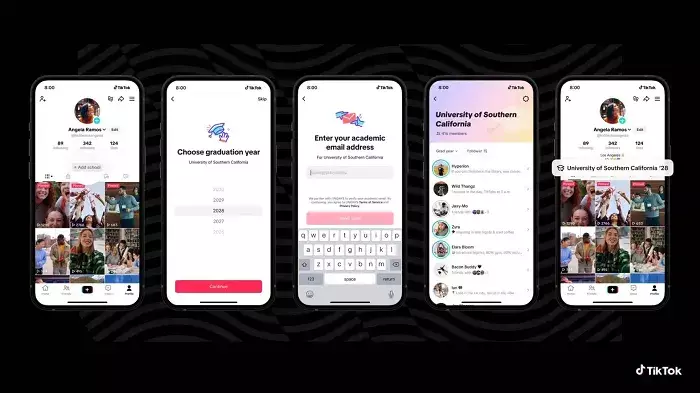
As the academic year looms on the horizon, TikTok’s latest innovation, “Campus Verification,” signals a significant shift in how social media platforms engage with students. Unlike traditional forms of connection, this feature aims to embed itself into the fabric of campus life, transforming TikTok from merely an entertainment hub into a potential catalyst for genuine social bonds among young adults. While the initiative appears promising at first glance, a deeper look reveals both its innovative ambitions and underlying challenges.
What sets TikTok’s approach apart is its strategic emphasis on authenticity and security. By requiring students to verify their enrollment through official college email addresses and partnering with verification services like UNiDAYS, TikTok attempts to mitigate the perennial issue of imposters infiltrating campus communities. This layered verification process underscores an understanding that trust remains paramount when building social environments online, especially in a setting as sensitive as college. Yet, the effectiveness of such measures remains uncertain, especially given the challenges that similar platforms have faced historically.
Transforming the College Experience Through Digital Community Building
The core intention behind Campus Verification is noble: easing the daunting transition into college life by providing students with an immediate digital foothold on campus connections. University environments thrive on social interactions—forming friendships, joining interest groups, and participating in campus events—all of which influence a student’s overall experience. TikTok recognizes this and strives to facilitate these organic connections through their video-centric platform, leveraging existing student engagement to foster new relationships.
In practice, the feature enables students to search for peers based on their university, graduation year, and follower metrics—effectively creating a digital “class directory” that can catalyze friendships. This is particularly relevant in today’s world, where social media often serves as the primary medium for casual socialization among Gen Z. By clustering students within the app based on their academic environment, TikTok is attempting to bridge the gap between online interaction and offline relationship-building, reaffirming its role as a central social space.
However, the effectiveness of this approach hinges on genuine implementation. The challenge lies not merely in creating the infrastructure but in managing its safety, inclusivity, and accessibility. Just as Facebook’s failed “Campus” initiative struggled with expansion and trust issues, TikTok must navigate similar pitfalls, especially considering the platform’s diverse user base and the unpredictability of online interactions.
Lessons from the Past and the Road Ahead for TikTok
Historically, efforts to create dedicated campus social networks—like Facebook Campus—have faltered amid logistical hurdles and concerns about privacy. Facebook’s shutdown was driven by difficulties in controlling non-students from accessing the platform, raising valid fears around security and misuse. TikTok’s entry into this space is bold, especially given its existing global reach and massive user base, but it also carries substantial risks.
TikTok’s plan to roll out Campus Verification in over 6,000 U.S. universities marks a significant expansion compared to its predecessors. This broad scope introduces both opportunities and complications. On one side, it enables a vast network of students to connect securely and effortlessly; on the other, it amplifies the responsibility of maintaining a secure, exclusive environment. As with any large-scale verification process, technical flaws, privacy concerns, and potential exploitation are inescapable concerns that could undermine the platform’s sincerity and safety.
Moreover, the partnership with UNiDAYS highlights TikTok’s recognition that verification isn’t solely about validation but also about creating a trustworthy experience. Nonetheless, whether these mechanisms will be sufficient to prevent unwanted intrusions or safeguard personal data remains to be seen. It’s clear that TikTok is taking a giant leap—one that could redefine student socialization if executed well, but also one fraught with the perils of overreach and mismanagement.
TikTok’s Campus Verification symbolizes a daring foray into the realm of digital campus communities, blending innovation with inherent challenges. Success will depend heavily on its ability to build sustainable trust, enforce security protocols, and truly resonate with student needs. Whether it becomes a celebrated tool for connection or a cautionary tale on the limits of social media integration remains to be uncovered as it unfolds.
Leave a Reply