
Artificial Intelligence (AI) is rapidly transforming the landscape of scientific research, often surpassing expectations and redefining possibilities. Historically, major scientific breakthroughs have been driven by relentless human ingenuity, requiring decades of meticulous experimentation and theoretical development. Yet AI, with its unmatched pattern recognition capabilities and ability to process vast datasets swiftly, is emerging as an equally formidable partner in this quest. While critics might argue that AI has yet to produce groundbreaking discoveries in physics, dismissing its influence is short-sighted. AI’s real strength lies in its potential to serve as a catalyst—offering fresh insights, uncovering hidden symmetries, and guiding human researchers toward paths previously deemed too complex or obscure.
What makes AI’s role especially intriguing is its capacity to tackle problems considered intractable for humans alone. For example, in high-energy physics, researchers are leveraging AI to analyze data from colossal experiments like those at the Large Hadron Collider. These experiments produce data at an astronomical rate, capturing fleeting particles and complex interactions that challenge even the most dedicated scientists. By deploying machine learning algorithms, physicists can now detect subtle symmetries and patterns—relics of fundamental natural laws—that inform our understanding of the universe. This isn’t merely about data sorting; it’s about AI acting as a scientific explorer, unearthing structural truths that have eluded traditional analysis for decades. The implication is profound: AI is not just a tool but a partner capable of indirect discovery.
From Quantum Mysteries to Cosmic Insights
The quantum realm remains one of the most baffling frontiers in physics, filled with phenomena that defy classical logic. Among these, entanglement stands out as both a curiosity and a revolutionary resource in quantum technology. The phenomenon, where two particles share a linked quantum state no matter how far apart they are, fundamentally challenges our notions of locality and causality. For decades, physicists assumed that such entanglement required the particles to originate from the same initial source. But groundbreaking experiments in the 1990s demonstrated that entanglement can be more flexible, opening pathways to incredible possibilities like entanglement swapping—where two unconnected particles become entangled through the measurement of intermediary particles.
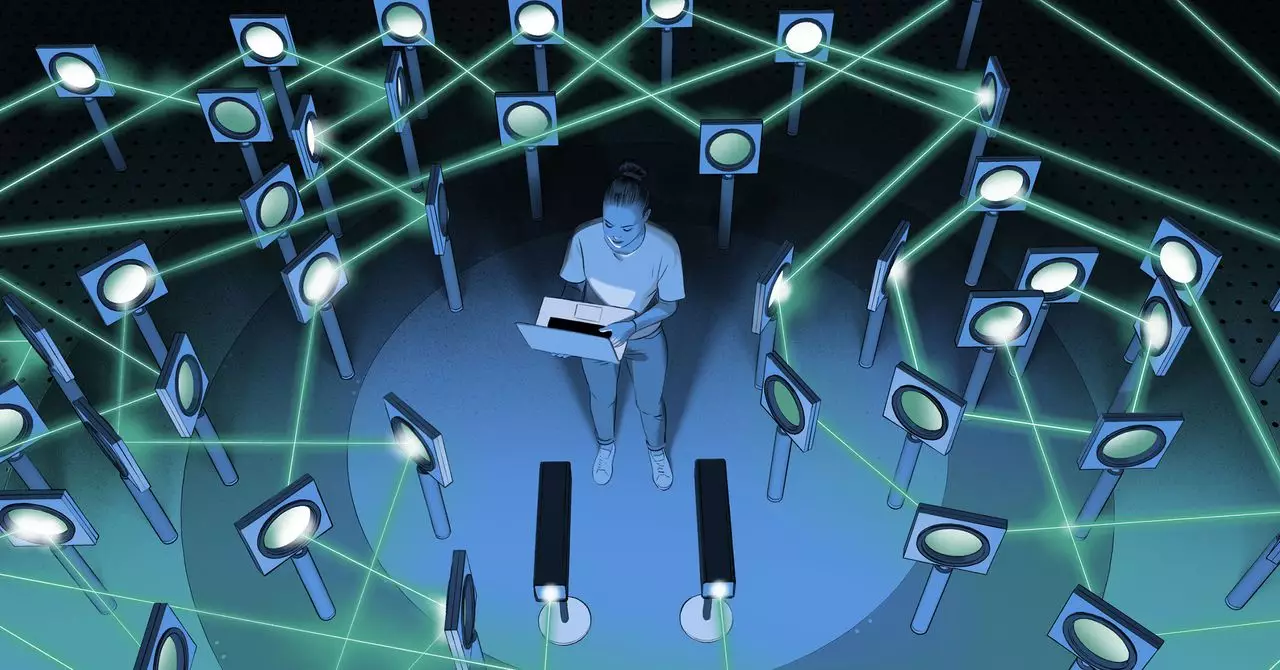
This evolution in understanding underscores a critical point: the universe’s quantum fabric is more intricate and interconnected than we once believed. AI has played an essential role here, powering algorithms that simulate and optimize complex quantum experiments. Krenn’s team, for example, employed a software named PyTheus—an homage to Both Python and the Greek hero Theseus—to design sophisticated experiments involving entangled photons. Using graph theory, they modeled optical setups as nodes and edges, representing components like beam splitters and photon paths. Such approaches exemplify how AI-driven modeling accelerates the development of quantum technologies, turning abstract mathematical structures into practical experimental blueprints. It’s an affirmation that AI isn’t just observing the universe but actively shaping our understanding of its most elusive aspects.
The Future of Scientific Inquiry Is Collaborative and AI-Driven
As AI continues to evolve, the scope of what it can contribute to physics expands beyond initial expectations. Its capacity to analyze, hypothesize, and even suggest novel experiments promises a new era of collaborative discovery. AI’s potential to identify symmetries, equations, and underlying principles—long considered the domain of the most brilliant human minds—could democratize fundamental research, making insights accessible to a broader spectrum of scientists.
However, this growing reliance on AI also raises critical questions. Are we prepared to trust machine-generated hypotheses? Can AI ever replicate the intuitive leaps and creative insights that characterize human ingenuity? These are genuine concerns, but they should not overshadow the tremendous opportunities. Instead, they highlight an urgent need for a symbiotic relationship—one where human intuition guides AI, and AI broadens human perspective.
Ultimately, the real power of AI in physics lies in its ability to accelerate our journey towards understanding. It simplifies the intricate tapestry of data and theory, revealing foundational symmetries and patterns that often go unnoticed. As we stand at this crossroads, it’s clear that artificial intelligence isn’t a competitor to traditional science but its most promising partner—pushing the boundaries of human knowledge into uncharted, awe-inspiring territories.
Leave a Reply