
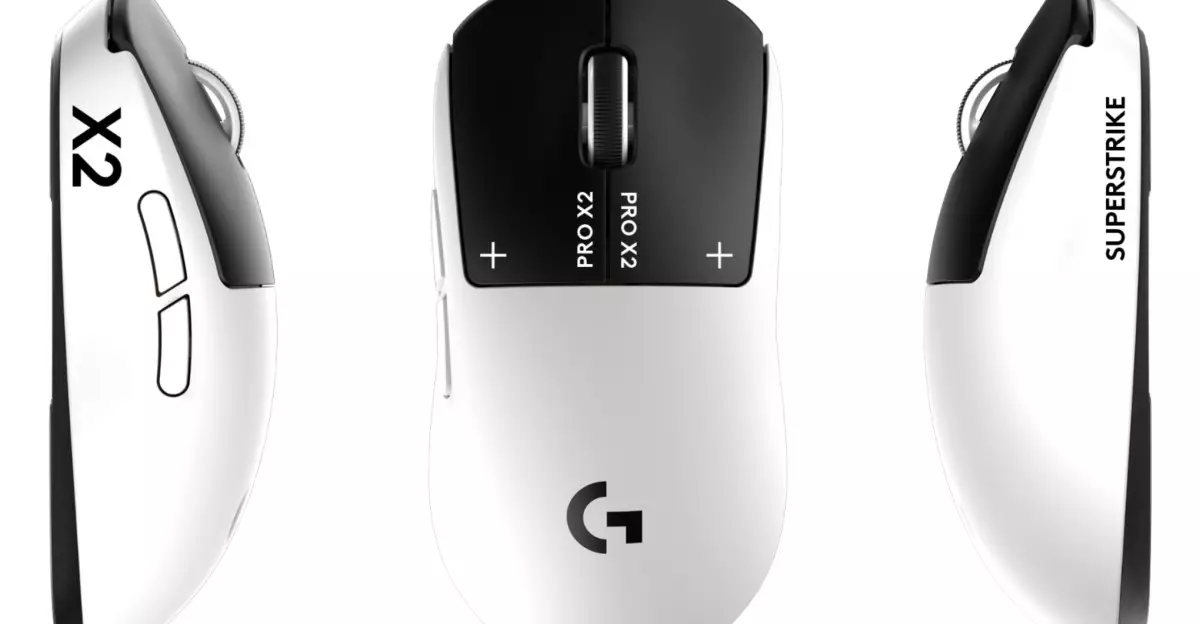
In recent years, gaming peripherals have seen incremental improvements that marginally enhance player performance. However, Logitech’s upcoming flagship, the Pro X2 Superstrike, signifies a seismic shift in mouse technology—one that challenges long-held notions about what constitutes responsiveness and control in competitive gaming. By abandoning traditional mechanical switches for an innovative analog sensor system with integrated haptic feedback, Logitech dares to redefine muscle memory and reaction times. This bold move underscores the company’s commitment to pushing boundaries and signifies a future where digital hardware precisely emulates tactile nuances, blurring the line between physical sensation and digital command.
Reimagining Clicks Through Haptic Technology
The core innovation of the Superstrike lies in its use of haptic actuators to simulate the tactile sensation of a click. Conventional gaming mice employ mechanical switches that physically register a click, but these often come with limitations: finite actuation points, inconsistent feedback, and slower response times due to mechanical inertia. Logitech’s approach replaces these physical components with an inductive analog system called the Haptic Inductive Trigger System (HITS). This technology leverages precise haptic feedback to mimic click sensation, thereby creating an adaptable, customizable experience that can be fine-tuned to individual preferences.
This shift is not merely about replacing hardware—it’s about enhancing gameplay fluidity. The analog system boasts a minimal 0.6mm travel per main button, enabling more rapid and nuanced response. The potential here is vast: players can experience a more immediate connection with their commands, potentially reducing latency and improving reaction accuracy. This is especially crucial in fast-paced eSports environments where every millisecond counts.
Challenging Convention: Speed, Precision, and Customization
What truly sets the Superstrike apart is its emphasis on speed-enhancing features such as the rapid trigger system. Borrowed from high-end gaming keyboards, rapid trigger support allows the sensor to reset swiftly when the button is barely lifted—permitting rapid, consecutive inputs with minimal force. With up to five configurable reset points, players can tailor the response timing to their content and style, creating an unprecedented level of precision.
Logitech claims the Superstrike reduces latency by up to 30 milliseconds—a significant figure in competitive scenes. While skeptics may question the tangible impact of such a reduction, the combination of high polling rate (8,000Hz, accessible only via Logitech’s G Hub software) and rapid trigger functionality theoretically elevates responsiveness to new heights. Although outright necessity may be debated—most professional gamers already operate near the threshold of human reaction times—the prospect of a device that adapts dynamically to individual reflexes excites the tech community.
Furthermore, the inclusion of the Hero 2 sensor ensures that the Superstrike isn’t sacrificing accuracy. Known for its precision, high DPI, and low latency, the sensor provides the foundation for elite-level performance, complemented by the lightweight 65 grams design that allows swift, agile movements without fatigue.
A Bold Leap Toward the Future of Gaming Hardware
The Superstrike also signals an evolution in design philosophy. Its smaller, lighter sibling— the Superlight 2C— emphasizes ergonomic versatility for gamers with varying grip styles. Weighing just 51 grams, the 2C emphasizes mobility and comfort, acknowledging that even subtle hardware modifications can impact a player’s performance and endurance over long gaming sessions.
This new lineup demonstrates Logitech’s understanding of gamer diversity, moving beyond one-size-fits-all solutions toward personalized hardware tailored to specific needs. The pricing—$179.99 for the Superstrike and $159.99 for the Superlight 2C—positions these devices as premium offerings justified by cutting-edge technology and bespoke adjustability.
Ultimately, the Superstrike exemplifies a bold vision: that the future of gaming peripherals lies in sensory imitation and software-driven customization. If Logitech manages to deliver on its promises of faster response and more granular control, it could mark the beginning of a new paradigm where hardware is no longer just a conduit but an extension of the player’s intent—responsive, adaptive, and almost telepathic in its immediacy.
By harnessing analog sensors and haptic feedback, Logitech is not just refining a mouse; they are transforming it into a dynamic tool that invites gamers to explore new boundaries of speed and precision. Only time will tell if this audacious innovation will become a staple in professional setups, but at the very least, it challenges all of us to rethink what performance means in the gaming world.
Leave a Reply