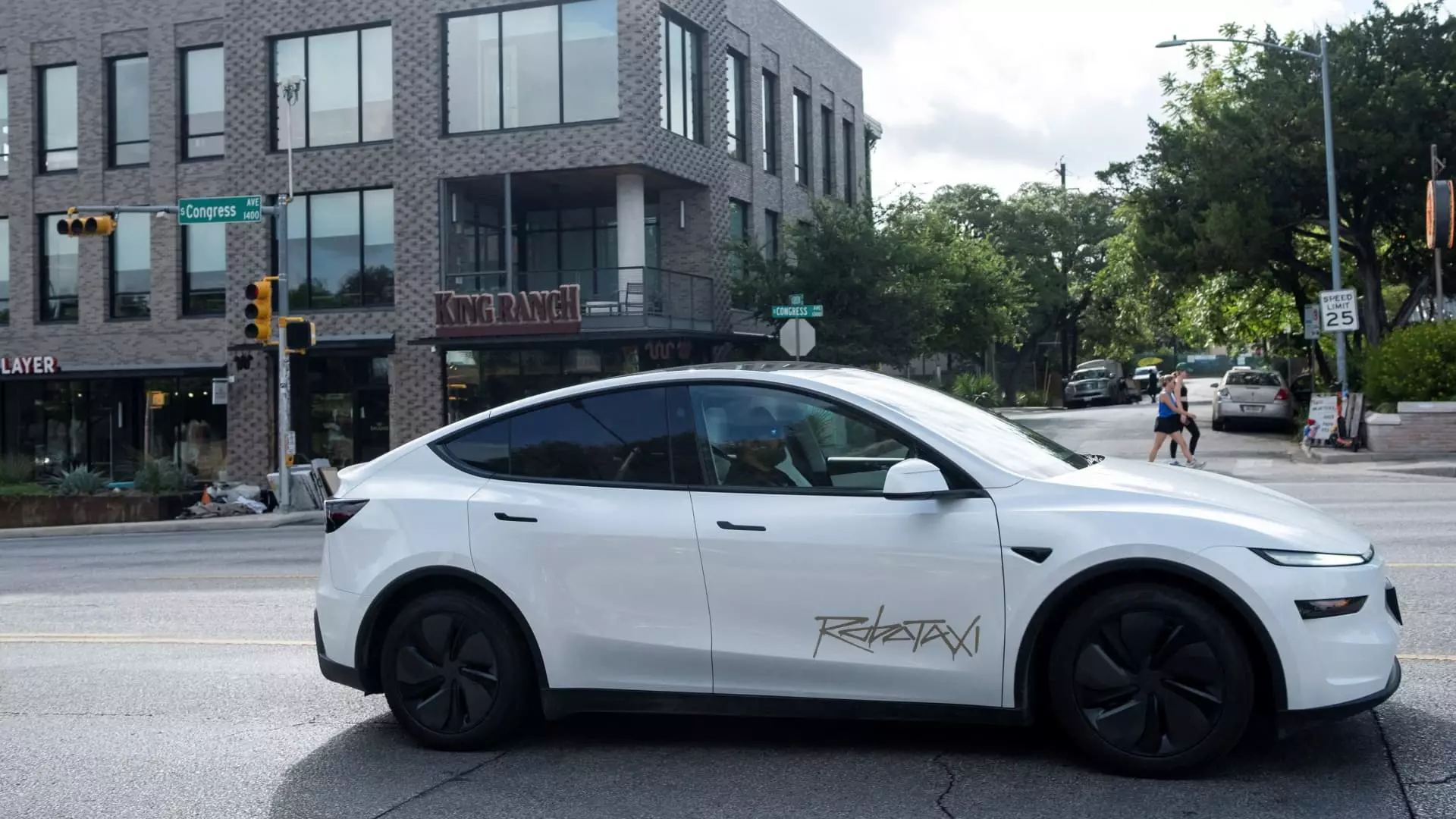
Tesla has always positioned itself at the forefront of innovation in the automotive industry, and the latest venture into robotaxis is no exception. The recent launch of autonomous taxi services in Austin represents both an exciting leap forward and a complex challenge fraught with risk. Elon Musk’s vision for driverless vehicles has captivated the imagination of many but also raises significant concerns about safety and reliability as evidenced by troubling incidents reported soon after the pilot’s initiation.
The Unsteady Launch
After opening the robotaxi program to a limited group of invited riders, Tesla swiftly faced scrutiny when videos surfaced depicting the vehicles behaving erratically on public roads. Observations of a Tesla Model Y navigating against traffic and executing sudden, unpredictable stops in response to stationary police vehicles paint a different picture from the confident projections Musk has made over the years. Rather than being a seamless showcase of technology, these episodes spotlight fundamental flaws and prompt essential questions regarding the readiness of such systems for public use.
The involvement of the National Highway Traffic Safety Administration (NHTSA) adds another layer of complexity. While the agency has stated it doesn’t pre-approve vehicle technologies, its engagement signifies palpable concern over Tesla’s autonomous ambitions. When regulators step in, it’s rarely a good sign for the manufacturer’s credibility, hinting at the possibility of deeper safety defects.
Regulatory Response and Public Trust
NHTSA’s mission is to ensure public safety on the roads, and the agency has previously probed Tesla’s Full Self-Driving (FSD) Beta systems in light of various accidents, both severe and fatal. The agency’s new inquiry into the robotaxi incidents feels like a cautious reminder that even cutting-edge technologies must pass rigorous safety thresholds before being widely adopted. When consumer trust is paramount for any technology’s success, such scrutiny directly impacts the fledgling acceptance of autonomous vehicles by the general public.
This pilot, despite being labeled as “early access,” limits the service to a select audience, primarily those who already advocate for Tesla and its products. This raises ethical questions about inclusivity and the real-world applicability of results derived from a non-representative user group. Are we observing genuine technological progress or merely a carefully curated test run designed to reinforce Tesla’s narrative?
Comparative Performance in the Industry
It’s crucial to contextualize Tesla’s robotaxi endeavor within the broader autonomous driving landscape. Competitors like Alphabet’s Waymo have reached impressive milestones, completing over 10 million paid trips, which starkly contrasts with Tesla’s current predicament and seemingly stalled promises. Internationally, companies such as Baidu and Pony.ai are operating commercial robotaxi fleets, raising the bar even higher. This competition suggests that while Tesla may have paved the way for discussions on electric and autonomous driving, the implementation of these technologies remains a work in progress—one that other companies seem to be executing more effectively.
Musk’s repeated claims of achieving full autonomy by various target dates, none of which have materialized, add skepticism about Tesla’s capability to deliver on future promises. As observers, we must recognize that hype does not equate to reality, particularly in a sector where safety is critical.
Challenges Ahead for Tesla
Tesla’s vision for a future dominated by autonomous driving is inspirational; however, the path ahead is riddled with challenges. The issues witnessed in Austin may be symptomatic of broader technological constraints in the company’s self-driving capabilities. Without proper safeguards, the rush to implement such systems can lead to grave consequences, both for the brand and for public safety.
The dichotomy between Tesla’s reputation as an innovator and the practical implications of its technology is stark. While the operational excitement around electric vehicles and autonomous systems is considerable, it should be tempered by a careful consideration of safety and regulatory frameworks. If Tesla is to emerge as the trailblazer it aspires to be, it must navigate these turbulent waters with a blend of audacity and a commitment to safety, lest it jeopardize public confidence in a future reliant on such advanced technologies.
As such, stakeholders and potential users must remain vigilant. This robotaxi revolution, if managed effectively, could redefine transportation; however, it’s equally important to ensure that it does not inadvertently become a cautionary tale of innovation gone awry.
Leave a Reply