
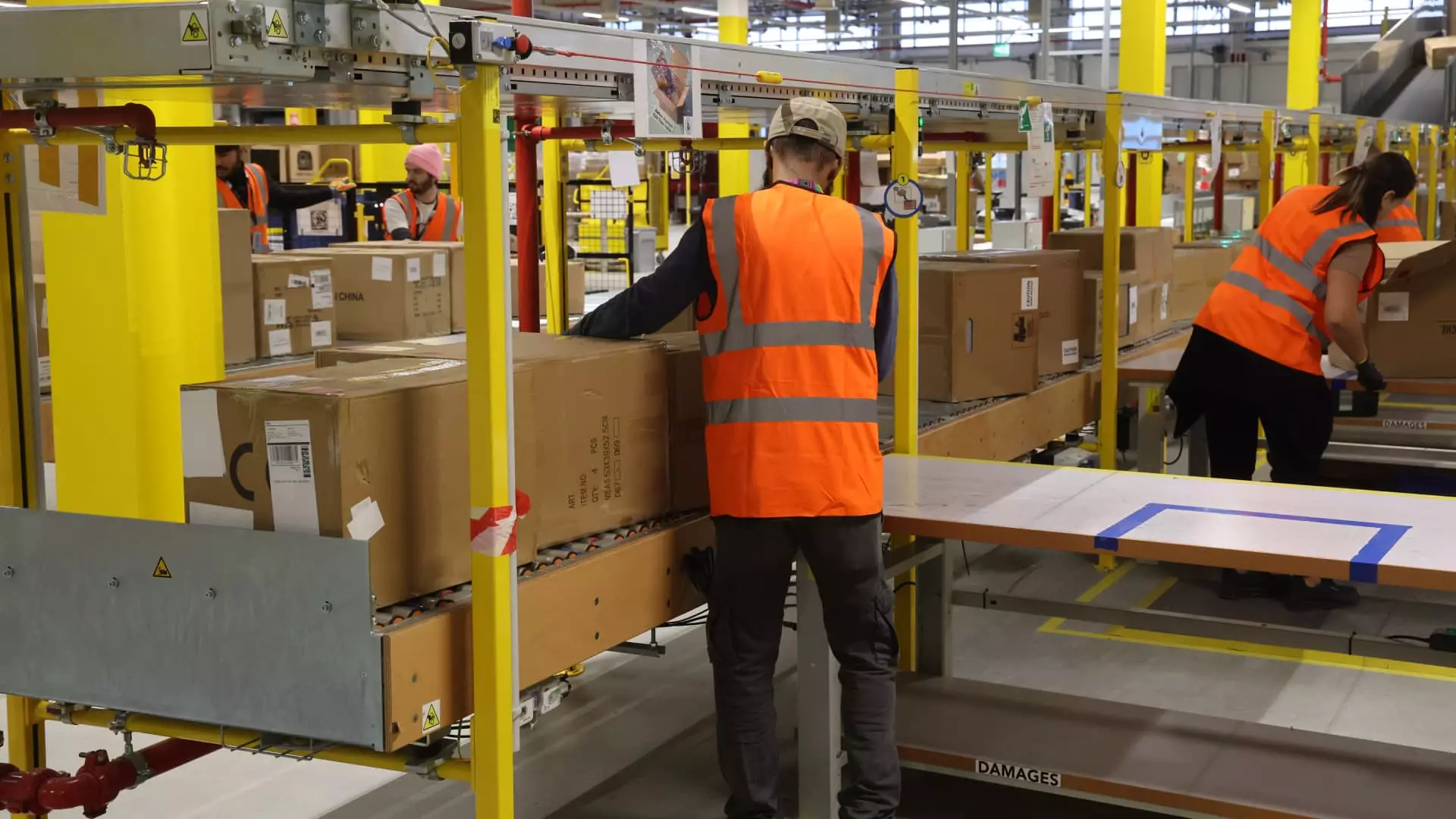
In an era where technological advancements seem to accelerate exponentially, Amazon’s recent milestone of deploying its millionth robot signals a profound shift in industrial automation. This milestone not only underscores Amazon’s dominance in robotic manufacturing but also highlights its ambitious push to intertwine artificial intelligence within its sprawling logistics infrastructure. The introduction of the “DeepFleet” AI model exemplifies a strategic move to optimize robot coordination, promising increased efficiency and cost savings. It’s a vivid demonstration of how AI is not merely augmenting operations but reimagining the very fabric of warehouse management. However, beneath this veneer of innovation lies a complex web of implications—both promising and unsettling—that merits deep scrutiny.
The Double-Edged Sword of Automation
While automation undeniably offers substantial productivity advantages, the narrative around job displacement has become increasingly prominent. Amazon’s emphasis on robots working “alongside” human employees creates an illusion of harmony, but the underlying truth is more nuanced. The deployment of over a million robots has coincided with measurable layoffs, revealing a stark reality: technology’s embrace often comes at a human cost. Amazon, claiming that robots free workers for more technical tasks, appears to be framing automation as an opportunity rather than a threat. Yet, the evidence suggests that “some of the jobs” lost to AI are likely to be highly skilled, well-paying roles—an erosion that could contribute to economic inequality and social instability in the long term.
The Paradox of Progress and Its Social Ramifications
The contradiction at the heart of Amazon’s AI strategy exemplifies the broader paradox facing the tech industry. On one hand, the adoption of generative AI and robotics promises unprecedented efficiencies, promising faster delivery times and lower operational costs. On the other hand, these very innovations threaten to destabilize traditional employment models, particularly in sectors like manufacturing and logistics that have historically offered stable jobs for the working class. High-profile figures like CEO Andy Jassy openly acknowledge the likelihood of workforce reductions, which fuels fears of widespread unemployment. This tension exposes a critical question: are we fostering a future where technology elevates society, or one where it systematically marginalizes its most vulnerable members?
The Ethical Dilemmas of Automation at Scale
Beyond economic concerns, there are profound ethical dimensions associated with AI’s expanding footprint. Companies investing heavily in automation must grapple with their social responsibilities. The deployment of humanoid robots, capable of mimicking human movement, pushes this issue to the forefront. Should companies prioritize efficiency over employment stability? Is it ethical to replace human workers with machines that can operate tirelessly, without regard for the economic fallout? The narrative often leans toward the imperatives of profitability and technological progress, but history teaches us that unchecked automation can erode social cohesion, foster resentment, and widen income disparities. The challenge lies not just in developing advanced AI, but in doing so responsibly—ensuring the benefits are broadly shared.
The Future of Work: A Reimagined Landscape
Predicting the future of employment in an AI-driven world is inherently uncertain. While Amazon’s strategy aims at augmenting human capabilities and creating new roles in engineering and maintenance, the pace and scale of implementation suggest a fundamental transformation. The reality is that many workers will face a necessity to acquire new skills or confront job displacement. This shift demands a proactive approach from policymakers, industries, and educational institutions to facilitate reskilling and social safety nets. The narrative should not be one of passive acceptance but of strategic, human-centered innovation—where technology serves as a tool for liberation rather than oppression.
While Amazon’s technological strides exemplify the incredible potential of AI to transform industries, they also serve as a stark reminder of the societal costs involved. Balancing efficiency with empathy, progress with fairness—that is the true challenge of this new era. Automation’s promise of a brighter, more efficient future must be tempered by a vigilant commitment to social justice and human dignity.
Leave a Reply