
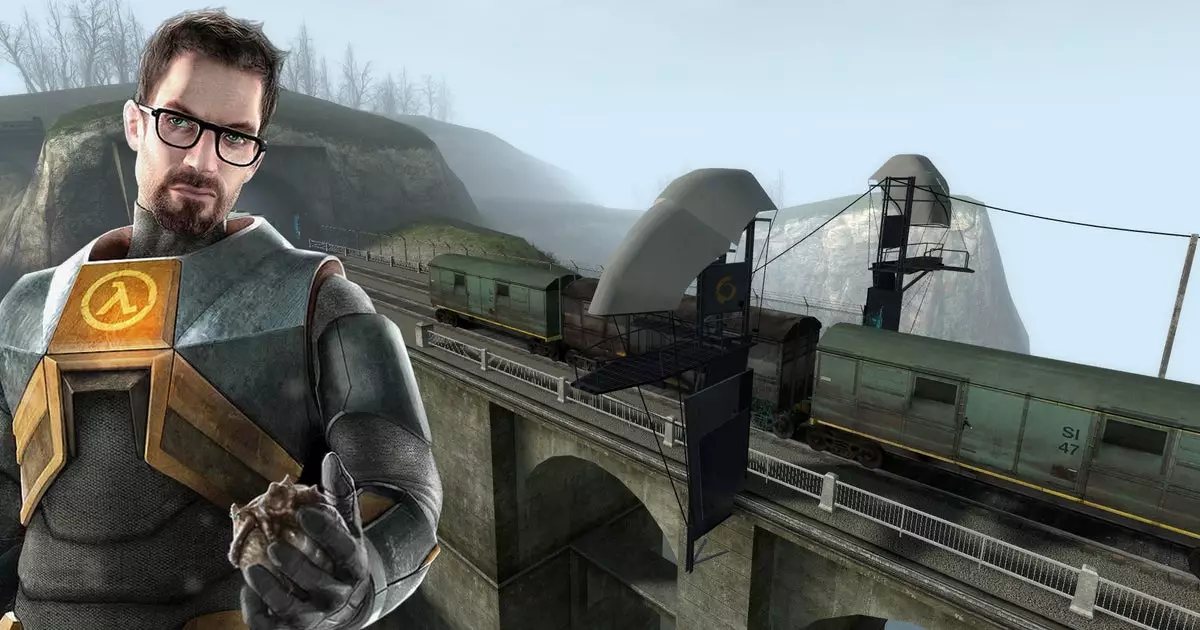
In an era where blockbuster titles often dominate headlines with their sweeping overhauls and groundbreaking features, it’s easy to overlook the significance of minute refinements. Valve’s recent update to *Half-Life 2* exemplifies how tiny adjustments—like tweaking a train’s speed—hold profound cultural and emotional weight. These seemingly insignificant patches echo a deeper truth: video games live and breathe through continual stewardship, even decades after their initial launch. Such updates serve not merely as technical fixes but as acts of preservation, ensuring that the game remains true to its original spirit while allowing players to reinterpret their experience anew.
Small modifications, especially in beloved classics, have the power to reframe our understanding of the game’s design and challenge. The train in Highway 17 represented more than just an obstacle; it was a symbol of the game’s meticulous balance between tension and consequence. When the physics were altered in later releases, players faced a different reality—one where outsmarting a train that had long seemed unbeatable became unexpectedly arduous. Now, with the recent tweak restoring its original speed, players are invited to reclaim their mastery over initial gameplay mechanics, rekindling a sense of nostalgia and triumph that had been dulled over the years.
Beyond Nostalgia: Reclaiming Agency in an Evolving Landscape
What does it say about the gaming experience that a minor speed adjustment can evoke such excitement? It underscores how tightly our connection to classic games is intertwined with the perceived fairness and integrity of their design. When game elements feel fixed and unchangeable, a subtle imbalance can create frustration or diminish the challenge’s authenticity. Restoring the train’s original pace isn’t just about convenience; it’s about reasserting the player’s agency—reminding us that, despite technological updates and evolving expectations, the core challenge was always meant to be surmountable.
Moreover, this act of fine-tuning reveals the ongoing dialogue between developers and their communities. The fact that Valve took the time to correct these minute details signals respect for the player’s experience, acknowledging that even after many years, the game’s nuances remain meaningful. It challenges the notion that fixed, “set-it-and-forget-it” classic titles become static museum pieces; instead, they evolve through small, deliberate adjustments, reaffirming their relevance in a modern context.
The Myth of the Perfect Game: Imperfection as Part of Its Charm
Interestingly, these updates also highlight the inherent imperfections in game design—flaws that often enhance the character and history of a title. While it might seem counterintuitive, minor bugs or oddities like inaccessible collision walls or awkward NPC behaviors contribute to a game’s narrative depth. They serve as signposts of the game’s age, its evolving technology, and the passionate community that persists around it.
Yet, by addressing these glitches, developers navigate a delicate balance. Fixing a long-standing issue like a missing collision wall can improve gameplay but may also risk stripping away some of that ineffable charm. The invisible wall, for instance, might have become a part of the player’s collective memory—a “quirk” that players became accustomed to because it was part of the experience’s idiosyncratic beauty. It raises questions about how much perfecting a game is beneficial versus erasing its historical texture. Each small fix is essentially a decision about what to preserve and what to correct, a reflection of ongoing debates about the nature of “authentic” gaming experiences.
The Dedication Behind the Digital Curtain
Amid discussions of game updates, it’s worth contemplating the unseen labor behind these tiny tweaks. Are there dedicated “custodians” at Valve—meticulous archivists and programmers—whose sole purpose is to preserve and refine these classics? Imagining an isolated figure, isolated in a dimly lit office, obsessively adjusting collision meshes or scrutinizing minute physics differences, lends a human dimension to these digital caretakers. Their work is often invisible, yet it sustains the cultural legacy of these games, ensuring they remain playable and relevant.
This ongoing micro-management underscores an essential truth: valuable games are never truly finished. They live on through continuous small improvements, driven by both community feedback and a developer’s own sense of responsibility. Such dedication challenges the misconception that vintage titles are relics; instead, they are dynamic artifacts, constantly refined by passionate individuals who view their work as part of a larger conversation with the players.
In essence, these tiny updates reflect a broader philosophy—games are collaborative, living entities rather than finite products. Valve’s approach exemplifies this, showing that respecting a game’s history means caring for its smallest details long after release. It’s a reminder that the joy of gaming isn’t just about new experiences but also about preserving and celebrating the old in ways that feel fresh and meaningful.
Leave a Reply