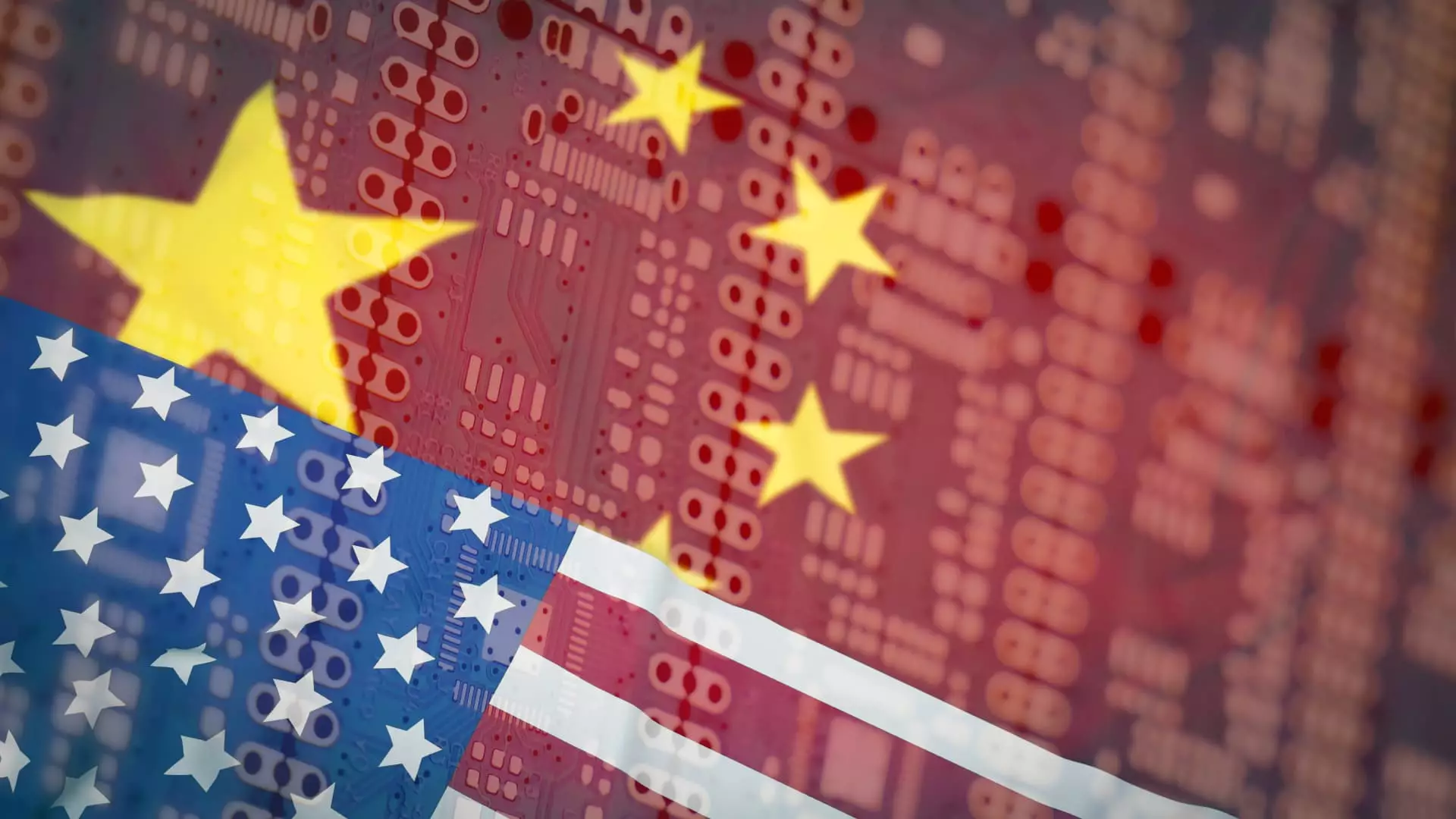
In an increasingly competitive landscape dominated by advancements in artificial intelligence (AI), Tencent and Baidu stand out as formidable players from China. These tech giants are not only committed to AI development but are also adeptly maneuvering around new restrictions imposed by the United States on semiconductor exports, particularly affecting crucial players like Nvidia and AMD. This article examines the strategies employed by Tencent and Baidu to adapt and thrive in the face of such hurdles.
While U.S. restrictions have raised concerns, Tencent and Baidu have demonstrated resilience by innovating and optimizing their resources. The ability to stockpile key components has emerged as a crucial strategy. As Martin Lau, president of Tencent, pointed out during a recent earnings call, the company started with a “pretty strong stockpile” of high-performance graphics processing units (GPUs). These chips are essential for the substantial computational demands of modern AI models. Lau’s assertion challenges the widespread belief among American firms that larger GPU clusters are mandatory for superior AI training, showcasing Tencent’s efficient resource management.
Pioneering Efficiency in AI Development
A key takeaway from Tencent’s approach is their emphasis on optimization rather than mere reliance on hardware scale. Through innovative software solutions, Tencent reports that it can conduct effective AI training and inference with a smaller inventory of GPUs. This shifts the paradigm from a hardware-centric mindset to one that prioritizes smart application of existing resources. Lau’s comment on software optimization reflects a broader trend within the industry—namely, that sophisticated algorithms can enhance performance and outcomes without necessitating a disproportionate increase in hardware investment.
Moreover, Tencent is exploring smaller AI models that require lesser computing power. This is a significant departure from the industry norm, which has often placed a premium on using the most powerful hardware available. By adapting their models to be efficient and manageable, Tencent indicates a clear understanding of contemporary challenges in AI development, positioning itself for sustainable growth even in a fluctuating market.
Embedding AI in Comprehensive Infrastructure
Similarly, Baidu’s approach highlights a holistic understanding of AI ecosystems. By championing its “full-stack'” capabilities—comprising cloud computing, diverse AI models, and user-facing applications—Baidu emphasizes the seamless integration of hardware and software. Dou Shen, president of Baidu’s AI cloud division, takes pride in the company’s ability to innovate despite limited access to the most advanced chips. This assertion underlines a fundamental shift: capability doesn’t solely rely on cutting-edge hardware but also on robust software and integrated services.
Baidu’s commitment to cost-effective operations is also noteworthy. By owning much of the technology within its AI stack, Baidu can optimize resource utilization. The focus on efficiency offers a blueprint that smaller firms and emerging enterprises can adopt—prioritizing innovation and operational excellence over mere expansion of hardware assets. This strategy of enhancing productivity without heavy initial capital expenditure will likely lead to more sustainable AI solutions.
The Rise of Domestic Semiconductor Innovations
While both companies display resilience through optimization and resource management, they also recognize the importance of advancing China’s domestic semiconductor industry. With a concerted effort to develop self-sufficient semiconductor technologies, Chinese firms are progressively narrowing the technology gap with their American counterparts. Gaurav Gupta from Gartner’s insights reinforce this narrative, noting that the Chinese semiconductor ecosystem has made considerable strides despite not yet matching U.S. capacities.
The emergence of homegrown capabilities is pivotal for long-term innovation in AI. Baidu’s acknowledgment of the rising capabilities of Chinese technology firms acts as a clarion call—local innovations in chip design and manufacturing promise to mitigate the impact of U.S. restrictions. As these advancements unfold, it’s plausible that Chinese companies will not only catch up but also find unique avenues to explore.
In a context where U.S. critics urge a reevaluation of export controls, the landscape is evolving rapidly. Nvidia CEO Jensen Huang’s stance that these restrictions may be counterproductive resonates with the ongoing discussion regarding globalization and innovation. Chinese firms are embracing this climate as an opportunity for redefinition, demonstrating that in adversity lies the potential for remarkable growth through innovation and adaptation.
As both Tencent and Baidu navigate through the complexities of the AI semiconductor market, their proactive strategies and commitment to efficient practices herald a new era in which resilience and innovation are paramount. The race for AI superiority is not merely dictated by hardware availability but also by how well companies can leverage their existing resources and respond to external challenges.
Leave a Reply