
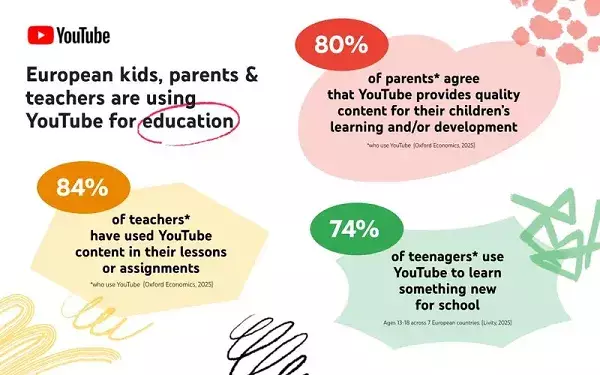
In an era dominated by rapid technological advances, the traditional boundaries of education are blurred. Platforms like YouTube have evolved from mere entertainment hubs into valuable educational ecosystems, especially for younger audiences. The latest findings reveal a compelling truth: a majority of teenagers are turning to YouTube not just to unwind but to actively learn. This shift underscores the necessity for such platforms to recognize their transformative potential in shaping informed, curious minds. They are becoming supplementary classrooms, where curiosity is fuelled through visual content that resonates with digital-native learners.
However, this evolution raises questions about how platforms should formally position themselves within educational discourse. If YouTube continues to innovate and promote high-quality, educational content, it could redefine societal expectations of digital media’s role in learning. Instead of being viewed merely as an entertainment conduit, YouTube might be repositioned as an accessible, interactive teacher — one that complements formal education through engaging, credible content tailored to diverse learning styles.
The Regulatory Dilemma and the Fight for Educational Value
Encroaching government regulations, particularly those aimed at restricting teen access to social media, threaten to stifle YouTube’s educational contributions. Countries across Europe and beyond are contemplating stringent age restrictions, often citing concerns over mental health, screen time, and online safety. Australia’s decision to tighten platform access below age 16 reflects a broader global trend to control adolescent exposure to social media.
Yet, YouTube’s staunch argument hinges on its educational utility. The platform cites studies like Oxford Economics’ report, emphasizing that teachers incorporate YouTube content into lessons and that many parents regard it as a trustworthy learning resource. If such content is significant in academic settings and positively impacts youth development, then restricting access essentially hampers an essential educational resource.
This presents a paradox: the very tools that can support youth learning are facing regulatory hurdles. The challenge lies in convincing policymakers that YouTube’s educational benefits outweigh perceived risks. The platform’s strategy to showcase real-world use cases, featuring stories of how educators and students leverage its resources, could be pivotal in this battle. However, public perception, safety concerns, and the shifting priorities of regulatory bodies make it a complex fight, one that requires nuanced advocacy and evidence-based reassurance.
Can YouTube Lead a Paradigm Shift in Digital Education?
The future of YouTube, and similar platforms, perhaps depends less on fighting restrictive laws and more on redefining its identity as an educational ally. The platform must capitalize on its unique blend of visual storytelling, accessibility, and content diversity to position itself as a complement rather than a competitor to formal schooling.
By investing in verified and exclusive educational content, partnering with educators and institutions, and advocating for digital literacy, YouTube can build a reputation as an essential part of youth education. Such efforts might not only influence policy decisions but also reshape societal perceptions, emphasizing that platforms like YouTube serve a dual role: entertaining and empowering young minds.
Furthermore, the platform could develop dedicated features, like educational playlists, certification, or teacher-student engagement modules, to formalize its role in learning. If YouTube successfully aligns itself with educational outcomes, it might mitigate the threat of bans or restrictions, ensuring access for the very demographic that benefits most from its resources.
The Uncertain Path Forward: An Opportunity for Innovation
The ongoing debate over social media regulation presents a critical juncture for YouTube: to innovate not just technically but socially and politically. Recognizing its educational potential isn’t enough; the platform must actively demonstrate that it can be a safe, credible, and positive learning environment.
This entails rigorous content moderation, partnerships with educational authorities, and clear privacy standards for young users. If YouTube can integrate these elements into its growth strategy, it could turn regulatory challenges into opportunities, showcasing leadership in digital education.
Ultimately, the platform stands at a crossroads. Its future depends on whether it can shift the narrative from “social media for entertainment” to “digital platform for empowering youth.” The stakes are high, but with strategic resilience and a focus on genuine educational impact, YouTube has the potential to redefine its role in the digital age—one that champions informed, engaged, and curious learners rather than simply chasing views and engagement metrics.
Leave a Reply