
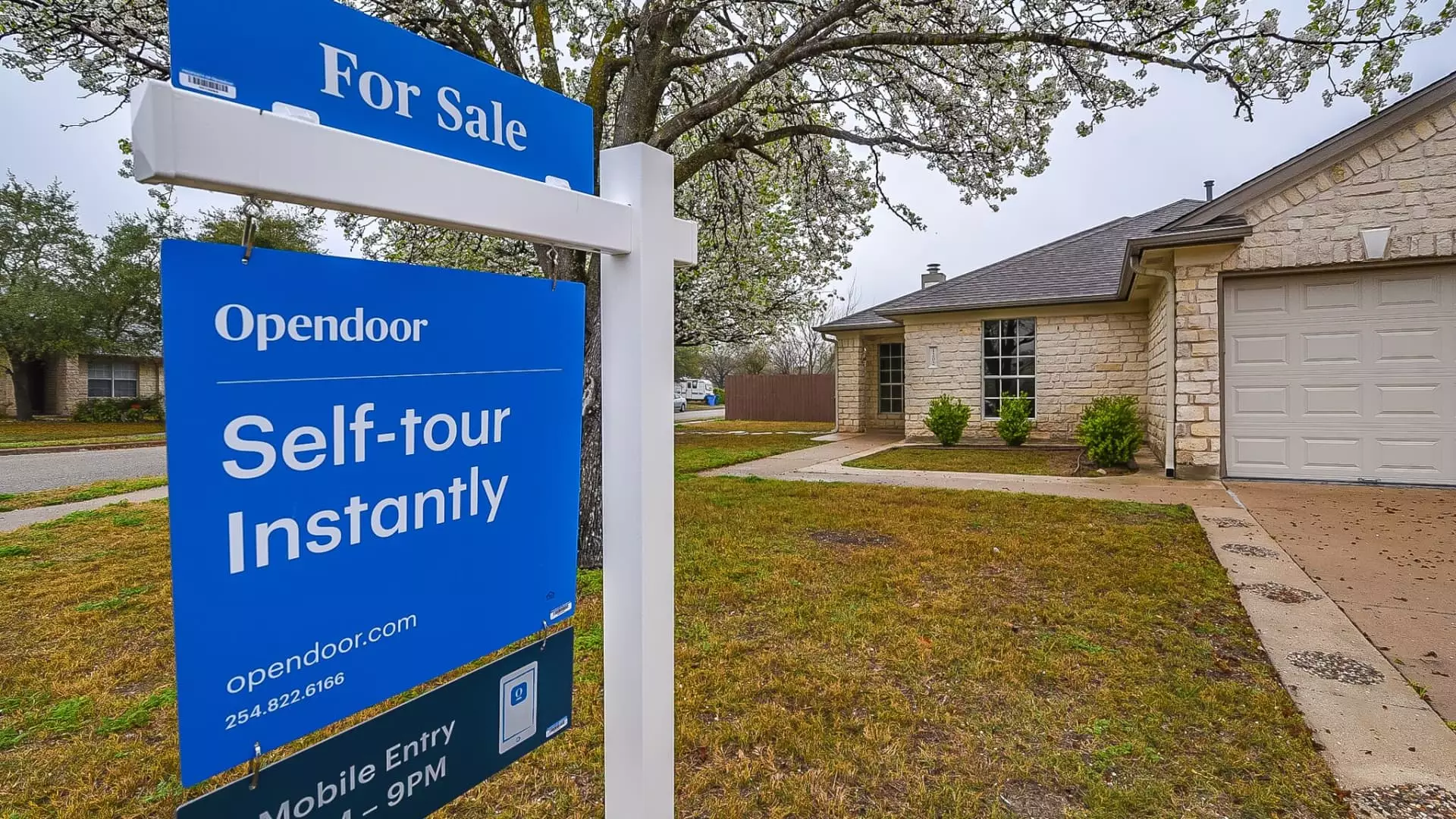
Opendoor has experienced a tumultuous journey, oscillating between extreme lows and astonishing rallies that defy conventional investor expectations. Once languishing at a mere 51 cents per share in mid-2023, the company’s stock has since skyrocketed nearly fivefold, a move that signals both investor fervor and the volatile spirit of the housing tech sector. This dramatic swing underscores an industry in flux—where optimism often outpaces fundamentals, and hopes for a turnaround are fueled by strategic shifts and high-profile endorsements.
What makes Opendoor’s recent ascent notable isn’t solely the share price increase—it’s the underlying narrative of resilience amid adversity. The company’s laser focus on utilizing technology to streamline property transactions has garnered attention, even if market realities and macroeconomic headwinds continue to cast shadows. As market sentiment shifts rapidly, it becomes apparent that Opendoor’s story is less about value and more about perception—how innovation and strategic pivots can revive investor interest in a battered sector.
Market Dynamics and Strategic Shifts
The catalyst behind Opendoor’s recent rise appears to be a confluence of speculative enthusiasm and strategic recalibration. Hedge fund manager Eric Jackson’s bullish stance played a significant role, with his forecast of an $82 target illustrating a belief that the company can regain momentum through revenue growth and market penetration. While such predictions border on optimism, they signal a fundamental belief that Opendoor’s business model has potential—if carefully managed.
But does the core business warrant such hype? The reality is stark: declining revenue, shrinking home acquisitions, and a housing market battered by rising interest rates paint a challenging picture. The company’s revenue fell precipitously from $15.6 billion in 2022 to $5.2 billion last year, illustrating the heavy toll of macroeconomic headwinds. Furthermore, the tightening credit environment and increasing mortgage rates led to a slowdown in home sales, stifling the very engine that powered Opendoor’s growth.
Yet, rather than despair, management is leaning into strategic evolution. CEO Carrie Wheeler’s emphasis on transitioning from an intensive iBuying model to a referral-based, less capital-dependent approach signifies a recognition that profitability hinges on adaptation. This “most important strategic shift in our history” aims to reduce operational risk while positioning the company for sustainable growth, even in a subdued housing market.
Financial Pitfalls and Persistent Challenges
Despite some promising signs—such as a narrower net loss of $29 million—Opendoor remains far from a stable proposition. The projected third-quarter revenue outlook of $800 to $875 million, representing a significant decline from previous periods, highlights ongoing struggles. The company’s reduced home acquisitions—down from 3,504 in the same quarter last year to an expected 1,200 in the upcoming quarter—reflect a cautious stance amid deteriorating market conditions.
This bearish outlook is compounded by a deliberate cutback in marketing and customer acquisition spending. Such cost-saving measures, while strategic, also serve as an acknowledgment that demand remains fragile. The persistent high mortgage rates and record numbers of new listings are evidence that the housing market remains under pressure, discouraging rapid recovery.
What remains to be seen is whether Opendoor’s strategic pivot can capitalize on this transitional phase. If the company can establish a steady revenue stream through referrals, reduce its capital expenditure, and insulate itself from macroeconomic turbulence, it could indeed carve out a unique niche. But for now, the path forward is riddled with uncertainty, and investor optimism appears to be riding on hope rather than concrete evidence of turnaround.
Leadership’s Call for Patience and Realignment
Carrie Wheeler’s candid acknowledgment of investor enthusiasm coupled with her emphasis on listening signifies a leadership keenly aware of the volatile environment. Her comments on increased visibility and a broader storytelling approach suggest an intent to build confidence through transparency—an essential step in a time of skepticism.
However, a skeptical view must recognize that optimism alone cannot sustain the company. The housing market’s inherent cyclical nature, coupled with widespread macroeconomic headwinds, makes the transition from a heavily tech-driven iBuyer to a referral-centric model a delicate balancing act. Success in this strategic transformation hinges on executing operational excellence, managing investor expectations, and navigating a challenging economic landscape.
In the end, Opendoor’s story exemplifies the complex interplay between innovation, market realities, and investor sentiment. The company’s current trajectory—marked by sharp rallies and cautious recalibrations—serves as a lesson that resilience requires more than fleeting optimism; it demands sustained strategic discipline, clarity of vision, and a bit of fortune to weather the inevitable storms ahead.
Leave a Reply