
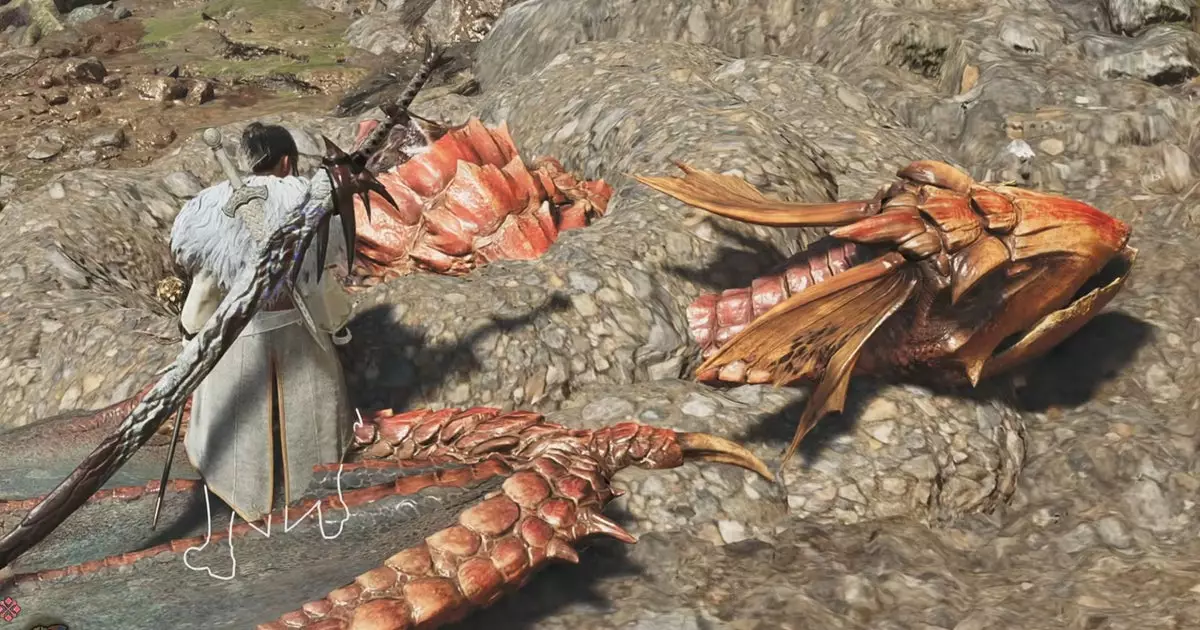
The gaming world witnessed a turbulent spectacle this past weekend with the launch of Capcom’s latest entry in the Monster Hunter franchise, “Monster Hunter Wilds.” The game boasted a staggering milestone, attracting over a million concurrent players on Steam, a feat that showcases the franchise’s enduring appeal. However, the enthusiasm was tempered by a wave of mixed reviews largely stemming from the game’s technical shortcomings. While the act of slaying fearsome beasts is at the heart of this series, players found themselves battling an entirely different monster—one composed of bugs and performance woes.
As is often the case with ambitious releases, the initial reception of “Monster Hunter Wilds” has prompted Capcom to spring into action, beginning the patching process aimed at rectifying player-reported issues. Patching, in this context, resembles an intricate act of surgery where developers aspire to repair the damaged structures rather than obliterating them, all in an effort to ensure a smoother gameplay experience. Capcom’s inaugural hotfix—available now—addresses a glitch in the Smithy system where weapon upgrading tutorials were incessantly presented to players, effectively clogging the options menu.
Additionally, another critical update aims to deal with a glitch affecting the “Grill a Meal” and “Ingredient Center” features, which naggingly fail to unlock despite meeting the required criteria. Such issues serve as a reminder that even the most anticipated games can falter in execution, raising the question of whether developers should allocate more resources towards testing before launch.
Players can look forward to another hotfix scheduled to roll out shortly, specifically targeting issues affecting pivotal missions, including “A World Turned Upside Down,” where a non-existent NPC blocked progression. Set to launch on March 4th, the update not only aims to rectify this bug but also addresses ongoing troubles with the Ingredient Center, signaling that Capcom is listening to its community.
However, the game’s broader issues extend beyond mere bugs. As players navigate through the rich, albeit sometimes frustrating world of “Monster Hunter Wilds,” feedback has emerged regarding mission descriptions, particularly for the quest “Omens.” Players reaching the Hunter Rank cap were initially left in disarray, only to discover that they could still complete the quest through optional missions. Here, Capcom’s oversight in mission clarity has drawn user ire, illustrating that detailed communication with the player base is imperative.
Arguably the most pressing concern shared by players has been the game’s performance, which many have described as taxing to the extreme. Reviews criticizing the graphical demands of “Monster Hunter Wilds” reference it as a “graphics card torture device.” Issues such as fluctuating frame rates have created an inconsistent gaming experience, where moments of smoothness in enclosed areas dissolve into significant performance drops in expansive environments.
The narrative surrounding “Monster Hunter Wilds” draws emphasis to Capcom’s initial technical support strategies, which leave much to be desired. Simple troubleshooting suggestions, like updating graphics drivers or running the game in administrator mode, feel more like placeholder advice than genuine solutions. This lackluster approach raises questions regarding Capcom’s commitment to ensuring their titles are optimized prior to release, urging them to rethink their strategies moving forward.
While “Monster Hunter Wilds” has undeniably captured a vast audience, the mixed reactions highlight a broader caution for developers: the need to prioritize quality alongside ambition. In an era where players are more discerning than ever, the importance of robust testing cannot be overstated. As Capcom embarks on the arduous journey of patching their latest endeavor, one can only hope that improvements will lead to a refined experience that lives up to the legacy of the Monster Hunter franchise.
While the exhilarating thrill of monster hunting remains intact, the path to success for “Monster Hunter Wilds” will inevitably depend on Capcom’s willingness to adapt, listen, and repair the product they have unleashed into the gaming universe. With an attentive eye on player feedback and swift action to address concerns, there lies the potential to transform a rocky launch into a triumphant continuation of an iconic series.
Leave a Reply