
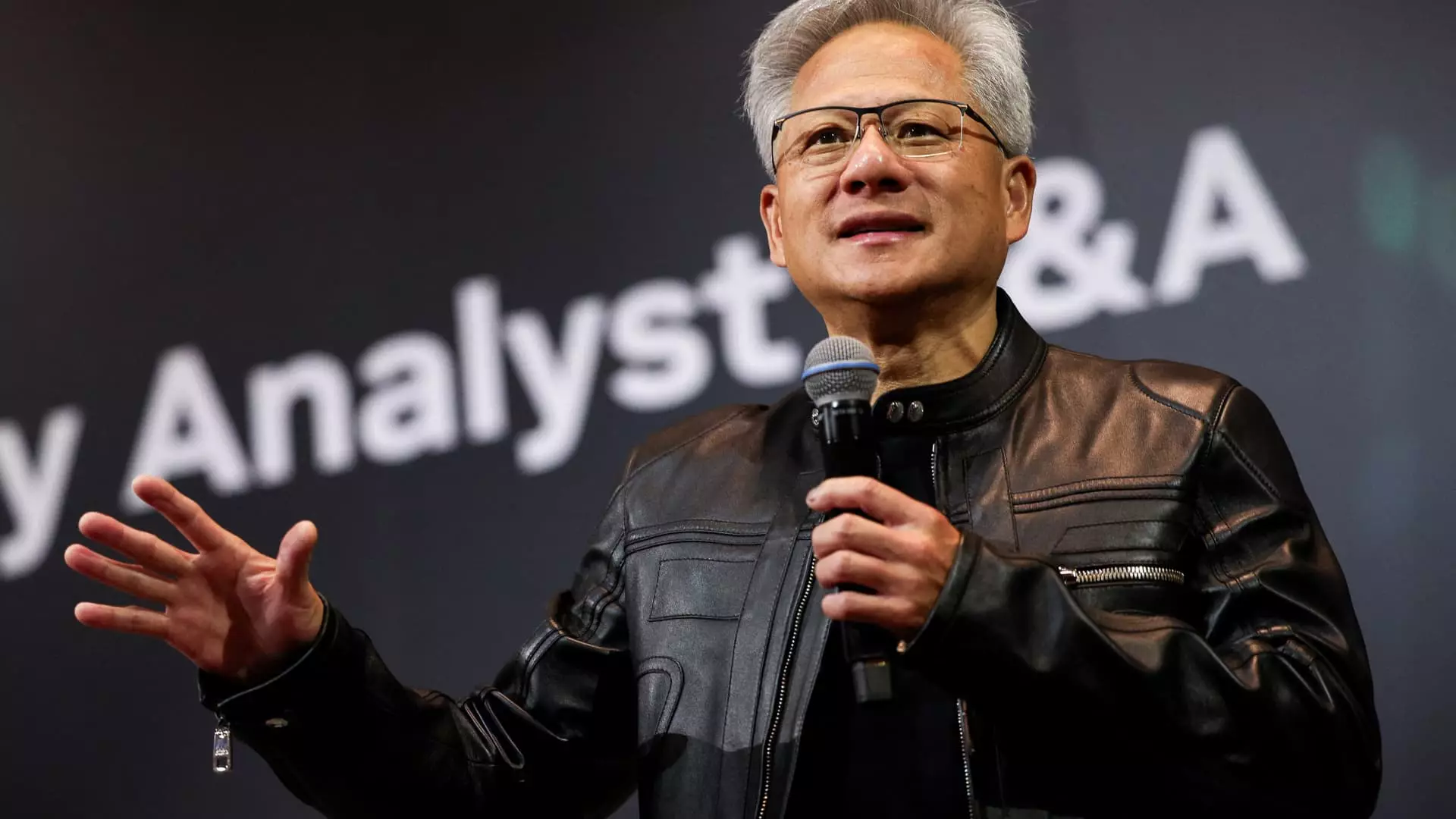
Nvidia’s CEO Jensen Huang recently made headlines by publicly praising Taiwan Semiconductor Manufacturing Company (TSMC), describing it as “one of the greatest companies in the history of humanity.” Such a statement from a leading industry figure not only underscores TSMC’s pivotal role in global semiconductor manufacturing but also reflects Huang’s strategic acknowledgment of TSMC’s unparalleled prowess. It’s rare for industry leaders to openly commend competitors at such a high level, which signals a recognition of TSMC’s critical position in the supply chain and technological innovation landscape. Huang’s words serve as a powerful affirmation: TSMC’s technological leadership is irreplaceable and is viewed as a fundamental pillar for the future of AI and advanced computing.
This praise arrives at a time when geopolitical tensions are rapidly reshaping the semiconductor ecosystem. The U.S., seeking to strengthen its domestic chip industry and reduce reliance on East Asian manufacturing, has adopted policies like the CHIPS Act, which promises billions of dollars to bolster American chip fabrication. However, Huang’s endorsement subtly hints that TSMC’s global leadership and technological excellence dwarf the influence of any political or economic barriers. For industry insiders, this is a recognition that TSMC’s innovations and manufacturing capacity are beyond mere nationalistic consideration—they are vital to the future of global technology.
The Strategic Significance of TSMC’s U.S. Expansion and the Potential Power Play
Huawei’s previous dominance in the global chip landscape and the shifting tides of U.S.-China relations have underscored the fragility of semiconductor supply chains. TSMC’s commitment to expanding its U.S. facilities, with a planned investment of $6.6 billion in Arizona, exemplifies a strategic move to diversify manufacturing bases and solidify its influence within the U.S. market. Notably, the company’s active role in building cutting-edge fabrication plants signifies an uphill battle against geopolitical headwinds, demonstrating resilience and forward-thinking.
Huang’s comments on TSMC making six new products for Nvidia, including CPUs and GPUs tailored for AI applications, highlight the symbiotic relationship between the chip giant and Nvidia’s innovation pipeline. This partnership underscores TSMC’s position as an enabler of technological progress, meaning its influence extends beyond financial metrics to shaping the very architecture of future AI systems. The acknowledgment that TSMC is central to Nvidia’s next-generation platforms emphasizes the hidden power dynamics in the semiconductor industry: control over fabrication technology translates into strategic dominance in a highly competitive geopolitical arena.
Moreover, the discourse around the U.S. government’s contemplated equity stakes in firms like TSMC and Intel reveals an underlying tension. While official reports suggest trepidation about government intervention, Huang’s praise may serve as a subtle message: TSMC’s leadership is a global asset and should not be confined by national borders or political manipulations. The intertwining of corporate recognition and geopolitical maneuvering paints a complex picture—one where TSMC’s technological supremacy offers leverage that may influence future policy decisions.
Taiwan’s Central Role Amid Geopolitical Uncertainty
Huang’s remarks about Nvidia’s new Taiwan office, “NVIDIA Constellation,” reflect the company’s deepening roots on the island. This expansion signifies more than just capacity growth; it demonstrates Nvidia’s strategic reliance on Taiwan’s thriving semiconductor ecosystem. Huang’s mention of ongoing negotiations with local authorities to start construction highlights how fundamental Taiwan has become to Nvidia’s operational blueprint.
Taiwan’s semiconductor industry, led by TSMC, provides a unique blend of innovation, manufacturing excellence, and geopolitical vulnerability. While the island remains a critical node in global supply chains, it also exists at the fault line of major international tensions, especially between China and the United States. Huang’s positive tone about Taiwan’s local ecosystem, despite the geopolitical challenges, underscores a stubborn belief in Taiwan’s unmatched technical talent and infrastructure. This conviction raises the question: does Nvidia’s and TSMC’s dependence on Taiwan’s tech hub inadvertently give Taiwan a strategic geopolitical leverage? The answer is complex—yet undeniable.
Simultaneously, reports about Nvidia’s H20 chips and China’s security concerns highlight how geopolitical disagreements influence supply chains. The pause on production related to these chips in China reflects the broader risks industry giants face due to international politics. Huang’s hopes for a resolution mirror the industry’s urgent need to navigate an increasingly turbulent geopolitical landscape while maintaining technological innovation and supply chain stability.
Huang’s praise of TSMC isn’t merely a corporate compliment; it’s a declaration of the company’s strategic importance in the global tech ecosystem. In a period marked by geopolitical tension and economic realignment, TSMC stands as a towering colossus—resilient, innovative, and central to the future of AI and computing technologies. Nvidia’s own expansion plans and strategic partnerships underscore a broader narrative: the future of technological dominance hinges on the strength and stability of supply chains rooted in Taiwan’s semiconductor industry.
Insiders can interpret Huang’s statements as an implicit assertion—despite political pressures and international uncertainties, technological and business leadership will be determined by those who possess the most advanced, reliable, and innovative manufacturing capabilities. In this game of power and innovation, TSMC’s role is irreplaceable, and Huang’s unwavering praise serves as a bold statement of that reality. The future belongs to those who understand that semiconductor supremacy is not just about technology; it’s about strategic influence in a world increasingly driven by microchips, AI, and technological sovereignty.
Leave a Reply