
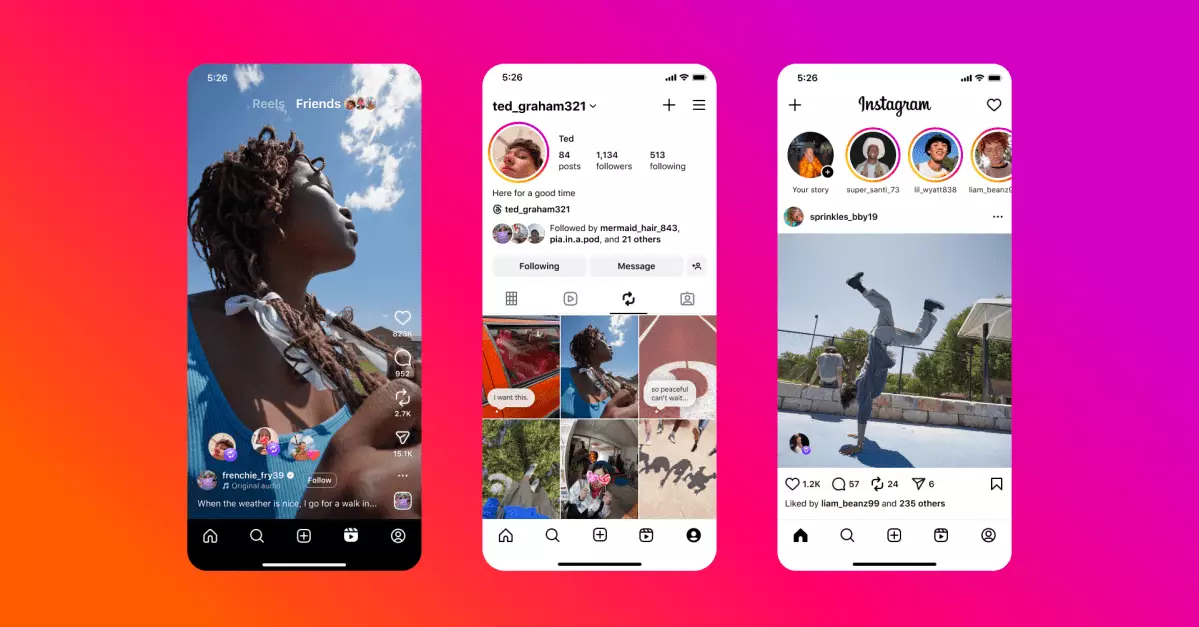
Instagram’s latest updates signal a deliberate pivot toward creating a more dynamic, interconnected ecosystem that mirrors the addictive qualities of platforms like TikTok and Snapchat. By introducing a reposting feature akin to TikTok’s, Instagram aims to facilitate easier content redistribution, deepening user engagement and fostering a more participatory environment. This shift isn’t just a superficial change; it reflects Instagram’s recognition that users crave more organic ways to share and discover content, rather than passively scrolling through curated feeds.
The addition of a dedicated repost tab on profiles, alongside its integration into feeds, transforms the platform from a static gallery of curated images into a vibrant canvas of community voices. Users can now re-share Reels and grid posts without the cumbersome process of screenshots or captions—significantly lowering barriers to content dissemination. This move signals Instagram’s awareness that creators and consumers alike want seamless interactions, empowering the community to amplify trending content effortlessly. However, while this democratizes sharing, it also raises questions about originality and content ownership. Will this lead to a dilution of individual identity, or stimulate a new form of collaborative creation?
Borrowing from the Best: Integration of Features from Snapchat and TikTok
Instagram’s design inspiration is clear: it’s borrowing elements from successful competitors, tailoring them to fit its unique audience. The redesign of the location map, inspired by Snapchat’s Snap Map, introduces an element of real-world social interaction that transforms passive checking-in into an active, visual experience. Now, private messages include a map displaying friends’ last active locations and content from events like music festivals, providing a richer context for online experiences.
This move indicates Instagram’s desire to merge digital and physical connections, blurring the lines between online sharing and real-world socialization. It’s an interesting twist because Snapchat pioneered location sharing as a means to foster immediacy and intimacy—traits that Instagram clearly sees value in harnessing. Still, such features also stir privacy concerns, especially as users grapple with how much sharing is too much. Nonetheless, the revival and reimagining of the map feature could rejuvenate user interaction, offering a new layer of engagement that many users crave amid the platform’s sprawling content landscape.
Privacy and Control: Addressing Long-Standing User Complaints
One of the most intriguing aspects of these updates is the newfound emphasis on giving users more privacy and control over their interactions. The addition of the enhanced activity tab, which shows who has engaged with your Reels, initially provoked concern over privacy and the potential for social pressure. The backlash was rooted in fears of surveillance and exposure—fears that still linger in the digital age.
Recognizing this, Instagram now offers more granular control options, including the ability to hide likes and reposts, or mute activity from specific users. These enhancements represent a meaningful acknowledgment of user fatigue with the platform’s increasing emphasis on visibility and engagement metrics. Instagram’s evolution suggests an understanding that genuine connection doesn’t necessarily hinge on transparency, but on respect for individual boundaries. This shift toward empowering users to curate their sharing and viewing experience could promote a healthier, less anxious engagement model.
Reimagining the Future of Social Media: From Personal Sharing to Community-Based Interactions
Despite these incremental improvements, Instagram is still caught between its roots and the demands of modern social media trends. Its traditional role—serving as a digital photo album for close friends and family—appears to be diminishing as algorithms prioritize viral videos and mass engagement. Reposts, the location map, and activity controls can be seen as attempts to knit a more interactive, community-oriented fabric into the platform’s design.
But the question remains: will these features rekindle the intimate, personal essence that originally made Instagram appealing? Or will they further accelerate its transformation into a feed of fleeting viral hits, with creators feeling alienated from their audiences? The platform’s core challenge is maintaining authenticity amidst this barrage of new features designed to boost engagement. While some users might find these tools exciting, many creators who thrived on genuine connection may feel that Instagram is drifting away from its original purpose.
In forging ahead with these innovations, Instagram is clearly betting on the idea that social media’s future lies in a seamless blend of sharing, discovery, and privacy. Whether that bet pays off depends on its ability to balance technological dynamism with user-centric control, ensuring that its evolution benefits both content creators and passive consumers alike.
Leave a Reply