
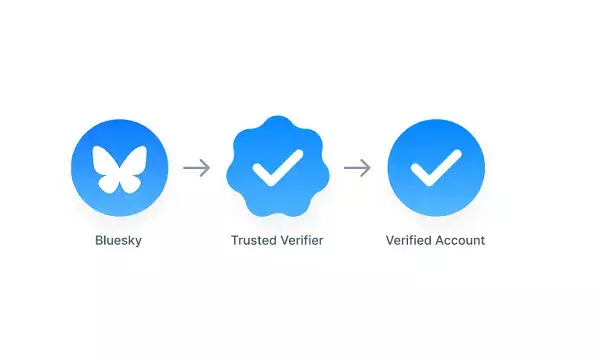
In the sprawling landscape of social media, trust can often feel like a scarce commodity. Bluesky is aiming to change that narrative with the rollout of its innovative in-app verification system. Last month, the platform introduced verification checkmarks, a tool that is designed to bolster authenticity and promote accountability among users. With this new feature, Bluesky is not only enhancing the visibility of trusted voices but also setting the stage for what could be a paradigm shift in how we perceive validation in digital spaces.
What’s intriguing about Bluesky’s approach is the distinction it makes between various types of checkmarks. While many social platforms have simply relied on a uniform checkmark system, Bluesky opts for a more nuanced method: a rounded marker for verified individual accounts and a traditional star-like checkmark for “trusted providers.” This dual system allows organizations like The New York Times to apply for provider status—thereby granting them the authority to verify their own journalists. This decentralized verification model could drastically change the traditional gatekeeping functions of social media platforms.
The Promise and Peril of Decentralized Verification
At first glance, this system appears to empower organizations and users alike. However, as with any innovative approach, it raises significant questions. There is a palpable tension surrounding the term “notable,” which Bluesky uses to determine who qualifies for verification. The criteria for this notability are subjective and could easily lead to discrepancies in who is deemed worthy of recognition. Factors such as “professional recognition” and “media coverage” can be interpreted differently, and what might be notable in one circle could be overlooked in another.
This is where the potential weaknesses of the verification system come into play. Will the checkmarks genuinely serve their purpose of distinguishing credible sources, or will they simply create a new hierarchy of influence based on whom an organization deems “notable”? Bluesky’s criteria also begs another question: who are the decision-makers behind these verifications? This ambiguity can lead to skepticism about the legitimacy of the verification process, thus undermining the very trust that Bluesky seeks to establish.
Connecting with Users: A Step Forward or a Misstep?
An additional layer to consider is Bluesky’s approach to user engagement. The app has stated that it will not engage in correspondence with those who apply for verification; users will only hear back if their application is successful. This hands-off methodology may streamline the verification process, but it also raises concerns about transparency. In a user-centric age where communication often fosters trust, a lack of responsiveness could alienate users who are left wondering about their application status or the rationale behind their rejection.
Furthermore, Bluesky has indicated that it may require additional identity verification in the future. While this promise hints at an additional layer of accountability, it also breeds anxiety. Frequent changes in verification requirements could create confusion and frustration among users, undermining their experience on the platform. They may find themselves caught in a system that increasingly feels out of reach.
Rethinking Notability: A Cultural Shift
The overarching goal of Bluesky’s verification system—to promote notable and authentic accounts—represents a cultural shift in how societies engage with authority figures online. Historically, online platforms have struggled with impersonation and misinformation, issues that can lead to real-world consequences. By focusing on verified identities, Bluesky is attempting to create a safer and more authentic environment.
However, the question remains: Can we effectively measure notability in a world filled with diverse perspectives and varied accomplishments? While Bluesky strives to mitigate impersonation risks, it must balance that with the need for inclusivity and authenticity. The strength of any social media verification system lies not just in objective standards but also in recognizing the nuances of individual contributions across different spheres.
Bluesky’s venture into verification is one full of promise, yet fraught with complexities that demand ongoing scrutiny and dialogue. Whether this platform can navigate these challenges while fostering trust remains to be seen—the implications of their decisions will reverberate through the digital landscape for years to come.
Leave a Reply