
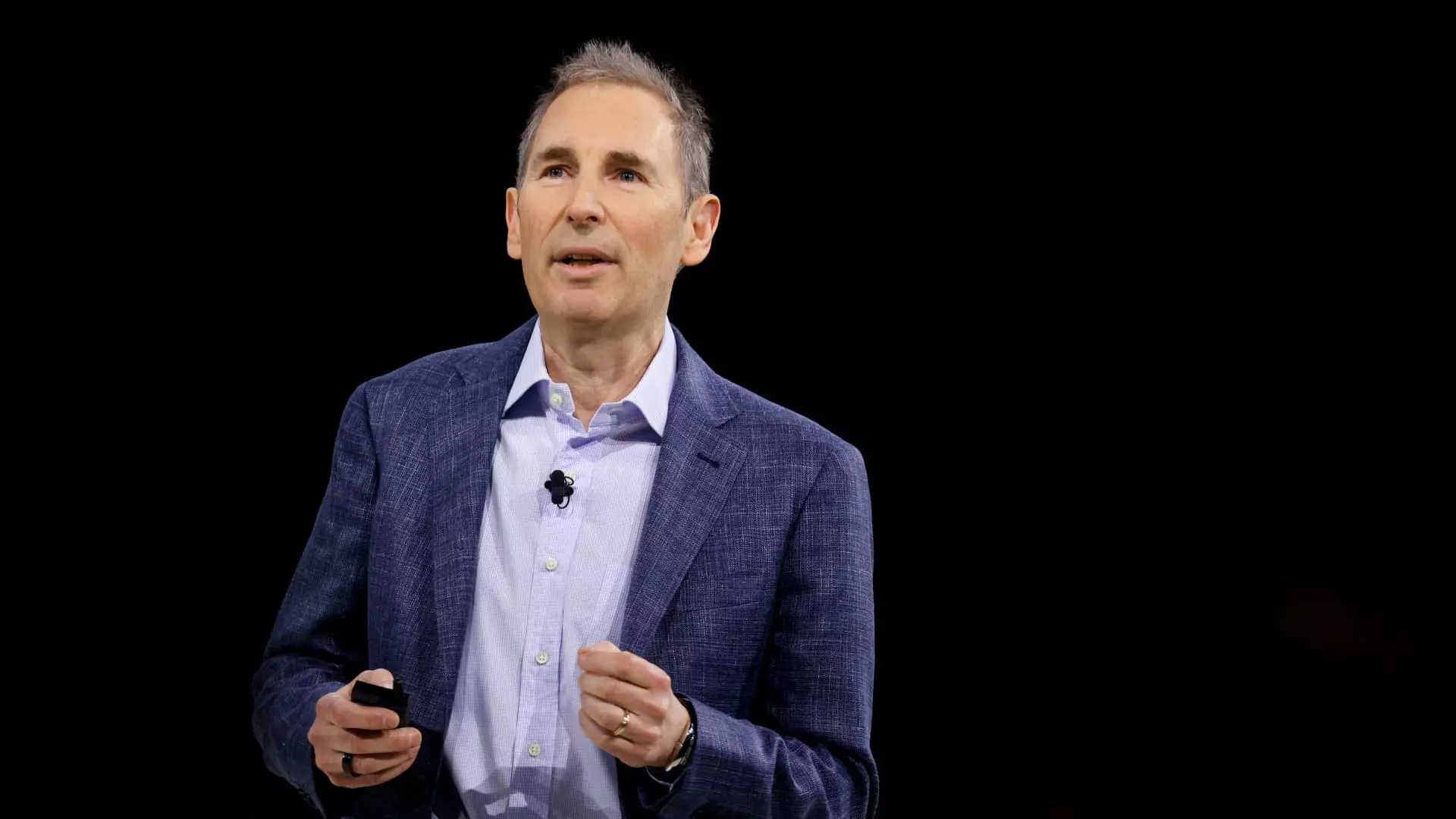
Amazon CEO Andy Jassy recently acknowledged a stark reality confronting many tech giants: generative artificial intelligence (AI) is poised to automate numerous jobs, potentially reducing headcounts. This acknowledgment signals a pivotal shift in how companies like Amazon view their workforce amid the accelerating adoption of AI technologies. Jassy didn’t mince words—he predicted that fewer employees will be needed to perform tasks once done manually, reflecting a broader tech sector trend. However, this is not simply a narrative of job cuts; it’s a transformative process reshaping what work means and how it’s executed.
The Nuanced Reality Behind Workforce Reductions
Jassy’s comments should prompt us to question commonly held assumptions about AI and employment. While AI will undeniably take over repetitive, rote tasks, eliminating certain job categories, it will simultaneously generate new types of roles focused on managing, developing, and innovating with AI technologies. Amazon’s approach suggests a clear strategy: prioritize efficiency with intelligent automation while expanding their teams in AI, robotics, and other cutting-edge domains. This duality—shrinking broad roles while growing niche, technical ones—is emblematic of an industry in flux rather than pure contraction.
AI’s Empowerment of Human Creativity and Innovation
Moreover, Jassy’s framing of AI freeing employees from mundane work challenges the dystopian fear that automation simply displaces humans. Instead, it highlights a more optimistic potential for AI to augment human creativity and accelerate innovation. If routine work diminishes, staffers can focus on developing superior products and services, nurturing innovation ecosystems within companies like Amazon. This is a vital perspective, as it underscores that AI doesn’t just replace labor but changes its quality, encouraging roles requiring higher cognitive skills and problem-solving capabilities.
Lessons from the Tech Industry’s Broader Movement
Amazon’s trajectory is far from isolated. Salesforce, Shopify, Microsoft, and Klarna have all embraced AI to varying degrees—some reporting significant productivity gains and workforce adjustments. Klarna’s roughly 40% headcount reduction illustrates how AI, combined with natural attrition and strategic restructuring, results in leaner yet technologically empowered organizations. Salesforce’s claim that AI performs 30% to 50% of their work showcases the accelerating dependency on AI-powered systems to handle bulk processes, reallocating human effort toward more strategic functions.
Share Prices and Market Perceptions: A Delicate Balance
Amazon’s flat stock performance so far in 2024, trailing behind Nasdaq and rivals such as Meta, Microsoft, and Nvidia, suggests that investors remain cautious about the immediate economic upside of these workforce adjustments. In many ways, this reflects inherent uncertainty about how swiftly AI-driven efficiency gains translate into accelerated growth. The market seems to favor companies that not only use AI effectively but capitalize swiftly on innovation to hit new records. This context adds pressure on Amazon to demonstrate that its workforce strategy and technology investments will pay off in robust long-term growth.
Rethinking Work in an AI-Driven Era
What ultimately emerges from Jassy’s remarks is a nuanced but critical insight: AI is poised to remodel not just the quantity of jobs but their very nature. This shift challenges companies and employees alike to adapt rapidly. While the fear of job losses is real and valid, the parallel emergence of new, more intellectually demanding roles invites a more hopeful view of the future workplace. AI’s promise lies not in simplistic automation but in empowering workers to transcend monotonous tasks, fostering a smarter, more dynamic working environment. Amazon’s journey offers a powerful case study into what’s at stake—and what could be gained—during this profound technological transformation.
Leave a Reply