
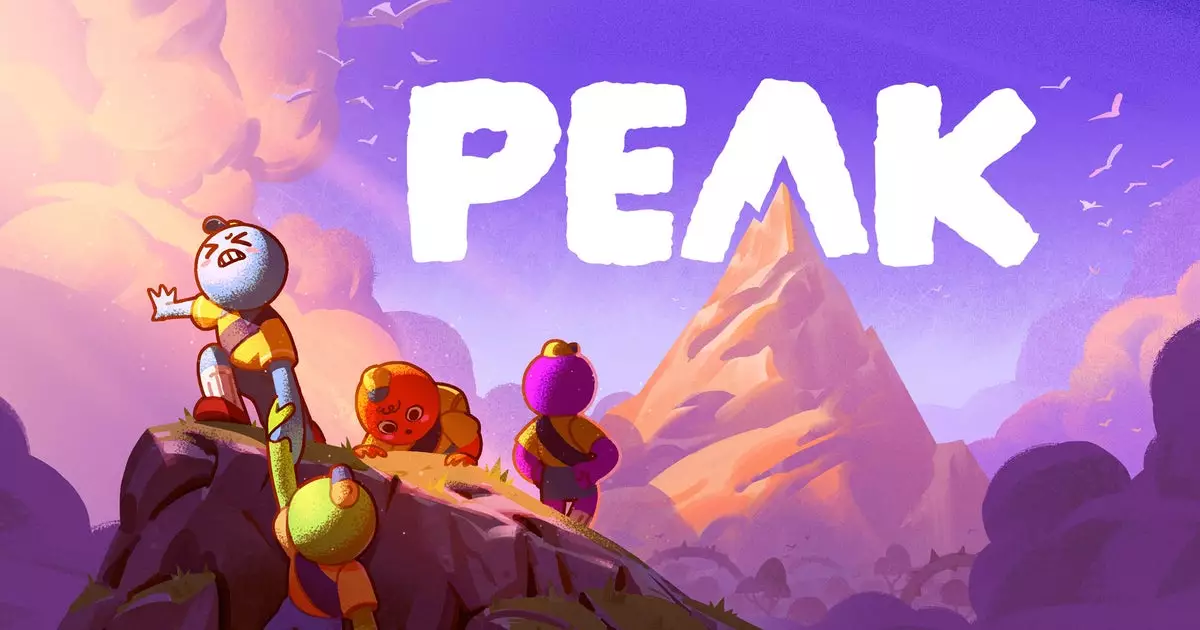
In the fast-paced world of video game design, the road to innovation often takes unexpected turns. The story of “Peak,” a cooperative climbing game, serves as a testament to how spontaneity, competition, and a thirst for novelty can converge into a compelling project. The game, born from the collaborative spirit of developers Aggro Crab and Landfall, showcases how the intersection of rivalry and inspiration can propel creativity to new heights. The creation of Peak is not merely a narrative of successful development; it is a reflection of the dynamic, unpredictable nature of the gaming industry.
Inspiration from Competition
One of the most striking aspects of Peak’s inception is the candid acknowledgment from Aggro Crab head Nick Kaman regarding the role of jealousy in the game’s development process. While it may sound tongue-in-cheek, there is an underlying truth that resonates with many creative professionals—competition can be a powerful catalyst. Kaman’s commentary emphasizes how the success of Landfall’s “Content Warning,” achieved in a mere month, spurred Aggro Crab to rethink their own lengthy development cycle associated with “Another Crab’s Treasure.” The juxtaposition of two vastly different timelines for game creation invites an intriguing discourse about the pressures of industry success and the realities of creative fatigue.
Kaman’s reflections suggest that the competitive spirit can sometimes foster groundbreaking concepts that might not emerge in a conventional setting. It challenges the notion that thoughtful, extended development always yields the best results—a perspective that, in the face of rapid innovation and shifting player expectations, may need to evolve.
The Game Jam Experience
Participating in a game jam in Korea provided a unique environment for experimentation and collaboration. The intensity of this setting—encompassing long hours alongside a relentless commitment to the project—proved instrumental in molding Peak. The team’s dedication included not only coding and designing but also bonding over shared meals and discussions, reinforcing the idea that camaraderie fuels creativity. The physical act of assembling their workspace from IKEA while immersed in the gaming zeitgeist is symbolic—a tangible representation of building something from the ground up, both literally and metaphorically.
Interestingly, the original concept for Peak was birthed in a hot tub in Sweden, highlighting the serendipitous moments often associated with creativity. This anecdote underscores how informal settings can spark revolutionary ideas, tearing down the barriers of conventional thinking often found in the structured environments of corporate game development.
From Concept to Execution
Once the team zeroed in on the concept of lost scouts navigating the quirky mishaps that accompany their mountain ascent, the game’s tone was set for a mix of adventure and dark humor. This theme invites players into a world that, while whimsical, grapples with the absurdities of failure. The decision to frame their escapades within a comic lens effectively positions the game for broad appeal—navigating challenges alongside friends adds an additional layer of social engagement that enhances the overall experience.
It is essential to note that while Peak has achieved commercial success, the underlying message from Kaman serves as a caveat. A singular success story, regardless of its allure, does not provide a roadmap for aspiring developers. Instead, it illustrates the importance of experience, adaptability, and embracing new forms of collaboration in an ever-evolving landscape.
Rethinking Success in Game Development
The phenomenon of Peak encourages a reexamination of what constitutes success in game development. The rapid development timeline is alluring, yet it raises questions about sustainability in the gaming industry. Can quality and innovation be maintained under time constraints, or does true creative expression require more time to gestate? As the industry grapples with these inquiries, Peak serves as a notable case study. One must consider whether its accomplishments are indicative of a new norm, or if they are simply a product of extraordinary circumstances and talented hands.
Ultimately, the journey of Peak emphasizes that the path to creativity is multifaceted and often unpredictable. The interplay of competition, collaborative experiences, and serendipitous moments can ignite the spark of innovation, paving the way for projects that captivate audiences in unexpected ways.
Leave a Reply