
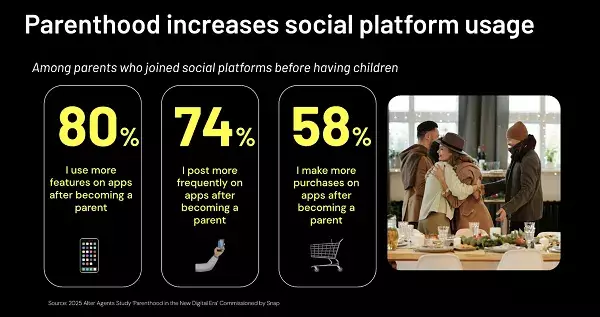
The decision to become a parent fundamentally reshapes an individual’s lifestyle, priorities, and social interactions. Traditionally, parenthood has often been associated with a decrease in personal leisure activities, including socialization outside the home. However, the advent of social media has introduced a nuanced layer to this dynamic. Contrary to popular belief that parenthood necessarily withdraws individuals from digital engagement, recent data suggests that becoming a parent often amplifies social media activity rather than diminishes it. This counterintuitive trend highlights social media’s evolving role as an essential tool for navigating the complexities of modern parenting.
When parents transition into their new role, their online behaviors undergo noticeable shifts. While physical outings may decline, the time spent at home — potentially occupied with calming restless children or managing daily routines — provides ample opportunity for digital engagement. Social media becomes a digital refuge: a space to share precious moments, seek advice, or connect with other parents facing similar challenges. Such activities not only serve emotional needs but also function as a practical resource, offering real-time solutions and community support. This transformation signifies that social media, rather than being a distraction, acts as a crucial support network in the parenting journey.
Moreover, since the current generation of parents has grown up immersed in digital environments, their familiarity with social platforms influences how they incorporate these tools into their parenting lives. They are not strangers to sharing photos of milestones, participating in niche parenting groups, or seeking recommendations for products and services. In this context, social media becomes intertwined with family life—an extension of their parental identity—fostering both emotional bonds and informed decision-making.
The Power of Connection and Consumer Influence in Parenting
One of the most compelling insights from recent studies is how social media use among parents intensifies around specific life events and seasons. Holidays, birthdays, and summer vacations are moments where parents tend to be particularly active online, sharing memorable experiences and engaging with their community. Interestingly, Black Friday emerges as a peak period for parental social media activity, revealing that shopping behaviors are deeply connected to digital interactions.
Social media’s influence extends far beyond casual sharing; it fundamentally alters the way parents approach purchasing decisions. The digital shopping journey has become collaborative, involving both parents and children navigating online marketplaces together. A striking majority of parents report shopping online with their children, often influenced by what their kids see and share on social platforms. Approximately 86% of parents acknowledge shopping with their children, and over two-thirds admit to making purchase decisions based on social media content their teens have encountered.
This dynamic transforms social media from a mere branding channel into an interactive marketplace where familial co-discovery occurs. Children’s exposure to products through social feeds shapes parental perceptions and preferences, resulting in a more informed and inclusive shopping experience. Whether it’s toys, clothing, or gadgets, parents are increasingly relying on peer recommendations and shared discoveries to guide their spending.
This phenomenon also opens new avenues for marketers: advertising strategies tailored to parents must consider these co-discovery moments. Timeframes such as after-school hours, weekends, and holiday shopping seasons are critical touchpoints for impactful engagement. Brands that understand and utilize these behavioral patterns can foster stronger connections with parents, appealing to their newfound role as both consumers and facilitators of shared experiences.
Implications for Future Marketing and Parenting Culture
As social media strategically intertwines with everyday parenting, its role as a catalyst for community, influence, and purchasing is more apparent than ever. The traditional boundaries of consumer demographics are dissolving, replaced by nuanced, relationship-driven engagement. Marketers who recognize this shift can craft campaigns that speak directly to parents’ collaborative and experiential mindset, resonating during key moments like holiday seasons or special family outings.
Ultimately, the digital landscape is redefining what it means to parent in the modern age. Social media offers a dual purpose: a space for connection and a tool for influence. It empowers parents to support each other through shared wisdom and firsthand experience, while simultaneously shaping consumer behavior in real time. As technology continues to advance, it’s clear that social media will remain a vital component of the parenting experience, driving both emotional bonds and economic transactions in ways previously unimaginable.
Leave a Reply