
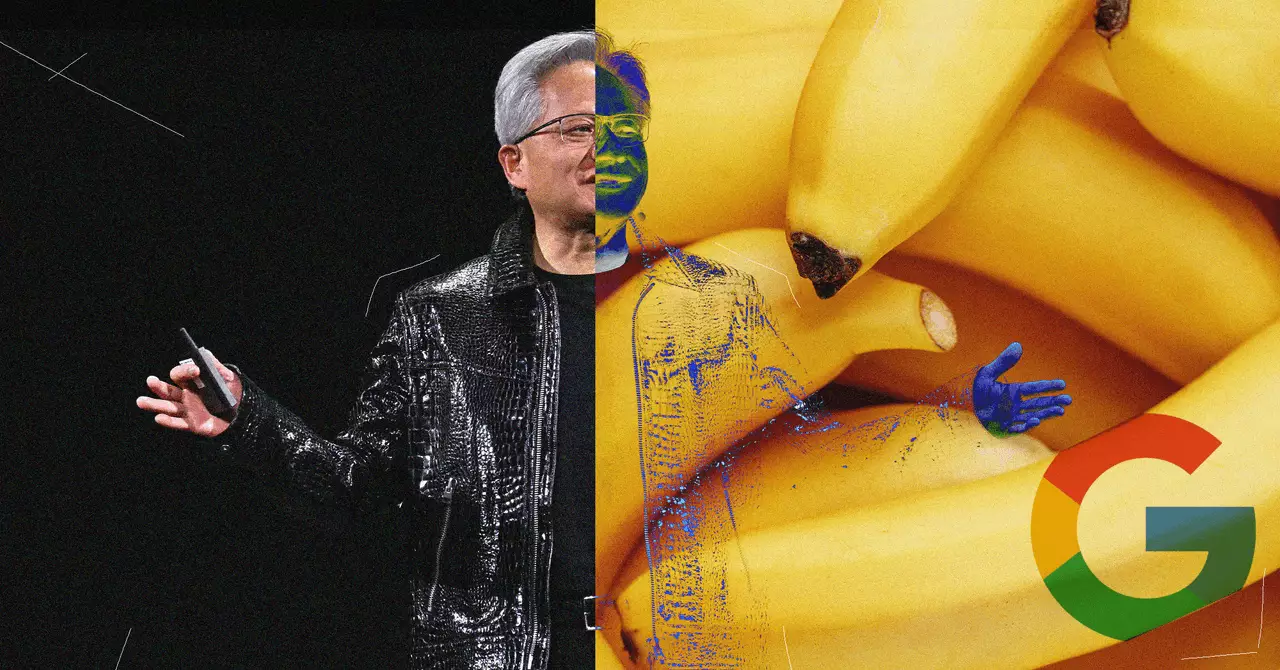
Artificial Intelligence has long been heralded as a transformative force, but recent developments suggest we’re on the cusp of a new epoch—one where AI transcends mere tools and becomes an extension of human creativity and intelligence. Nvidia’s CEO Jensen Huang exemplifies this shift, passionately articulating a vision where AI democratizes access to knowledge, fuels innovation, and bridges societal divides. His exuberance about emerging AI creations like Gemini’s Nano Banana symbolically underscores how technological advancements are merging seamlessly with the human desire for wonder, humor, and forward-thinking.
What sets Huang apart from many industry leaders is his unabashed enthusiasm not solely for the capabilities of AI but also for its aspirational potential. By framing AI as an empowering force for everyone, he challenges the conventional narrative that technology serves only the elite or those with specialized expertise. If AI can serve as a “thinking partner” for an industry titan or a casual user, then its true power lies in fostering a global community where individuals from all walks of life can enhance their lives through accessible innovation.
From Gaming to Global Impact: The Shift in AI’s Role
The explosive surge in image generation, exemplified by Nano Banana’s rapid growth, highlights the changing landscape of AI’s impact. Initially perceived as a niche application, AI-generated images now influence industries ranging from entertainment to education, drawing widespread attention. The success of Gemini’s tool, which allows precise edits while maintaining facial and object integrity, reflects a broader trend: AI is becoming more intuitive, user-friendly, and aligned with human needs.
Huang’s investments in data centers, supercomputers, and collaborative initiatives in the UK signal a strategic move toward embedding AI as a national and global infrastructure. This isn’t just about commercial gain; it’s about positioning AI as a cornerstone for future societal advancements. When he confidently states that the UK’s rich historical contributions to science and technology give it an advantage, he underscores the importance of cultural and intellectual capital in technological evolution.
Moreover, Huang’s overt pride in his investments demonstrates his belief that AI’s future is intertwined with human ingenuity—fueled by collaborations, research, and shared vision. It’s evident that he sees AI not as a rival but as a partner in unlocking human potential, echoing a core principle: technology’s highest purpose is to amplify what it means to be human.
Democratization of AI: Bridging the Global Divide
Huang’s vision for democratized AI underscores a fundamental ethical stance: technology should be a leveller, not a divider. In his view, no one should be left behind on the cusp of a technological revolution that promises unprecedented access to information, education, and opportunity. The assertion that AI can be a catalyst to “close the technology divide” is both optimistic and pragmatic, yet it requires a radical shift in how society perceives and implements technological progress.
This belief aligns with his personal endorsement of AI as a means of enhancing daily life—be it through AI-powered writing tools or research assistants—to enable smarter decision-making and more creative output. Huang’s use of AI for research, speech preparation, and even personal organization demonstrates how these advanced tools are already integrated into the fabric of everyday life. The implication is clear: AI can be a democratizing force only if it remains accessible, affordable, and easy to use.
However, the challenge lies in ensuring that this democratization does not become a superficial promise. The true test of AI’s potential to bridge divides depends on dedicated efforts to develop inclusive infrastructure, policy frameworks, and educational initiatives. Otherwise, the risk persists that such innovations will serve only the privileged few, exacerbating existing inequalities instead of alleviating them.
Huang’s fervent optimism about AI’s role in shaping the future reveals an underlying truth: the human spirit is inherently inventive and aspirational. Turning a playful nod to Nano Banana into a symbol of new beginnings exemplifies how imaginative applications of AI can inspire us to think beyond conventional boundaries. When technology becomes a tool for creativity, empowerment, and societal good, the possibilities for human progress become virtually limitless.
This is a pivotal moment in history—where leadership, vision, and technological innovation converge. The challenge—and the opportunity—lies in ensuring that AI remains a force for positive transformation, accessible enough to uplift the many, not just the few. With pioneers like Jensen Huang championing this cause, humanity stands at a crossroads: continue to innovate with purpose or risk losing sight of the ideals that drive true progress. The future belongs to those who dare to dream boldly, harnessing AI’s extraordinary potential to reshape our world into a better, more inclusive place.
Leave a Reply