
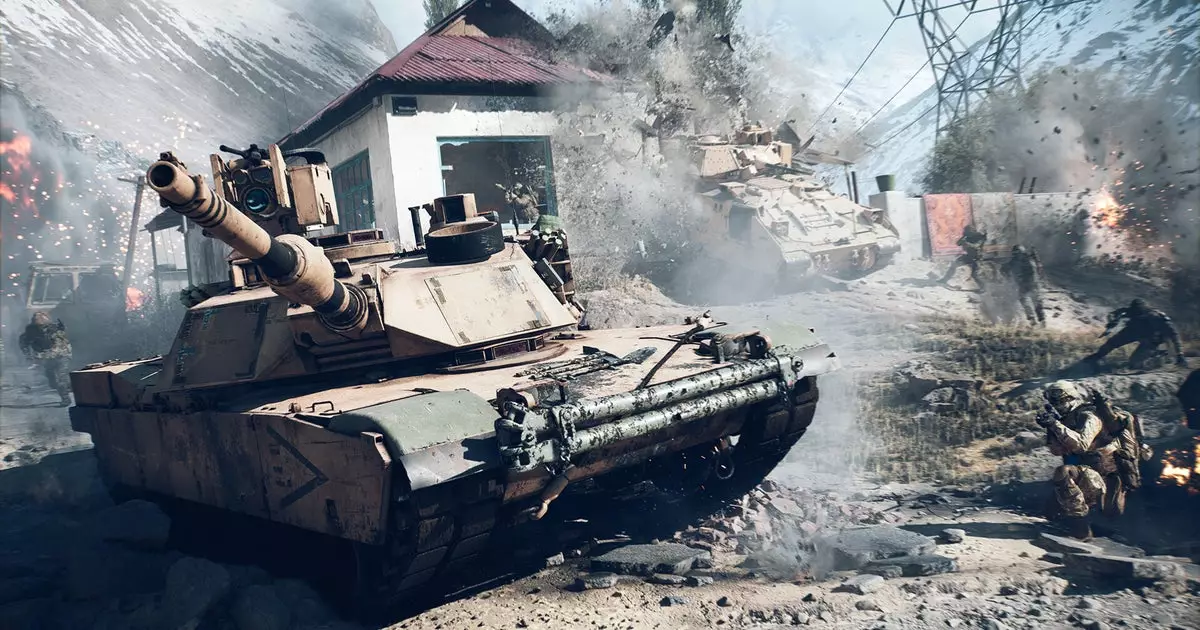
In the world of multiplayer shooters, the quest for perfect game balance often becomes an elusive mirage. Battlefield exemplifies this ongoing struggle, especially with respect to vehicle dynamics. The perception that some vehicles feel like unstoppable forces while others resemble unwieldy toys is not merely a matter of individual skill or player perception — it is an intrinsic aspect of game design philosophy. Developers deliberately introduce imbalance to craft a dynamic, unpredictable environment that keeps players engaged and constantly adapting. Far from being a flaw, this volatility fuels emergent gameplay and heightens the sense of chaos and excitement.
The contrast between agile, responsive infantry and the lumbering, often frustrating vehicles underscores this intentional asymmetry. Vehicles might appear fragile on paper but can overwhelm opponents if used tactically or if they exploit the game’s mechanics. Conversely, when players try to pilot tanks like shopping carts rather than bulldozers, it hints not at player incompetence but perhaps at misjudged balance or insufficient tuning. Recognizing this, seasoned developers understand that initial vehicle damage models and handling characteristics are just starting points, not the final word.
Balancing as a Moving Target: The Developer’s Dilemma
The acknowledgment from Battlefield 6 producer David Sirland that vehicles initially start out “too weak” reveals a crucial insight about modern game development: balance is a tailored journey rather than a static goal. By starting with somewhat underpowered vehicles, developers aim to foster fairer engagements and reduce the frustration of insta-destruction. This conservative approach, however, risks leaving the game feeling hollow or unsatisfying until further adjustments are made.
This iterative process becomes even more complex when considering how player proficiency evolves. As players learn to better exploit particular vehicle weaknesses or engineer strategies involving anti-tank weaponry, the developers must continually recalibrate. It becomes a dynamic chess game, where patches and updates serve as moves to counteract emerging tactics. Yet, this also raises the question: Are developers intentionally releasing underbalanced vehicles to anticipate future gameplay bounces? This calculated gamble might be necessary to develop a resilient, adaptable combat environment.
Vehicle Fragility and the Culture of Explosive Innovation
The visual narrative of Battlefield trailers—helicopters exploding in fiery cascades—builds a fanbase that expects explosive action and dramatic destruction. Ironically, this desire for spectacle clashes with the reality of game balancing. Players crave powerful, satisfying vehicles, yet in practice, those same vehicles are rendered vulnerable through weapons and tactics designed for asymmetrical warfare. This tension adds layers to the gameplay experience; vehicles become both the kingmakers and the crown jewels that require careful safeguarding.
What this reveals about game design is the importance of unpredictability. A vehicle that appears fragile can shift the game’s tempo dramatically, especially if it is used creatively or in unexpected ways. Developers, aware of this, may prefer to keep vehicles deliberately underpowered initially, allowing them to tweak handling and damage models based on how the player base interacts with them. This process mirrors real-world warfare, where entire strategies are refined through trial, error, and adaptation.
The Long Road Ahead: Evolving with the Player Base
Looking forward, future playtests with vehicle-heavy maps promise to deepen the complexity of battlefield interactions. These sessions will serve as testing grounds for the current balancing philosophy—one that accepts imperfection as a necessary step toward a more refined experience. It’s an acknowledgment that the game’s ‘perfect’ balance might never exist; instead, it is an ongoing dialogue between developers and players.
The ongoing adjustments also hint at a broader design philosophy: balancing for the future, not just the present. Developers are preemptively shifting parameters based on player trends and tactical innovations they expect will surface months down the line. This approach—balancing for mitigation rather than reaction—reflects a high-stakes gamble, but one that could ultimately lead to a more resilient and engaging game.
For those who see Battlefield as a battlefield for control, this process of perpetual adjustment underscores a fundamental truth: chaos and imbalance are not flaws but features of a living, breathing multiplayer ecosystem. The art lies in cultivating enough chaos to stay exciting, yet enough control to prevent complete anarchy. Achieving this delicate equilibrium is precisely what makes competitive multiplayer such a compelling—and ultimately, unpredictable—arena.
Leave a Reply