
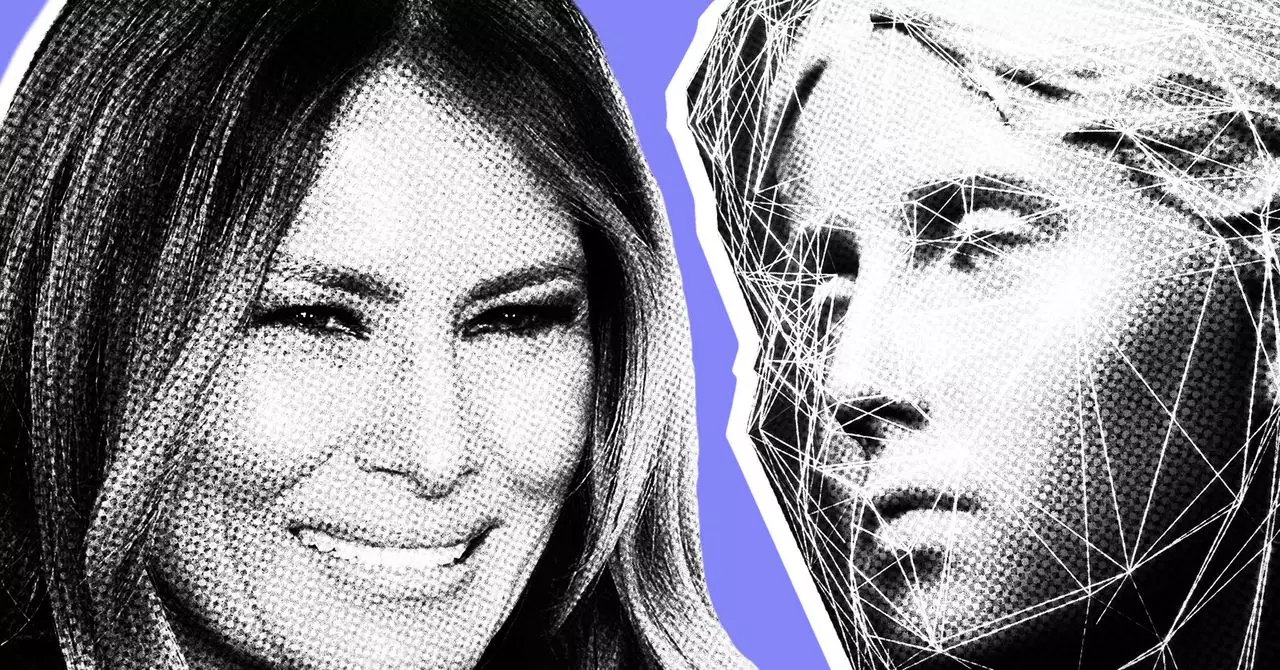
In the evolving landscape of artificial intelligence, political figures often serve as symbolic anchors that influence public discourse and industry direction. Melania Trump’s recent involvement in AI initiatives, despite its ambiguity, signals a strategic move into an arena increasingly pivotal for national security, economic growth, and societal well-being. While the details of her specific goals remain scarce, her presence hints at a broader attempt to shape the contours of AI development in the United States, especially concerning children’s safety and workforce preparedness. This gesture, somewhat symbolic yet potentially impactful, repositions her from a traditional First Lady role into a stakeholder with emerging influence on technological policy, aligning her with a future-centric vision that underscores innovation and national competitiveness.
Challenging the Traditional Narrative of AI Oversight
One of the most striking aspects of this scenario is how it reframes AI oversight away from purely technical or governmental domains into the realm of public consciousness through a high-profile figure. Historically, AI regulation has been dominated by policymakers, scientists, and industry insiders. Now, with Melania Trump stepping into the spotlight, there’s an implicit message: societal values, especially those concerning children’s safety and ethical considerations, are central to the conversation. Yet, the lack of clear directives or detailed goals from her camp reveals a potential gap between intention and execution. Are her objectives rooted in genuine concern, or are they more about leveraging influence within a powerful political and corporate ecosystem? This ambiguity invites scrutiny and raises questions about accountability and the true potency of her involvement.
The Intersection of Politics, Industry Power, and Moral Responsibility
The political environment surrounding AI policymaking is complex, characterized by a mixture of deregulation efforts, technological dominance pursuits, and ideological battles over the openness or restriction of AI’s development. Within this context, Melania’s support appears to serve as a bridge connecting corporate interests with political legitimacy. The reported eagerness of AI industry leaders and their expectation of “big commitments” from companies underscores a critical reality: industry players recognize the importance of influential voices beyond the technical sphere. This convergence suggests a future where moral responsibility — especially regarding children and societal impact — might be co-opted by political figures seeking not only to shape policy but also to maintain cultural relevance and influence.
The Potential for a New Paradigm in AI Advocacy
Despite the lack of concrete policy proposals from her team, Melania’s presence at industry events signals an opportunity for a new paradigm: leveraging celebrity and political influence to prioritize societal and ethical concerns in AI development. Her apparent attentiveness and engagement could serve as a catalyst for more human-centered discussions, encouraging industry leaders to reflect on the long-term implications of their innovations. More importantly, her involvement might push for a broader dialogue about the societal risks posed by AI—deepfakes, misinformation, privacy invasion—beyond just economic and technological metrics.
Looking Ahead: A Double-Edged Sword of Influence
However, this influence is not without its risks. When AI policy is driven by figures who are not technical experts—no matter how well-intentioned—the danger of superficial engagement or misguided policies increases. The absence of transparent, detailed plans from her side could lead to initiatives that lack depth, focusing more on image than substantive change. Conversely, if her understanding of AI’s societal impact deepens and aligns with ethical principles, her involvement could inspire industry and policymakers to prioritize child safety, digital literacy, and sustainable infrastructure. Her potential role as a moral advocate could thus be a powerful catalyst for positive change if harnessed responsibly.
The Real Power of Symbolism in Shaping the Future
Ultimately, Melania Trump’s entry into the AI arena exemplifies how symbolism can influence real-world technological trajectories. While her direct impact remains uncertain, her presence elevates societal considerations in conversations often dominated by technical and geopolitical concerns. It is a reminder that public figures, even those outside the tech industry, can shape the moral and ethical frameworks that govern innovation. If harnessed wisely, this influence has the potential to foster a future where technology serves humanity—particularly its most vulnerable—rather than undermining societal values or safety. In a world increasingly obsessed with AI advances, a figure like Melania Trump could offer a pivotal moral compass that steers industry and policy toward a more conscientious and human-centered direction.
Leave a Reply