
The recent release of Civilization 7’s patch 1.2.4 signifies more than just a routine update; it marks a turning point in how the game evolves to balance complexity, challenge, and player engagement. Firaxis’s commitment to refining the strategic depth while managing the intricate web of mod compatibility reveals both their innovative spirit and their acknowledgment of the game’s community-driven nature. This update underscores a deliberate effort to revamp foundational systems, signaling that the developers are eager to sustain long-term vitality rather than pursue quick fixes or superficial changes.
One of the most notable aspects of 1.2.4 is the overhaul of the user interface workflow. The decision to shift to a new system isn’t simply technical; it reflects a bold strategic choice. Firaxis is clearly prioritizing a more accessible, reactive interface that can adapt better to future updates and mod integrations. However, such deep backend changes inevitably cause ripples—most prominently, the breaking of mods which players heavily rely on. The developers’ transparency about this upheaval demonstrates a rare respect for their community, reframing what could have been a frustration into a necessary evolution. The option to revert to the legacy branch on Steam provides a pragmatic safety net, acknowledging that players’ custom content remains vital.
The importance of this behind-the-scenes shift is not merely procedural but signals a broader philosophical stance: Verdant soil for growth often requires disturbance. Firaxis’s willingness to endure temporary chaos for long-term benefits underpins an ambitious vision of a continuously evolving game ecosystem. This is a gamble that, if successful, will facilitate a more robust, flexible UI system that can support future expansions and mods without the jarring disruptions experienced before.
Balancing Power and Fairness: Wonder Tweaks and Victory Path Adjustments
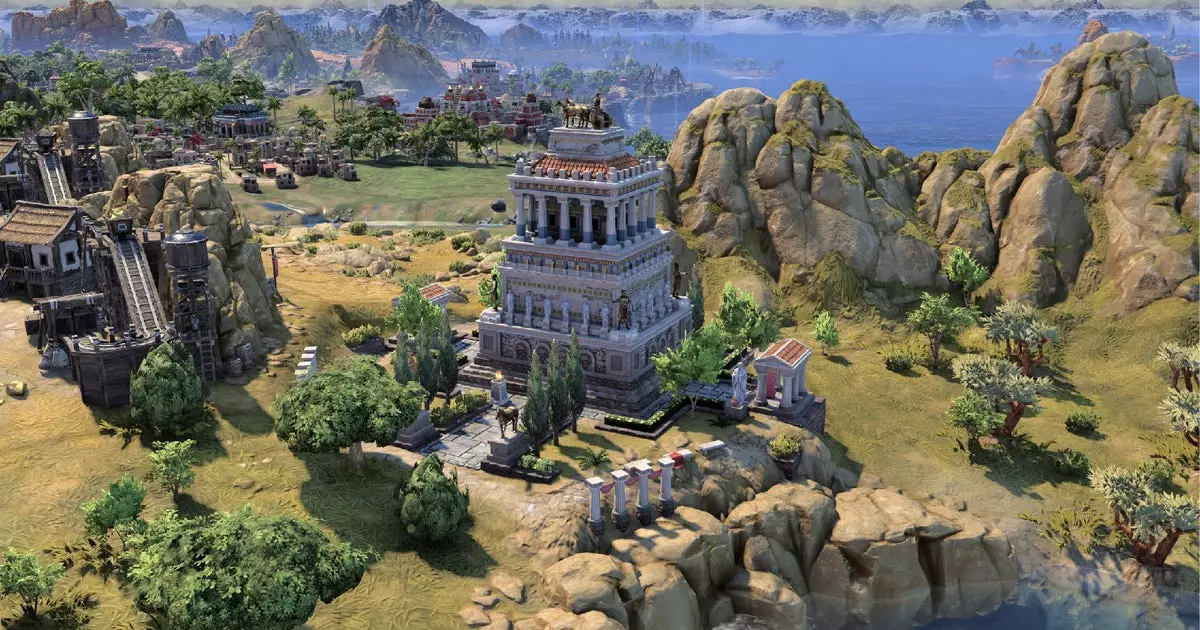
In spite of the technical upheaval, the heart of Civ 7 remains its strategic gameplay—the pursuit of dominance through wonder-building, technological advancement, and diplomatic maneuvering. A significant portion of the update has been devoted to rebalancing iconic wonders, reflecting a desire to foster diverse approaches rather than cookie-cutter strategies. For example, Erdene Zuu’s earlier availability encourages players to explore religious or cultural paths sooner, while relocating the Colossus and Monks Mound to different civic branches diversifies strategic timing and planning.
However, the developers haven’t simply buffed popular wonders; they’ve also nerfed some to prevent runaway victories. The Gate of All Nations and House of Wisdom, once potent focal points for rapid victory, have been slightly weakened. This demonstrates an understanding that excess power corrupts strategic variety, narrowing the game’s emergent possibilities. Conversely, wonders like Petra and the Eiffel Tower have received minor boosts, underscoring a nuanced balancing act—encouraging players to experiment with different strategies rather than funneling everything into a handful of dominant options.
This deliberate tension between power-ups and nerfs embodies a core insight: game balance isn’t static. It’s an ongoing dialogue where developers must weigh the thrill of powerful strategies against the risk of monotony or imbalance. Firaxis’s approach exemplifies a mature understanding that variety and fairness are essential for sustained engagement in a deeply strategic game.
The Challenge of a Changing Landscape: AI and Game Mechanics
Another facet of this update is the focus on AI improvements, a move that signals realism and challenge at the core of Civ 7. Firaxis has aimed to craft AI opponents that are not only capable of nuanced decision-making but also less prone to bizarre, illogical moves—those “weird moves” that can break immersion. This aligns with the broader goal of elevating the overall challenge, ensuring that victories feel earned and the AI remains a worthy adversary.
Moreover, the adjustments to age transitions and game continuity are designed to sustain momentum, encouraging longer, more dynamic games. By rolling over alliances and accumulated resources, the game encourages players to focus on sustained diplomatic and economic strategies rather than quick, opportunistic victories. It’s a move that positively shifts the game’s pacing, demanding players to think holistically about their civilizations’ long-term prospects.
Firaxis’s transparency concerning interface improvements, AI tweaks, and game mechanics also underscores their recognition that player feedback is a vital ingredient in shaping Civilization 7’s future. Continuous updates, despite their sometimes disruptive nature, establish a commitment to evolving the game into a more refined, challenging, and satisfying experience. Their willingness to experiment and tweak reveals an understanding that strategic mastery is a moving target—one that requires constant fine-tuning and responsiveness to the community’s evolving desires.
In essence, this latest update is not just about fixing bugs or tweaking stats; it’s about redefining what Civilization 7 aspires to be: an ever-adapting masterpiece of strategy, balancing the complex interplay of technological progress, cultural achievement, and diplomatic influence. Firaxis has shown that they are not content with resting on laurels but instead are prepared to refine and challenge their creation continuously. This is the kind of evolution that keeps strategy games vital and compelling long after their initial release, cementing Civilization 7’s place as a living, breathing universe of human ingenuity and conflict.
Leave a Reply