
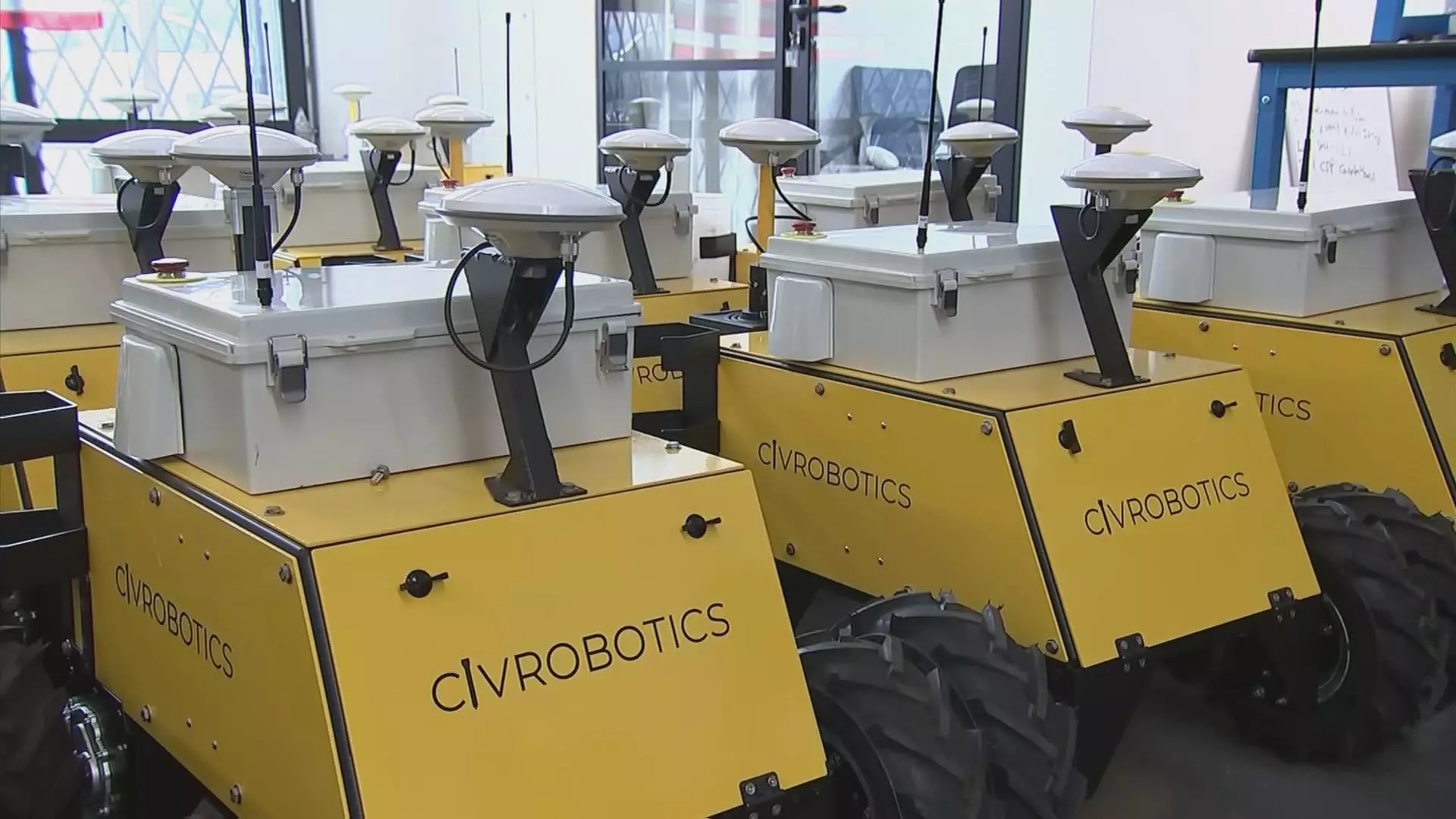
The renewable energy sector is experiencing a quiet but profound transformation. While governmental support may wane, private sector innovation is not only filling the void butAlso pushing the boundaries of what’s possible in energy infrastructure. At the forefront of this shift is the integration of autonomous robotic systems that streamline the most labor-intensive tasks. Among these breakthroughs, CivDot—a four-wheeled surveying robot—stands as a testament to how technology can radically accelerate project timelines while cutting costs dramatically. This innovation doesn’t just improve efficiency; it redefines what’s feasible in large-scale solar farm development.
Traditionally, site surveying has been a painstaking process that demands precision, time, and manpower. Manual surveys often involve teams of engineers traversing rugged terrains with handheld equipment, a process susceptible to human error and delays. Civ Robotics’ CivDot disrupts this paradigm, automating the marking of thousands of layout points with extraordinary accuracy—up to 8 millimeters, even on uneven, outdoor surfaces. By doing so, it alleviates the dependence on large crews, reduces labor costs, and shortens project timelines. This is especially critical as renewable projects scale up rapidly, often in remote areas where logistical challenges compound delays.
Breaking Barriers in Harsh Environments
What truly sets CivDot apart is its resilience and adaptability. Designed to navigate challenging terrains—from desert sands to muddy fields—the robot exemplifies how autonomous machinery can thrive in environments previously considered difficult or even impossible for human crews. Its advanced navigation and geospatial technology allow it to pinpoint precise coordinates in complex, uneven landscapes. This capability is essential for large-scale solar projects, which tend to stretch across vast, open spaces with obstacles like brush, rocks, and variable terrain.
Kelley Brown of Bechtel emphasizes this point, noting how traditional survey crews are limited by terrain and weather conditions. The CivDot’s ability to operate on batteries further enhances flexibility, although it introduces logistical considerations like battery swaps. Yet, these challenges pale in comparison to the gains—potentially quadrupling productivity from 250 to 1,250 marks per day. Such efficiency gains not only speed up project completion but also unlock opportunities for developers to pursue projects in previously inaccessible areas, broadening the scope and geographical reach of renewable energy infrastructure.
Industrial Innovation Driving Economic and Environmental Benefits
The infusion of robotics into renewable energy construction signifies more than technological progress; it represents a strategic response to industry demands for scalability and cost mitigation. With over 100 CivDot units actively deployed, primarily in solar and oil & gas sectors, the adoption of this technology underscores its versatility. Companies like Bechtel are already witnessing tangible benefits, including significant labor savings and enhanced accuracy, which translate to fewer errors and reworks—factors that can heavily impact project budgets and completion dates.
Investment into Civ Robotics, backed by notable venture capital firms and industry players like Alleycorp, FF Venture Capital, and Bobcat Company, attests to growing confidence in this approach. The extensive funding underscores a broader recognition: automation and robotics are not optional extras but essential components for the future of sustainable energy infrastructure. The competition is fierce, but CivDot’s unique ability to handle difficult, rugged terrains offers a clear competitive advantage that less specialized robots—focused on highways or open fields—cannot match.
Looking Beyond the Horizon: The Future of Robotics in Renewable Energy
The ongoing evolution of robotic surveying tools especially benefits the renewable sector, which is increasingly venturing into complex terrains and remote regions. This trend could lead to paradigm shifts in how renewable projects are conceived, designed, and constructed. As autonomous machines continue to improve, their role will expand from simple marking to more complex tasks like site assessment, material transport, and even minor construction tasks.
However, critical self-reflection reminds us that reliance on robotics also carries risks. Hardware failures, battery limitations, and unforeseen terrains remain hurdles that industry players must navigate. Additionally, questions of employment impact and technological dependency are inevitable. Yet, the overarching narrative remains optimistic: when deployed thoughtfully, robotics can catalyze a greener, faster, and more efficient energy landscape—proof that innovation, when harnessed responsibly, can be a decisive factor in combating climate change and fostering sustainable growth.
Leave a Reply