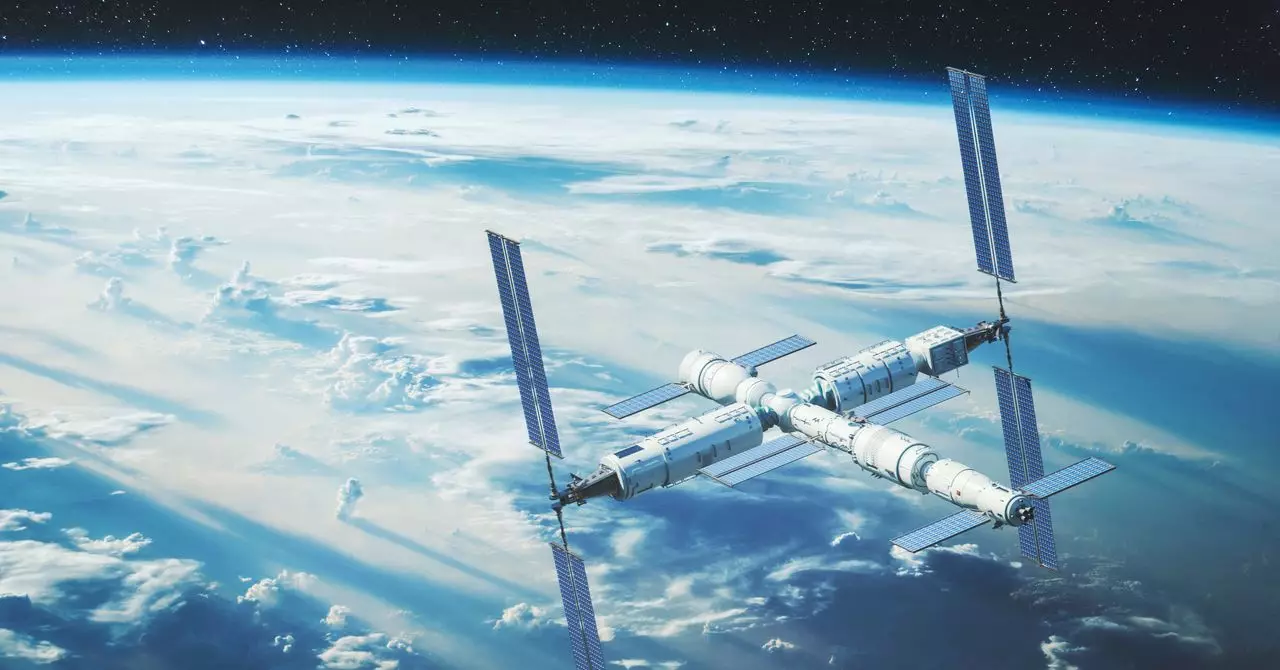
In the relentless pursuit of space exploration, technological innovation continues to push boundaries, demonstrating that the future belongs to those who leverage intelligent systems in extraterrestrial environments. China’s recent integration of Wukong AI into its Tiangong space station epitomizes this paradigm shift. Unlike traditional robotic assistants or rudimentary command modules, Wukong AI embodies a sophisticated, adaptive, and mission-specific artificial intelligence, designed to enhance crew efficiency, safety, and psychological resilience during in-orbit operations. This development underscores a crucial insight: AI is no longer just a support tool but an active participant in human space endeavors.
What makes Wukong AI particularly compelling is its dual-module architecture—one located on Earth and the other onboard the station. This configuration creates a seamless flow of information, empowering astronauts to access specialized knowledge rapidly while enabling ground-based analysts to perform comprehensive diagnostics and situational assessments. Such a system significantly reduces latency, which has historically been a critical challenge in space missions, facilitating swift, accurate decision-making in scenarios where seconds matter.
The first operational deployment of Wukong AI during a complex spacewalk highlights its practical value. Supporting tasks such as debris protection and station inspection, the AI demonstrated an ability to assist in high-stakes environments—precisely where human judgment, guided by real-time data, is paramount. Its role extends beyond mere informational support; it fosters a more resilient psychological environment by providing pertinent in-mission updates and reducing the cognitive load of astronauts amid demanding operations.
Looking Beyond: The Broader Implications of AI in Space
China’s venture into deploying an LLM-powered assistant like Wukong AI is a clear indication of a strategic shift toward integrating advanced AI systems with human crews. Compared to existing station AI agents like NASA’s CIMON or the robotic helper Astrobee aboard the International Space Station, Wukong’s emphasis on space navigation and tactical planning signals a nuanced understanding of the complex demands of future missions. It signifies a transition from generic support systems to specialized, adaptive intelligence capable of tackling unpredictable challenges unique to deep-space operations.
This evolution prompts us to examine the broader implications for space exploration. AI systems with advanced reasoning abilities and contextual understanding can optimize mission planning, resource management, and emergency protocols far beyond the capabilities of traditional software. As China lays the groundwork for a sustainable presence on the Moon and potentially Mars, AI will undoubtedly become an indispensable pillar—acting as the navigator, strategist, and psychological pillar for human explorers.
However, deploying such systems does not come without risks. Relying on an AI with evolving capabilities mandates rigorous oversight, transparency, and failsafe protocols. Misinterpretations or system malfunctions could lead to safety hazards or mission setbacks. Therefore, the design, governance, and continuous improvement of these intelligent assistants must be scrutinized critically to ensure they serve humanity’s best interests in the unknowable expanses of space.
A Symbolic Name for a Pragmatic Future
Choosing the name Wukong for China’s latest AI embodies more than mere homage to myth. Sun Wukong, or the Monkey King, symbolizes agility, resilience, and an insatiable hunger for knowledge—traits that align with the ambitions of China’s space program. This cultural symbolism signifies that AI in space is not just a tool but an extension of human ingenuity driven by cultural pride and strategic vision.
AI’s role in space exploration remains set to expand exponentially. Wukong AI exemplifies a new chapter where intelligent systems are integrated as essential crew members, capable of handling complex, unpredictable scenarios while simultaneously aiding in the psychological and operational stability of astronauts. As China commits to becoming a major space power in the coming decades, systems like Wukong will likely serve as harbingers of an era where artificial intelligence complements, enhances, and perhaps even redefines human space exploration itself.
The future of space is no longer just a journey through the stars but a fusion of human vision and machine intelligence—pioneered by innovative systems like Wukong AI, which harness the strength of cultural symbolism and cutting-edge technology to propel humanity forward into an era of unprecedented discovery.
Leave a Reply