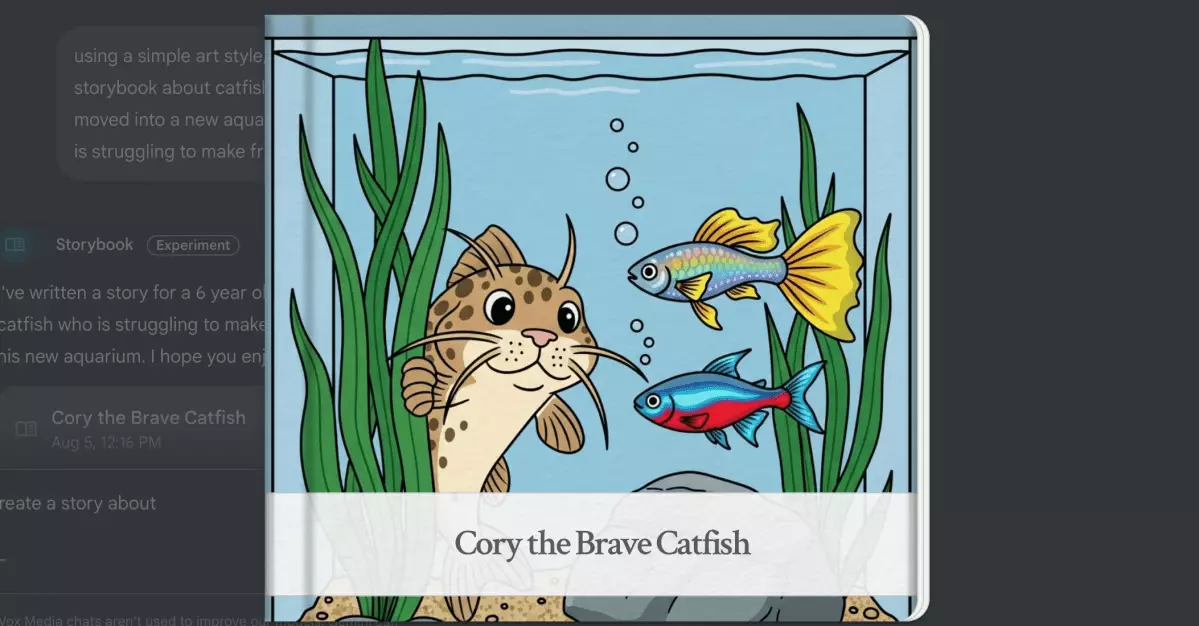
Artificial intelligence continues to reshape how we approach storytelling, blending technology with imagination in unprecedented ways. Google’s latest innovation, the Gemini AI chatbot’s “Storybook” feature, exemplifies this transformation by allowing users to craft illustrated narratives through simple descriptions. This development signals a significant leap toward democratizing creative expression, empowering even those without artistic skills to bring their stories to life. Yet, beneath this promising veneer lies a series of inherent limitations that highlight both the immense potential and the current inadequacies of AI-driven creativity.
Capacities and Exciting Possibilities
The “Storybook” tool is more than just a novelty; it embodies a vision where artificial intelligence becomes a co-creator. Users can request stories spanning any art style—be it anime, claymation, or comic book aesthetics—and receive customized illustrations aligned with their vision. The ability to upload personal images, such as a child’s drawing, further personalizes the creative process, making it accessible and engaging for a broad audience. This democratization could revolutionize how children and amateur storytellers approach art and storytelling, providing an inclusive platform where imagination isn’t limited by technical skill.
Furthermore, the feature’s capacity to generate concise narratives accompanied by corresponding visuals makes it a practical tool in educational settings, therapy, and entertainment. For instance, parents and teachers can craft tailored stories that resonate emotionally or reinforce learning objectives. The integration of text-to-speech functionality adds another layer of accessibility, transforming static images into dynamic storytelling experiences that can be shared verbally, broadening the reach of digital storytelling.
The Complexity and Limitations of AI-Generated Content
However, as promising as this technology appears, a critical assessment reveals notable flaws rooted in the current state of AI. The inherent hiccups—such as inconsistent character design, bizarre or misplaced images, and storyline clichés—serve as reminders that AI remains a tool still in its developmental infancy. For example, the unintended inclusion of a human arm on a fish or a ‘crime scene’ spaghetti sauce illustrate how AI interprets prompts literally, often missing nuanced context or emotional depth.
These inconsistencies highlight that AI-generated art and stories lack a refined understanding of human aesthetics and storytelling subtleties. While they can mimic styles and produce visually appealing images, they often stumble when it comes to coherence, character consistency, and contextual accuracy. This can be particularly problematic in children’s stories, where clarity and emotional resonance are crucial. The oddities, such as mismatched screens or surreal character alterations, serve as humorous reminders of AI’s current limitations rather than its mastery.
Additionally, the experience reveals that AI struggles with subjective artistic vision. Uploading personalized artwork, like a cartoon cat, doesn’t always translate well into the AI’s generated interpretations, which tend to lack the personality and emotional tone that a human artist could embed. This dissonance underscores the need for human oversight in creative processes, emphasizing that AI is more an aid than a replacement for genuine artistic expression.
Implications for the Future of Creative Tools
The advent of tools like Google’s Gemini “Storybook” prompts reflection on our relationship with technology in creative domains. AI can significantly expedite and diversify content creation, lowering barriers for storytelling and visual art. Yet, this convenience should not overshadow the importance of human nuance, aesthetic judgment, and emotional intelligence—elements that AI cannot replicate convincingly at this stage.
As developers iterate on these platforms, there is hope that future versions will refine coherence, reduce the bizarre glitches, and better understand the complex nature of storytelling. Until then, users should approach AI-generated stories as an imaginative starting point rather than a definitive product. Embracing the imperfections and quirks of AI can even foster a sense of playful experimentation, inspiring creators to push boundaries and reimagine possibilities.
While AI-powered storytelling tools herald a new frontier of creative empowerment, they also expose the current technological gaps. Recognizing these limitations is essential for fostering a balanced perspective that values both human ingenuity and technological advancement. As AI continues to evolve, so too will its role as a collaborator—improving, yes, but forever shadowed by the imperfect beauty of human creativity.
Leave a Reply