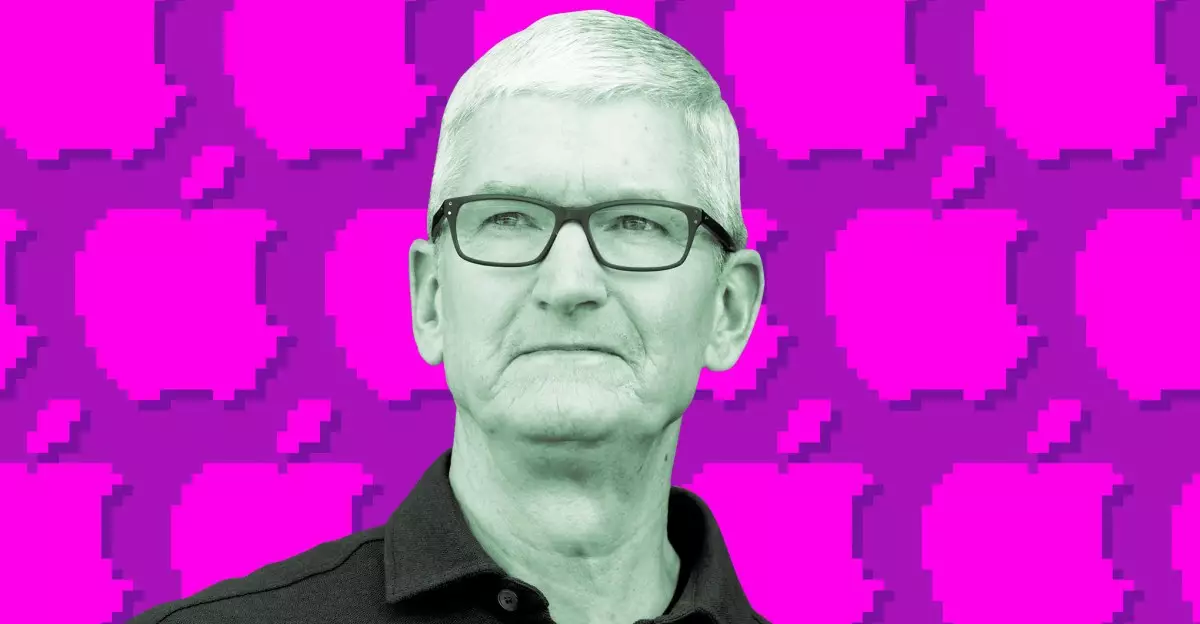
In a rare and candid gathering, Apple’s CEO Tim Cook highlighted the transformative potential of artificial intelligence, comparing its significance to that of the internet, smartphones, and cloud computing. This comparison underscores Apple’s recognition that AI isn’t just a peripheral feature but a fundamental shift that could redefine the company’s future. Cook’s assertive tone reveals a company eager to stake its claim in this uncharted territory, viewing AI as a realm ripe for innovation and dominance. His declaration that “Apple must do this” and “will do this” signals a firm commitment, yet it also exposes the internal pressures and high stakes involved in catching up with competitors. While Apple’s traditional approach has been cautious and deliberate, Cook’s rhetoric suggests a shift towards aggressive investment—a recognition that in the race for AI supremacy, hesitation can mean obsolescence.
The Struggles and Setbacks in AI Development
Despite this soaring vision, Apple’s journey into AI has been marred by setbacks, revealing a tension between ambition and execution. The delayed AI-powered upgrade to Siri exemplifies the company’s cautious approach clashing with the fast-paced demands of AI innovation. Originally, Apple envisioned a hybrid architecture—combining existing systems with large language models (LLMs)—to enhance Siri’s capabilities. However, as internal development progressed, Apple acknowledged that this method failed to deliver the quality they aspired to achieve. This admission signals a crucial understanding: existing models and hybrid solutions are insufficient for creating a seamless, high-quality AI experience. Instead of rushing out half-baked features, Apple appears to be recalibrating its strategy, focusing on building a new, unified architecture. The delay and internal re-evaluation highlight a core challenge: balancing perfectionism with competitive urgency. Moreover, losing talent to Meta’s aggressive AI hiring spree exposes vulnerabilities in Apple’s talent retention and suggests that other tech giants are outpacing Apple in attracting top AI minds.
Is Apple Courageously Reimagining or Falling Behind?
Apple’s stance on AI indicates a significant pivot—from its historical niche of polished, user-friendly hardware and software to a more complex, cutting-edge frontier. The company’s acknowledgment of being “rarely first” in categories like personal computing and smartphones signifies a history of deliberate innovation over speed. Yet, as AI rapidly evolves, this cautious stance might risk ceding ground to more aggressive competitors. While Cook’s optimism and Apple’s hefty investments may eventually pay off, there’s a lingering question: Can Apple leverage its design and ecosystem strengths to leap ahead in AI, or will it remain a follower? The internal focus on robust architecture and quality suggests a strategic shift towards excellence rather than first-mover advantage, but time is a critical factor. competitors like Google, Meta, and Microsoft are already embedding large language models into their products, positioning themselves as leaders. For Apple, this moment is a test of whether its traditional virtues of quality and careful development can coexist with the rapid innovation demanded by AI.
Critically, Apple’s current AI narrative exposes both its strengths and vulnerabilities. Its cautious, quality-first approach might ensure superior products in the long run, yet it also risks falling behind in a competitive landscape where speed and agility are equally critical. If Apple cannot swiftly adapt and attract top AI talent, its future dominance could be compromised. The company’s challenge will be to reconcile its perfectionism with the relentless pace of AI advancement—a task that may define its position in the next era of technology.
Leave a Reply