
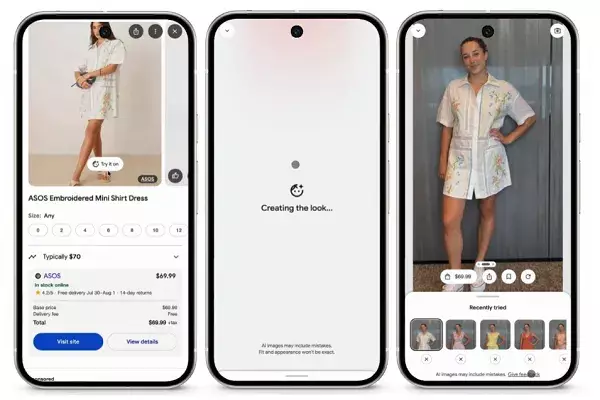
In the competitive landscape of e-commerce, the integration of artificial intelligence marks a transformative shift, especially with the introduction of sophisticated virtual try-on technologies. Google’s recent rollout of an AI-powered clothing preview feature signals a new era—one where online shopping could rival the tactile experience of in-store browsing. By enabling users to upload a self-photo and instantly visualize garments on their own likeness, Google aims to bridge the gap between physical and digital retail experiences. This innovation promises to reduce the ambiguity and uncertainty that have long plagued online apparel shopping, potentially boosting confidence and satisfaction among consumers.
However, as promising as this technology appears, it invites scrutiny regarding its practical accuracy and inclusivity. The reliance on selfies raises questions around how well these virtual try-ons can adapt to diverse body types, skin tones, and unique physical features. If the system is biased or less precise for certain demographic groups, it risks alienating those who don’t see themselves accurately represented. Moreover, the technology must contend with the variability of selfies—lighting, angles, and image quality—that could affect the realism and usability of virtual try-ons. While Google’s move toward democratizing this feature in the U.S. is commendable, the success of this innovation will ultimately hinge on how well it replicates the tactile experience and provides reliable visuals across the broad spectrum of users.
Enhancing Value Through Smarter Price Tracking
Another significant advancement is Google’s upgraded price tracking system. The ability to set custom alerts for specific sizes, colors, and target prices exemplifies a strategic shift toward more intelligent, personalized shopping aids. In an era where consumers are inundated with endless options and fleeting sales, such tools could empower shoppers to make better-informed purchasing decisions—saving money and time in the process.
Yet, despite its potential benefits, this feature requires critical examination. How accurately can price alerts reflect true market fluctuations, especially when deals vary across different retailers and regions? There’s a risk that users might rely too heavily on these notifications, only to find that discounts or offers have expired or were inaccurately reported. Additionally, the integration of the Shopping Graph—a broad database of products and pricing—raises questions about data transparency and whether consumers can truly trust these automated signals. Nonetheless, if perfected, this system could serve as an invaluable tool in cultivating smarter consumer habits and fostering trust in online marketplaces.
Transforming Search with Text-Based Fashion Discovery
Perhaps the most intriguing innovation is Google’s capacity to interpret conversational, text-based queries for fashion items. This evolution signifies a move toward more intuitive and human-like search capabilities, where users can describe what they want in natural language and receive tailored results. Such functionality lowers barriers for less tech-savvy shoppers or those with specific style preferences that don’t easily fit into standard filtering options.
However, the complexity lies in the system’s ability to accurately parse nuanced descriptions and translate them into relevant product matches. Language is inherently subjective; a phrase like “boho chic” or “affordable streetwear” might be interpreted very differently depending on context and individual perception. The challenge for Google’s AI is ensuring that the search results genuinely align with user intent, rather than producing generic or inaccurate listings. Still, matched with visual discovery tools and price alerts, this feature could significantly streamline the path from inspiration to purchase, especially during major sales seasons or when hunting for niche styles.
The Future of Digital Shopping: An Incomplete but Promising Path
Google’s recent developments signal a future where online shopping is less about scrolling through endless listings and more about immersive, intelligent discovery. The integration of virtual try-ons, personalized price tracking, and conversational search approaches to retail exemplifies the potential for AI to make digital shopping more engaging, accurate, and satisfying. However, these innovations are not without their hurdles: issues of accuracy, inclusivity, data transparency, and user trust remain paramount.
The true test of these tools will be their ability to deliver consistent, reliable experiences that genuinely augment the shopping journey—not complicate it. As these features expand beyond the U.S. market, their success will depend on how well they accommodate diverse shoppers and adapt to the unpredictable realities of online retail. While Google edges closer to creating a seamless, personalized shopping environment, only time will reveal whether these innovations will reshape the way we shop online or simply serve as powerful, yet initial, steps toward a more intelligent shopping future.
Leave a Reply