
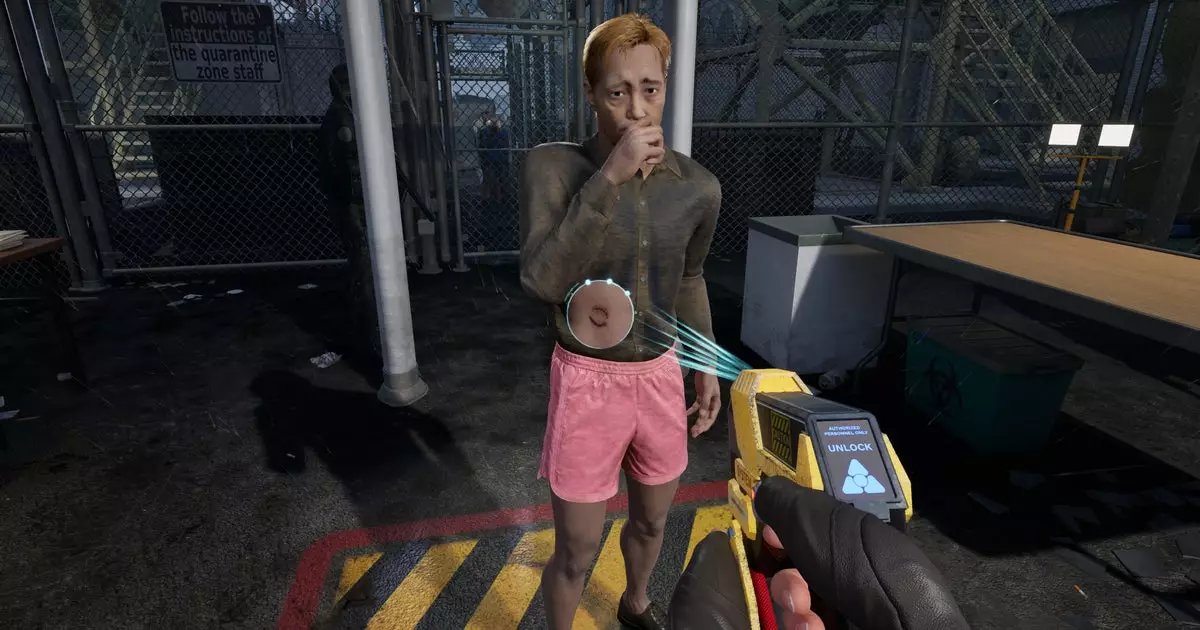
In the bleak landscape of zombie-infested worlds, where survival hinges on relentless vigilance, Quarantine Zone: The Last Check introduces a nuanced perspective on authority and human judgment. Unlike typical survival games that emphasize combat and chaos, this game positions players at a moral crossroads, scrutinizing every individual that approaches a government checkpoint. As a hazmat-clad gatekeeper, your role transcends mere security; it demands a delicate balance between protecting society and exercising compassion. This juxtaposition challenges players to confront their biases and question the nature of justice in a post-apocalyptic context. Are you merely an enforcer of rules, or can you see the person behind the infected façade? This moral ambiguity elevates the game from a simple survival simulator to a profound commentary on human dignity in adversity.
Innovative Mechanics That Humanize the Apocalypse
One of the game’s most compelling features is its immersive inspection system. Using an array of tools—UV flashlights, thermometers, and manual scanners—you delve into the subtle signs of infection. Yet, rather than straightforward checks, players are encouraged to interpret ambiguous clues, fostering empathy and critical thinking. For example, a groaning woman clutching her stomach might be suffering from food poisoning rather than zombification, and rigidly adhering to protocols could risk marginalizing innocent individuals. This mechanic underscores the importance of discernment and reminds us that appearances can be deceiving, even in the direst circumstances. Additionally, resource management plays a crucial role. Limited supplies of test kits and inspection tools compel players to make strategic choices, prioritizing who to quarantine and who to grant passage. This resource strain reflects real-world dilemmas faced at borders, especially during crises, highlighting that effective judgment often depends on cautious allocation rather than hasty decisions.
Decisions That Define Morality and Humanity
What truly sets Quarantine Zone apart is its focus on decision-making under pressure. Whether to permit a seemingly innocent refugee entry or to detain a potentially infected person becomes a test of ethics. Will you risk allowing someone in based on a faint hunch, or will you err on the side of safety, possibly condemning innocents? The game introduces a layer of complexity when it presents characters in humorous or surreal variants—such as distinguishing between genuine individuals and parody characters like Buster Keaton or Barney the Dinosaur. These moments serve as an allegory for the importance of seeing beyond surface appearances. For instance, recognizing that a silent, stilt-walking figure dressed as Keaton is merely making a humorous escape plan reflects the necessity of understanding context. Even in chaos, a sense of humanity persists if players choose to prioritize compassion over rigid enforcement. Here, the game subtly challenges players to reflect on their biases and consider whether strict protocols should outweigh human compassion in crisis management.
Beyond the Screen: A Reflection on Society’s Boundaries
While at first glance Quarantine Zone may appear to be a grim dystopian game rooted in horror tropes, it actually offers a fertile ground for social commentary. It invites players to think critically about real-world borders, immigration, and the often-blurry line between safety and prejudice. How do we decide who is trustworthy, who needs to be scrutinized, and who should be left unexamined? And crucially, do these decisions reflect our humanity, or do they expose our fears? The game’s nuanced approach to these questions demonstrates that even in a fictional zombie outbreak, the core issues of morality, empathy, and societal order remain relevant. It nudges players away from purely mechanical gameplay into contemplating their own attitudes towards strangers and vulnerability. Moreover, it suggests that true security comes not from indiscriminate exclusion but from careful judgment, understanding, and kindness—even in a world overrun by monsters.
While the game’s setting leans heavily into horror and chaos, its underlying message resonates on a deeper level: the choices we make define who we are, especially when the world is falling apart. Quarantine Zone’s innovative combination of strategic gameplay and moral interrogation offers a fresh perspective on survival—one that emphasizes human connection amid catastrophe. It prompts us to ask whether survival is best achieved through fear and exclusion, or compassion and discernment. In the end, perhaps the most powerful weapon in such a realm is not a flamethrower or a barricade, but the capacity to see humanity in others—no matter how deformed or monstrous they may appear.
Leave a Reply