
The upcoming release of Wuchang: Fallen Feathers signals a notable shift in the landscape of action RPGs. While the genre often gravitates towards high-fidelity visuals and blockbuster combat, Wuchang presents a compelling blend of traditional Chinese mythology with gruesome, atmospheric storytelling. The developer, Leenzee, aims to redefine the genre by intertwining historical fantasy with brutal boss battles and intricate upgrade systems. The game’s premise, centered around a amnesiac pirate swordswoman navigating a cursed universe afflicted by “Feathering,” offers a narrative rich with mystery, betrayal, and survival.
What sets Wuchang apart is its willingness to embrace a darker, more visceral aesthetic—no cheerful woodland creatures here, but a land scarred by plague, mutation, and chaos. Its setting, Shu, has been visually refined since initial previews, moving away from overly red-hued Yharnam-like scenes towards a more nuanced, foreboding environment. This indicates a developer attentive to the importance of mood and atmosphere, qualities that heighten engagement and emotional resonance.
Gameplay Mechanics that Challenge and Excite
The game’s combat system appears inspired by classics like Bloodborne, but infused with Chinese cultural elements. The core mechanic involves using “Red Mercury” to unlock new fighting techniques, evoking a system of skill progression that is both gritty and strategic. Weapon enchantments promise escalation in damage and style—transforming familiar swords into instruments of destruction capable of leaving “furrows” through the game’s monstrous adversaries. The emphasis on player choice, from remembering lost pasts to selecting allies, hints at a branching narrative that rewards replayability and strategic thinking.
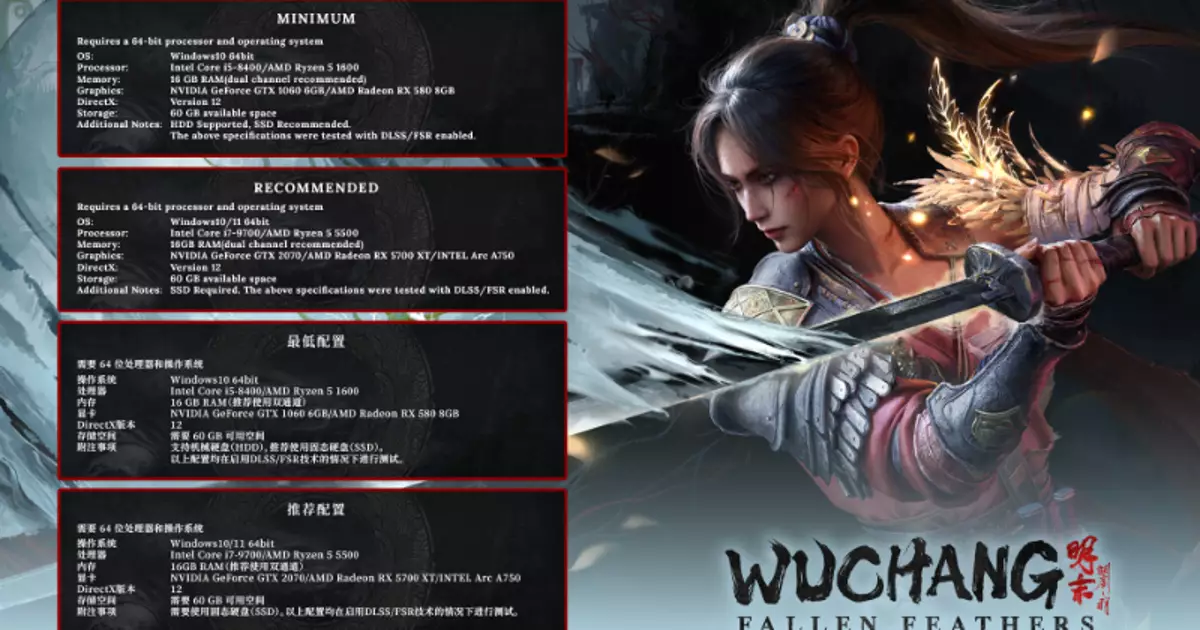
This complexity in gameplay also extends to the system requirements—an aspect that often receives less scrutiny but is vital for understanding accessibility. Falling within the mid-range category, Wuchang demands a GeForce GTX 1060-level GPU, a solid Intel Core i5 or Ryzen 5 CPU, and 16GB of RAM. The optional requirement of an SSD for optimal performance indicates that the developers know how to balance ambitious visuals and fluid gameplay without imposing prohibitive hardware demands. The inclusion of DLSS technology on higher-end hardware showcases a dedication to leveraging advanced rendering techniques that can benefit players without sacrificing performance.
Hardware and Technological Ecosystem
For gaming enthusiasts considering Wuchang, the hardware specifications serve as a reassuring indicator that the game isn’t a technological beast requiring top-tier rigs. The recommended requirements, featuring NVIDIA’s RTX 2070 or AMD Radeon RX 5700 XT, suggest that players with capable, but not cutting-edge, machines can expect reasonable performance. Moreover, the mention of DLSS 4—Nvidia’s AI-powered upscaling—signifies an investment in cutting-edge tech, often associated with crisp visuals and smoother frame rates.
However, it’s essential to recognize that such features also imply a game designed to showcase hardware capabilities, which can either inspire gamers to upgrade or intimidate those with more modest setups. The emphasis on SSD storage for optimal experience underscores the reliability and speed that modern gaming demands, especially in action-intensive sequences. This attention to detail suggests that Wuchang’s experience is meant to be immersive from start to finish, blending technological sophistication with gameplay integrity.
The Cultural and Narrative Depth
Beyond visuals and mechanics, Wuchang’s narrative background positions it as an ambitious project steeped in cultural mythology. The plague of feathers, transforming humans into bird-like creatures, is a potent allegory for disease, identity, and contamination—timely themes that resonate deeply in speculative fiction. Players must delve into their character’s forgotten past to uncover truths that will influence their journey, making each decision carry weight.
The game’s storytelling seems to challenge players to confront moral ambiguity, with different endings contingent upon how they navigate alliances and secrets. This depth elevates Wuchang from mere hack-and-slash to a thoughtful adventure that explores human resilience amidst chaos. Its premise of battling against one’s own transformation echoes timeless themes of loss, self-discovery, and redemption—all packaged within a richly detailed mythical universe.
Final Reflections: Innovation Amidst Tradition
Wuchang’s approach evolves beyond traditional genre conventions, merging cultural storytelling with modern gameplay innovations. Its balanced system requirements affirm a desire to remain accessible while showcasing advanced tech. More importantly, its narrative depth and atmospheric immersion position it as a potential standout among upcoming action RPGs.
In a gaming era increasingly dominated by hyper-realistic graphics and straightforward mechanics, Wuchang offers a refreshing reminder that storytelling, atmosphere, and meaningful choices are just as crucial to creating unforgettable gaming experiences. If it succeeds in delivering on its promises, it could carve out a distinctive niche as both a cultural artifact and an exhilarating adventure for fans of dark fantasy and myth-inspired worlds.
Leave a Reply