
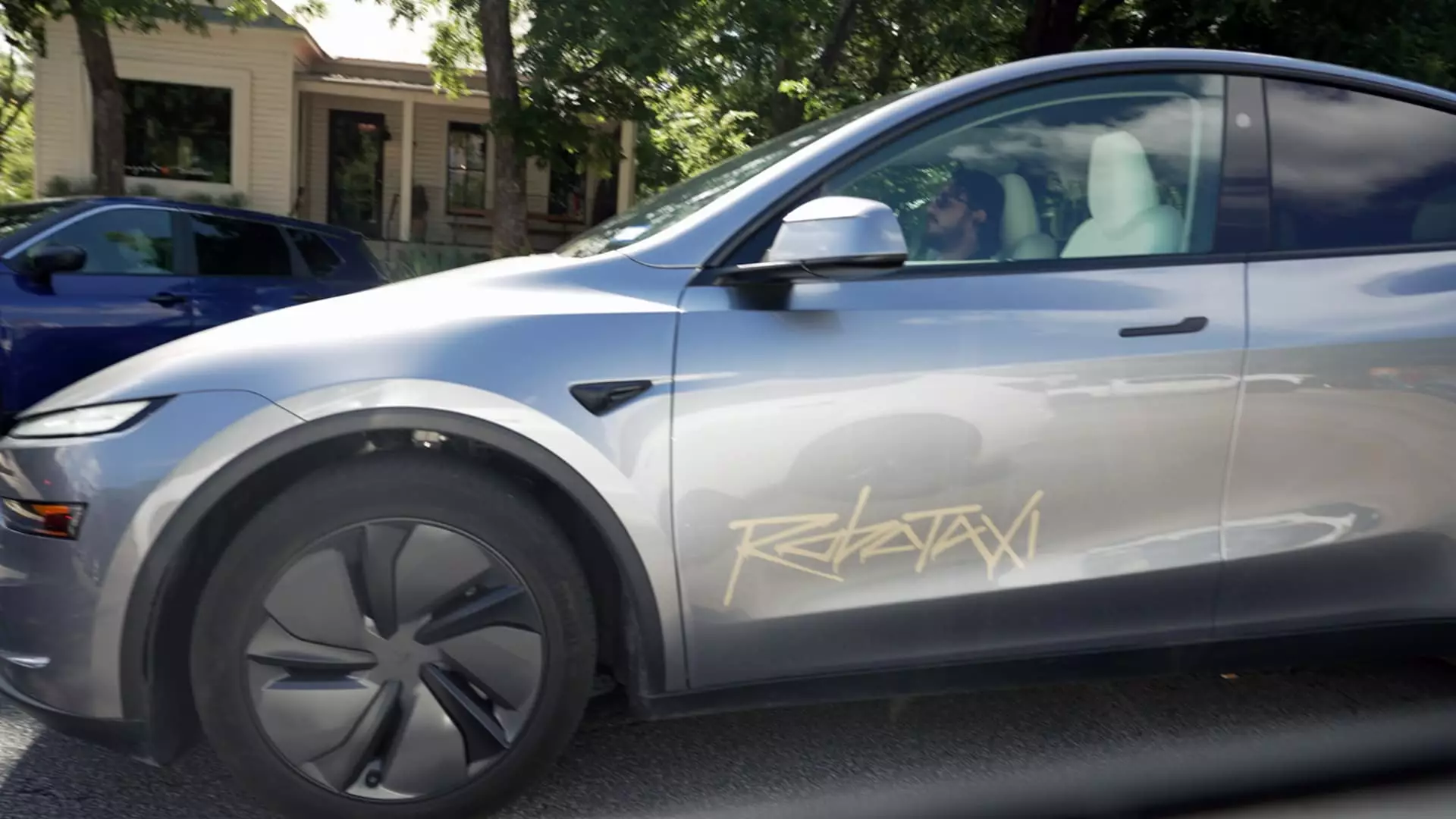
Tesla’s latest pursuit to develop and deploy robotaxi fleets signifies a transformative shift in how society envisions urban transportation. While industry giants like Waymo have cemented their positions with years of operational experience—serving thousands of customers in Phoenix—Tesla’s aggressive push demonstrates that it aims not just to participate but to lead the autonomous revolution. The company’s strategic move to test in Phoenix is not merely about expanding geographical coverage; it encapsulates a broader vision to reshape the very fabric of city commuting.
Tesla’s approach diverges sharply from its competitors by emphasizing affordability and technological simplicity. Eschewing lidar and other costly sensors, Musk advocates for a camera-centric system, believing that a more economical autonomous vehicle can democratize access to self-driving technology. This positioning could, in theory, accelerate adoption across diverse markets and pave the way for widespread use, but such confidence must be tempered with realism about the technological challenges and safety concerns that remain.
Tesla’s foray into Phoenix, following their pilot program in Austin, underscores a sense of urgency and a desire to showcase rapid innovation. However, the road to safe, fully autonomous vehicle deployment is riddled with hurdles, not least regulatory scrutiny and public trust. Incidents documented on social media—such as minor accidents involving Tesla Robotaxis—highlight the difficulty of balancing innovation with safety, and they cast long shadows over the company’s ambitions.
Strategic Challenges and Public Perception
Public perception and regulatory oversight remain significant obstacles for Tesla’s autonomous ambitions. Unlike Waymo, which operates a controlled, fleet-based service with well-established safety protocols, Tesla’s approach involves limited human oversight, often relegating safety drivers to secondary roles. This aggressive stance raises questions about whether the technology is mature enough for widespread public deployment.
Furthermore, Tesla’s past marketing practices—promising full self-driving capabilities that are not yet universally validated—have already garnered regulatory attention and lawsuits. Critics argue that overpromising can erode public trust, which is essential for broader acceptance of autonomous vehicles. The incidents in Austin serve as cautionary tales; they exemplify the unpredictability of Tesla’s autonomous systems amidst real-world complexities.
Still, Tesla’s strategic optimism is palpable. The company’s assertion that Robotaxi services could be operational in the San Francisco Bay Area within a few months demonstrates a desire not merely to compete but to dominate the market. However, without securing regulatory approvals in California—long considered the epicenter of autonomous vehicle legislation—the company’s timeline may be overly ambitious.
Implications for the Industry and Society
Tesla’s aggressive pursuit of robotaxi deployment spells profound implications for transportation and societal norms. If successful, Tesla could drastically lower the costs associated with autonomous ride-hailing, potentially making individual car ownership obsolete in favor of subscription-based mobility services. This could lead to significantly reduced congestion, lower emissions, and enhanced accessibility for underserved populations.
On the other hand, rapid deployment without thorough safety validation risks escalating accidents, legal liabilities, and public skepticism. The balance between technological innovation and societal responsibility is delicate. Tesla’s pattern of pushing boundaries—sometimes at the expense of cautious testing—raises critical questions about corporate accountability and the importance of incremental, transparent progress.
Tesla’s endeavor embodies a broader evolutionary struggle within the autonomous vehicle sector: the tension between innovation, regulation, and public acceptance. Its success or failure in this endeavor could shape industry standards and influence government policy for years to come. Ultimately, whether Tesla can navigate these turbulent waters depends not just on technological breakthroughs but on its ability to restore confidence and demonstrate unwavering commitment to safety and transparency.
Leave a Reply