
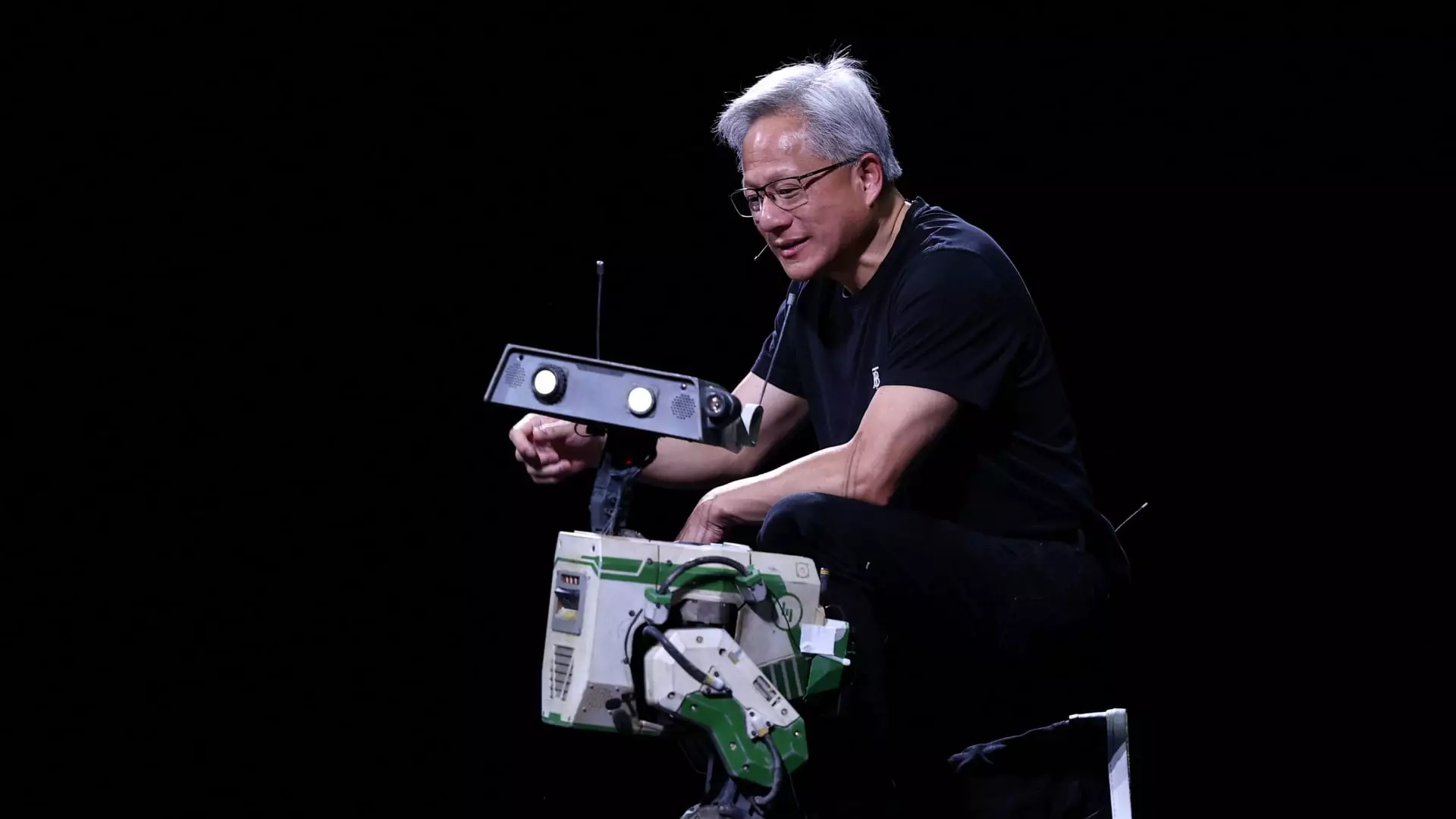
In the rapidly evolving tech landscape, Nvidia has emerged as a leader not just in graphics processing units (GPUs), but also in the thrilling realms of artificial intelligence (AI) and robotics. Jensen Huang, the CEO of Nvidia, recently articulated that while AI is a formidable force for growth, robotics stands as the next critical frontier. Huang’s emphasis on self-driving cars as the initiating point for commercial applications unveils a dual narrative: the promise of transformative technology and the challenges that accompany such ambitious aspirations.
Nvidia’s integration of its automotive and robotics divisions into a single reporting entity underscores its strategic foresight. Just a year ago, this visionary shift was designed to encapsulate its evolving product narrative, reflecting an understanding of the intertwined relationship between these two sectors. With reported quarterly sales reaching $567 million, marking a 72% annual increase, there’s substantial momentum building in areas traditionally overshadowed by its more prominent AI offerings.
The Commercial Surge: From GPUs to the Market
Nvidia has never been a company to shy away from thriving in the spotlight of innovation. The staggering leap in total revenues—growing from approximately $27 billion to a projected $200 billion within two years—speaks volumes about market demand, particularly for data center GPUs. What underpins this phenomenal success is not merely a coincidence; it is the byproduct of a deep-rooted commitment to pushing the boundaries of what technology can achieve. The company’s foresight in adapting its business model to tap into burgeoning sectors, especially in AI, reflects shrewd leadership and an acute sense of market dynamics.
With their market capitalization recently breaching the $3.75 trillion mark, Nvidia’s financial prowess is impressive, but what truly sets it apart is its holistic approach to product offerings. The move away from viewing itself strictly as a chip manufacturer demonstrates an evolving corporate identity, one that encompasses a broader ecosystem of AI infrastructure. Huang’s remarks about identifying Nvidia as a “computing platform provider” rather than just a chip company captures a critical aspect of modern business: adaptability.
The Future Landscape of Autonomous Technology
As Huang envisions a future where billions of robots and millions of autonomous vehicles populate our streets and factories, the implications stretch beyond mere market potential. It reflects a societal shift towards automation that could redefine human labor, efficiency, and even lifestyle. The partnership with major automotive brands like Mercedes-Benz to integrate Nvidia’s Drive platform for self-driving cars illustrates that the race towards autonomous technology has indeed commenced. Moreover, the recent introduction of AI models for humanoid robots, branded as Cosmos, highlights Nvidia’s commitment to shaping the operational fabric of future households and industries.
However, the expansive vision laid out by Huang raises essential questions about the ethical implications of such technologies. While excitement accompanies the promise of automation, it is crucial to consider how society will respond to these changes. The transition towards a heavily automated economy demands not only technological advancement but also regulatory frameworks to ensure responsible use of AI and robotics.
A Company in Transformation
The evolving narrative of Nvidia transcends the conventional parameters of tech companies. The integration of AI, robotics, cloud services, and networking technology paints a holistic picture of a forward-thinking enterprise leveraging synergies among its products. Huang’s leadership, characterized by strategic transitions and a clear vision, positions Nvidia as a critical player in the tech ecosystem. The compelling data and market performance illustrate that the company is not simply reacting to trends; instead, it is actively creating them.
Shareholders, in their recent meeting, underscored their confidence by approving executive compensation plans and re-electing the board, reflecting trust in Huang’s vision and the company’s direction. The interplay between investor sentiment and corporate strategy serves as a testament to Nvidia’s robust leadership and innovative prowess—elements that will be essential as they navigate the undulating waves of technological evolution.
The spotlight on Nvidia illuminates not just the company’s current achievements but also the monumental aspirations that lie ahead. As they blend robotic advancements with AI capabilities, Nvidia is not merely shaping a market; they are sculpting the future of human-technology interaction.
Leave a Reply