
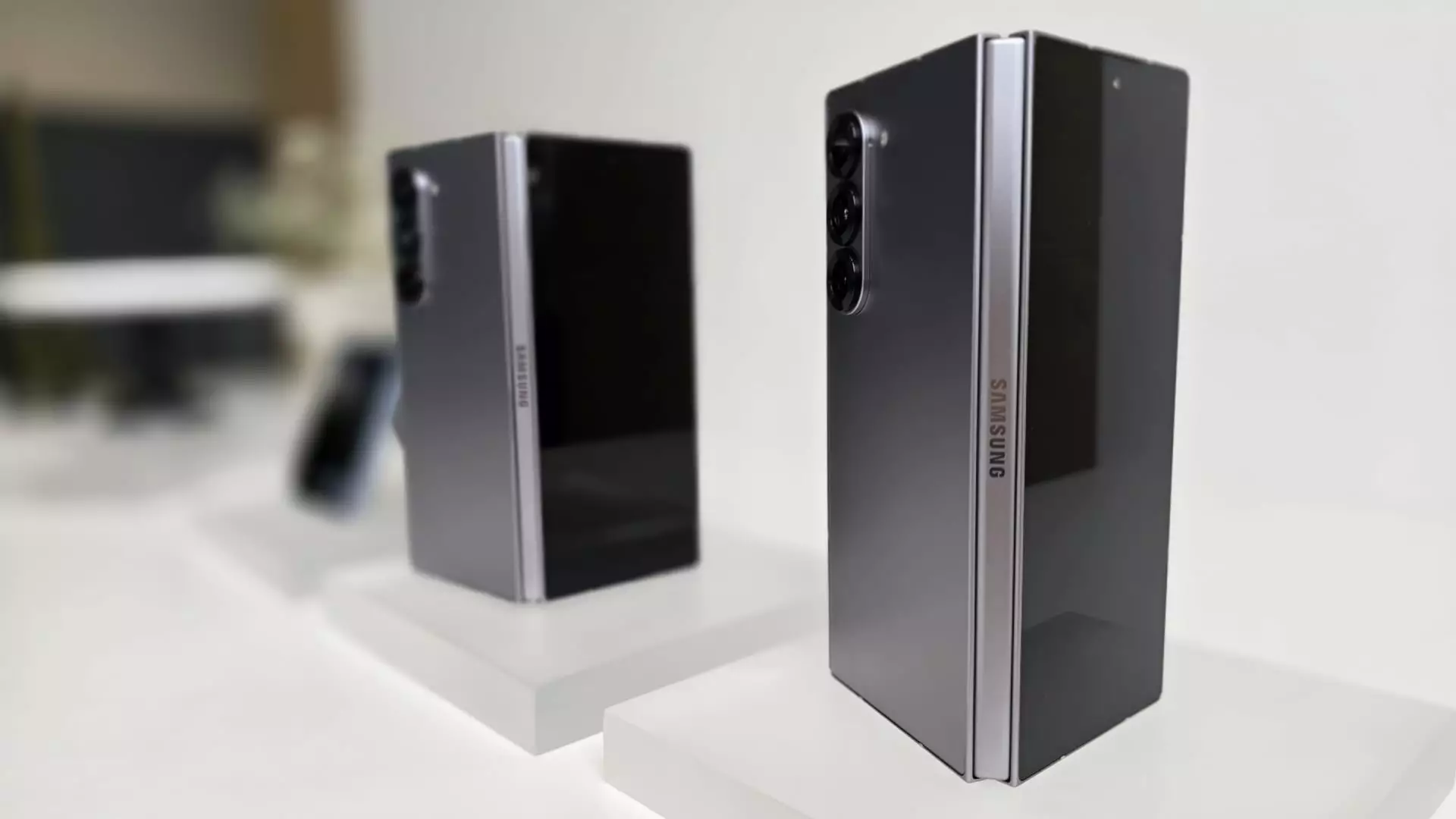
In the race for technological supremacy, foldable smartphones have emerged as a symbol of innovation and modern design. Samsung, a stalwart in the consumer electronics realm, is gearing up to introduce a sleeker version of its flagship foldable device, poised to be unveiled next month. This announcement comes on the heels of fierce competition from Chinese manufacturers like Honor and Oppo, who have been relentless in their pursuit of an edge in the foldable market. The stakes are high, with thinness and portability becoming critical selling points for consumers who demand cutting-edge technology in increasingly compact forms.
Since Samsung’s inaugural foldable smartphone hit the market in 2019, it attracted significant attention and set the tone for the burgeoning category. However, competitors have quickly caught up. The latest offerings from Honor and Oppo boast designs that are not only thinner but also remarkably lightweight. This paradigm shift in consumer expectations raises an essential question: how vital is the slender profile of a foldable smartphone for market success?
Why Thinner is Better: Consumer Expectations
Ben Wood, chief analyst at CCS Insight, sheds light on the growing importance of thinness in foldable devices. Consumers today are less inclined to compromise on their desire for a portable and lightweight smartphone, preferring to prioritize aesthetics and convenience. The foldable smartphone must strike a delicate balance; it needs to provide the benefits of a larger display without the bulk that often accompanies such features. The Galaxy Z Fold6, Samsung’s latest folded creation, measures a hefty 12.1 millimeters thick when closed, while its Chinese competitors have managed to slim down to 8.93 millimeters and 9.2 millimeters respectively. This stark contrast highlights a potential vulnerability for Samsung, which must adapt or risk losing market share.
Thinner devices enhance consumer allure significantly. The ability to carry a larger screen without a noticeable increase in weight could entice a demographic that values functionality alongside style. If Samsung can match or even come close to the slim profiles of Honor’s and Oppo’s offerings, it will not only rejuvenate its foldable line but also assert its dominance in an increasingly crowded market.
Anticipation Surrounding the Next Generation
As Samsung prepares for its upcoming launch, anticipation is building not just for the devices themselves but also for the implications they carry in a market that, despite being innovative, has seen slow adoption rates. Recent statistics indicate that foldable phones will account for a mere 2% of the total smartphone market this year. Samsung realizes that merely introducing a new model is not enough; it must also reignite consumer interest to drive sales. As pointed out by Wood, creating devices that resemble traditional smartphones while incorporating foldable technology might be key to attracting first-time buyers.
Innovations need to match consumer expectations, and this intersection of design and practicality could prove to be a pivotal turning point for the foldable segment. Sophisticated marketing strategies will also play a crucial role in redefining how consumers perceive foldable smartphones and their benefits.
Future Prospects: A Comeback for Foldable Phones?
The intrigue surrounding foldables lies in their ability to merge form and function, yet fundamental questions remain as to how they fit into the typical consumer lifestyle. Analysts indicate that despite recent enhancements, many still struggle to conceptualize the advantages of switching to a foldable model. The challenge becomes more pronounced in a market where traditional smartphones still reign supreme.
As Samsung inches closer to its release date, its success will hinge not only on the device specifications but also on effective communication with potential customers about the advantages of foldable technology. With competitors like Honor planning their launches, Samsung is under pressure to deliver something remarkable. If done successfully, it could facilitate a renewed interest in foldables, tempting even the staunchest skeptics to consider a shift.
The whispers of an impending foldable iPhone from Apple add yet another layer to this dynamic saga. With the possibility of Apple’s entrance into this market, Samsung faces a unique set of challenges and opportunities that could reshape the foldable landscape entirely. As technology continues to evolve, the future of smartphones hangs in a delicate balance, depending on how effectively manufacturers respond to consumer needs.
Leave a Reply