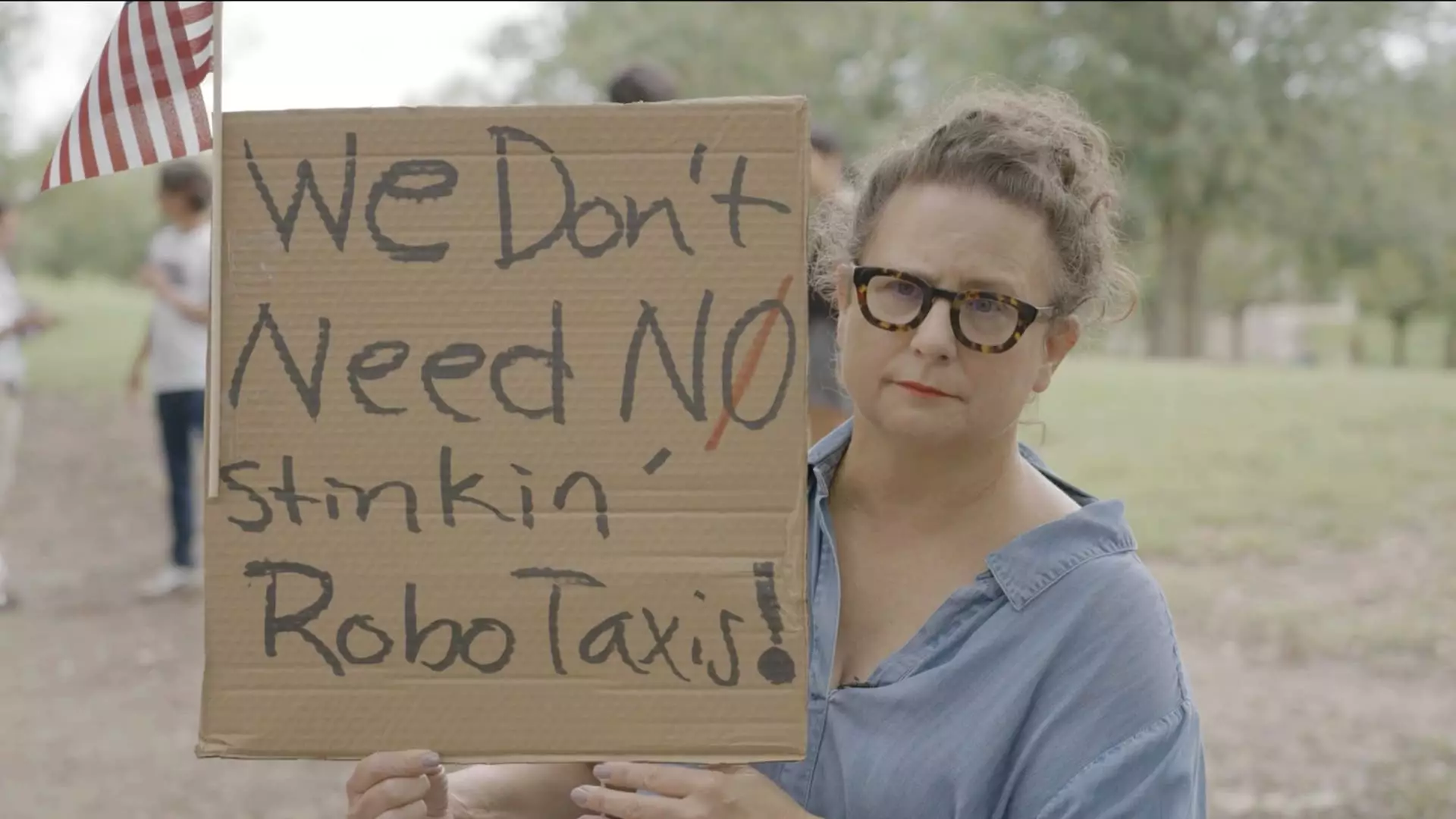
As the clock ticks toward June 22, the anticipated launch of Tesla’s pilot robotaxi service in Austin, Texas, looms large. However, in stark contrast to the excitement that might accompany such a technological leap, a strong chorus of dissent is rising. Protesters, unified in their apprehensions about safety and regulatory transparency, gathered in downtown Austin to voice their grievances against the implications of Musk’s ambitious vision. The convergence of public safety advocates and political critics signifies the complexities intertwined with emerging technologies like robotaxis, especially those championed by a controversial figure like Elon Musk.
The Safety Concerns Surrounding Autonomous Vehicles
At the heart of the protests is a deep-seated concern regarding the reliability of Tesla’s partially automated driving systems. Organizations such as the Dawn Project and Tesla Takedown contend that the Autopilot and Full Self-Driving (FSD) options, which Musk touts as revolutionary advancements, have been implicated in numerous accidents. Data from the National Highway Traffic Safety Administration underscores this apprehension, revealing that vehicles equipped with these systems have been involved in hundreds of collisions, some tragically resulting in loss of life. This reality creates a pressing question: how much trust can consumers place in a technology that has yet to prove itself across all operational circumstances?
Demonstrating the Risks
During a demonstration designed to highlight the inadequacies of the current software, protesters showcased a Model Y car equipped with a version of FSD software. The demonstration, which alarmingly featured a simulation of the vehicle ignoring crucial safety measures—such as stopping when a school bus extends its stop sign—was a stark visual interpretation of the dangers proponents believe the public might face. The fact that such demonstrations are necessary underscores the lack of confidence many feel regarding Tesla’s safety protocols and transparency. It raises the concern that while technology advances, fundamental safety standards might be compromised for the sake of innovation.
The Political Context of Innovation
Moreover, the backdrop of Musk’s political affiliations further complicates public sentiment. His connections to the previous administration have led many, including attendees at the protest, to express skepticism about whether his motivations align with public welfare. Statements from participants indicate a longing for accountability and a demand for clearer communications from Tesla regarding their technologies. The cries for safety and transparency echo the everyday citizens’ desire to understand the impact of automated systems on their lives, especially when they operate in mixed environments with human pedestrians and cyclists.
A Call for Greater Responsibility
The dichotomy between innovation and safety presents an urgent dilemma facing urban planners and tech developers alike. While Tesla positions itself at the forefront of the autonomous vehicle revolution, the public’s reaction in Austin serves as a crucial reminder that with advanced technology must come rigorous scrutiny. As protests continue, the narrative surrounding Musk’s robotaxi initiative could ultimately guide future discussions on the balance between groundbreaking autonomy and the imperatives of human safety.
Leave a Reply