
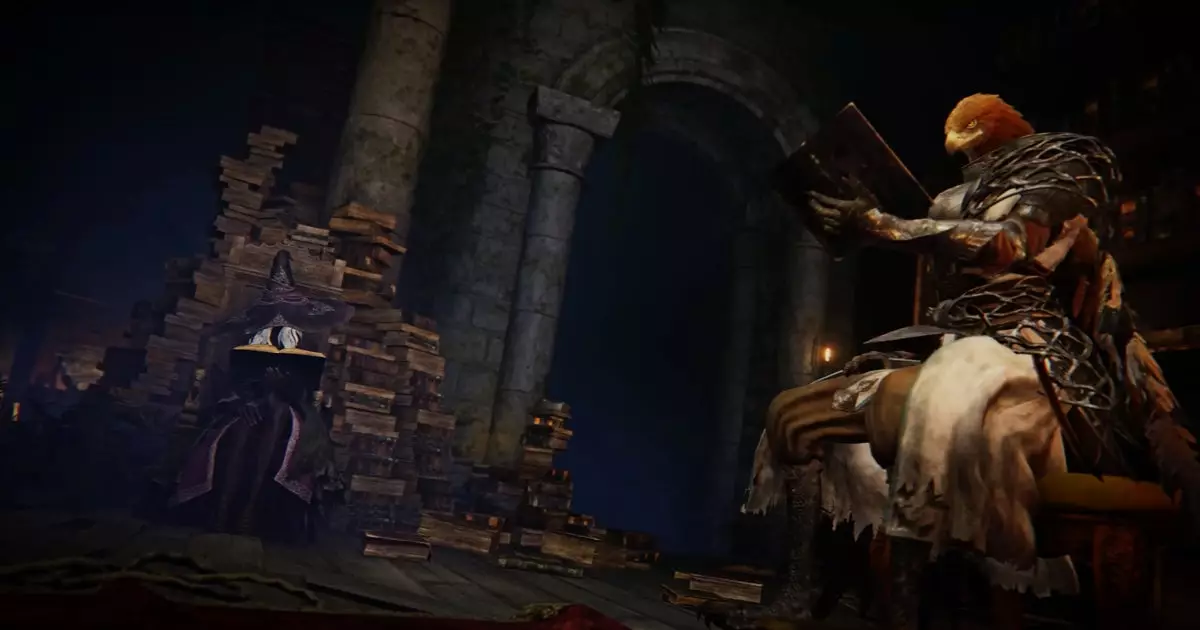
Elden Ring, the critically acclaimed game from FromSoftware, captures players’ imaginations with its vast world brimming with lore and intricate character design. The introduction of Nightreign, a game intertwined with the Elden Ring universe, has intrigued fans, particularly with its mysterious Guardian character. This character, whose appearance blurs the lines between bird-like features and human elements, has spurred questions and theories among committed fans. Notably, this investigation goes deep into the data-driven realms of game mechanics and character modeling, areas often overlooked by casual players but cherished by dedicated enthusiasts.
The Fascination with Character Design
A recent exploration by Zullie The Witch, a well-known modder and dataminer within the Souls community, sheds light on the hidden nuances of Nightreign, particularly surrounding its Guardian. Fans of the game often thrive on such revelations, immersing themselves in the minutiae and dissecting every last detail in the hope of discovering something new. Zullie’s excavations have revealed that the character models in Nightreign follow a different structure compared to their predecessors in Elden Ring, creating a unique identity while also sparking speculation regarding possible hidden elements—namely, the presence of a human face on the avian Guardian.
The loyalty and curiosity exhibited by fans towards character designs showcase a level of engagement that elevates the gaming experience. The Guardian’s outer appearance is indeed striking and invokes an air of mystery with its halberd and avian traits, but how much of that is skin-deep? It’s captivating to witness how player engagement often drives exploration beyond the surface, suggesting that the character design is not merely aesthetics but integral to the overarching narrative fabric of the game.
The Great Face Debate
One of the particularly riveting aspects of Zullie’s exposition pertains to the Guardian’s potential hidden human face. While the speculation may stem from a simple fascination with lore and design intricacies, it evokes a deeper discussion reflecting on player psychology and the narrative patterns imbedded in games by FromSoftware. Many players cherish the notion of exploring deeper meanings within character designs, reflecting their personal interpretations and emotional investments in their gameplay experiences.
Zullie’s conclusion—that the Guardian, despite its birdlike appearance, holds no concealed human visage—resonates with the broader themes of transformation and identity prevalent within the game. The notion of characters evolving or hiding aspects of themselves aligns with overarching themes of the franchise, pushing players to question the realities and facades that characters embody. This quest for understanding, however, isn’t merely confined to the Guardian; it branches out into other characters like Wylder, leaving a lingering ambiguity that fuels discussions within the community.
The Ongoing Mystery of Wylder
Wylder, another character who draws intrigue, further complicates the investigation. Unlike the Guardian, who emerges as a cautionary focal point of the game’s lore, Wylder presents a more profound enigma. The absence of a clear facial design prompts theories that deepen the character’s narrative weight. Many fans speculate that Wylder’s presentation—as a featureless silhouette—may symbolize a deeper existential implication on identity and belonging, echoing broader themes present in FromSoftware’s storytelling.
As players joke about Wylder’s resemblance to the archetype of a faceless hero akin to “John Nightreign,” they simultaneously highlight a shared cultural gaming narrative that has—over the years—attributed human characteristics to otherwise ambiguous figures. This jest, reminiscent of other player-created narratives within the FromSoftware universe, illustrates how engaged communities find connection and substance in even the most obscure details, transforming them into layers of meaning.
Community Engagement: A Testament to Game Design
In light of the analysis provided by Zullie The Witch and the ongoing fan discourse, it’s evident how the design and lore of Nightreign serve to enhance player investment. The collaborative nature of uncovering these secrets showcases how tightly-knit gaming communities provide modifications and contextual speculation that push the narrative beyond text or visuals alone. Games like Elden Ring and Nightreign thrive not merely on their gameplay mechanics, but on the depth of their world and the communities they inspire to dissect and debate every intricate detail.
As players unearth these mysteries, it becomes clear that Nether realms of gaming exist, where obscure details lead to rich storytelling—a hallmark of exceptional game design, manifesting itself in both the game and the players’ collective interpretation of it. The richness of Nightreign leads one to ponder what new revelations await as the journey unfolds, ready to sweep players into the depths of its enigmatic universe.
Leave a Reply