
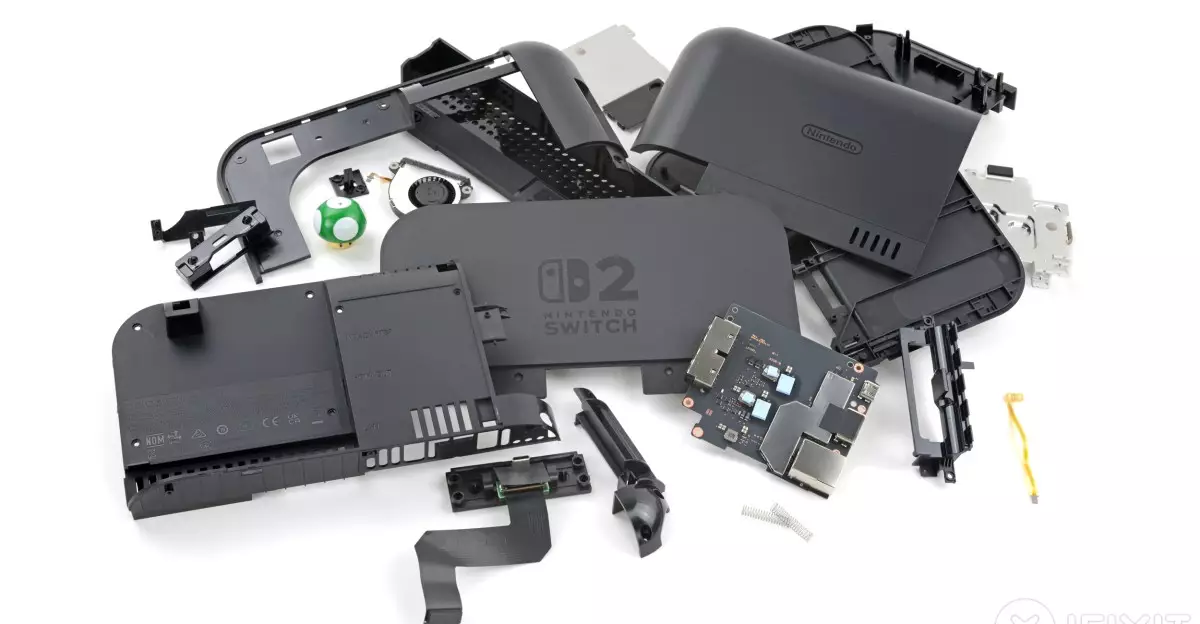
In an age where sustainability and consumer rights are becoming paramount, the latest Nintendo Switch 2 has emerged as a glaring example of a missed opportunity. With a repairability score plummeting to a measly 3 out of 10 by the renowned repair advocacy group iFixit, Nintendo seems to be stepping backward in a world that increasingly demands forward-thinking approaches. The resistance to ease of repair may very well alienate a burgeoning community of gamers who value not just their experience but the ability to maintain and extend the lifespan of their devices.
Gone are the days when gadgets were designed with user-friendly repairs in mind. Instead, Nintendo has fortified the internals of its new handheld console with more adhesive, soldered components, and hidden screws that verge on the absurd. The shift from a relatively manageable repair experience with the original Switch to the current level of complexity is alarming. It seems that in an effort to create a sleeker device, they have also entrenched themselves in a fortress of frustrating obsolescence.
Hidden Obstacles in the Design
What stands out from iFixit’s latest teardown is not just the low repairability score but also the many hurdles typical users will face when attempting even basic fixes. For example, the infamous “glued-in” battery is not just a minor inconvenience—it’s emblematic of a broader design philosophy that discourages consumer-driven maintenance. The promise of portability and convenience is tarnished when users must navigate a gauntlet of adhesives and specialty screws. Moreover, soldered components such as USB-C ports and flash storage modules force users into a narrow path where third-party solutions might be their only escape from malfunction.
As if that wasn’t enough, Nintendo’s continued use of the elusive tri-point screws, often hidden beneath fragile stickers, only complicates matters. The sense of satisfaction derived from taking apart and reassembling gadgets is replaced with anxiety, as these special screws can easily strip or break during disassembly. This design choice raises an unsettling question: Is gaming hardware becoming intentionally unrepairable to steer users towards costly replacements instead of repairs?
Components: Fragility Over Functionality
Delving further into the Switch 2, one of the few redeeming features noted by iFixit is the relative ease of removing components like the headphone jack and microphone. However, this hardly compensates for the battle users face in extracting the battery and other essential parts. The report outlines an arduous process requiring isopropyl alcohol and a “whole set of pry tools,” which signals a disturbing trend toward the fragility of functional components.
Additionally, the introduction of three different types of thermal paste that are prone to solidifying over time also raises red flags. It’s a reminder that efficient cooling is vital for longevity, yet the design appears to undermine this aspect, potentially leading to overheating and performance degradation down the line.
Impact on Gamers and the Unfortunate Joystick Drift Legacy
Particularly concerning is the situation surrounding the new Joy-Cons. They remain as difficult to disassemble as ever, while also being filled with outdated potentiometer technology known for its propensity to wear out, leading to the infamous joystick drift. The learning curve for repairing these joysticks is bound to be steeper than it already has been, raising the specter of widespread frustration among an audience that’s been fighting this battle for too long. With Nintendo failing to embrace alternatives that would provide better longevity and easier repair options, there’s a sense of inevitability that the drift issue will continue to haunt this iteration of hardware.
One has to wonder if Nintendo is overly focused on design aesthetics and innovative features to the detriment of functionality and user experience. In a time when environmental considerations demand more sustainable practices from corporations, the gaming giant’s reluctance to create easily repairable devices could alienate a committed user base that values longevity and ethical production.
The Switch 2 illustrates a complex relationship between technological advancement and user accessibility—a relationship that needs a profound reconsideration from gaming companies committed to their communities. In the grand scheme of consumer electronics, the push for better repairability should not be relegated to mere nostalgia; it deserves to be a foundational pillar in the design of future devices.
Leave a Reply