
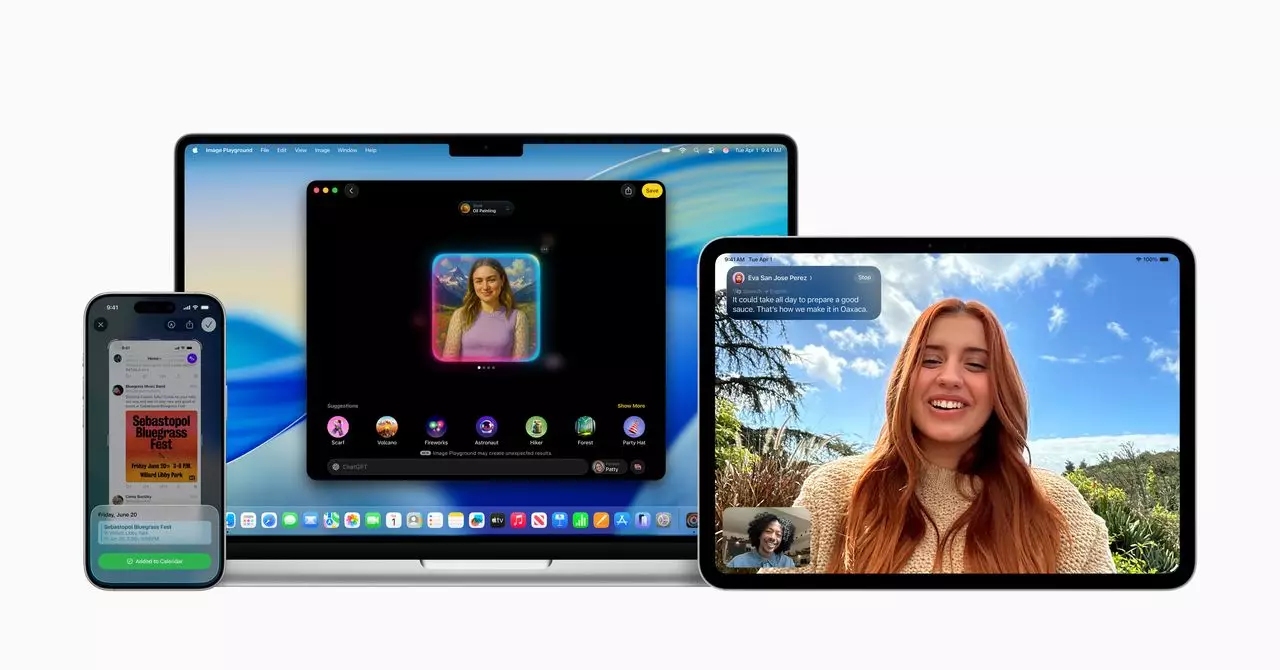
In the rapidly transforming landscape of technology, where artificial intelligence (AI) reigns supreme as a pivotal force shaping our digital interactions, Apple’s methodical approach stands out. At this year’s Worldwide Developers Conference (WWDC), Apple demonstrated its commitment to enhancing its ecosystem with AI-driven features that cater not only to convenience but also to user experience. Unlike other tech giants aggressively pushing the boundaries of AI, Apple appears to embrace a more patient and thoughtful strategy, opting for gradual integration that ensures it aligns with its foundational principles of user privacy and device reliability. This cautious rollout reflects Apple’s philosophy—prioritizing quality over quantity, user comfort over disruptive change.
Live Translation: Bridging Language Barriers
One of the most impressive announcements from WWDC was the introduction of Live Translation, a tool that leverages AI to facilitate seamless, real-time translation during phone calls and FaceTime conversations. This feature embodies a significant leap towards inclusivity, enhancing communication across linguistic divides. Imagine a world where language no longer serves as a barrier, making conversations fluid and natural, a goal that aligns perfectly with a globalized society. While some may view this as a gradual step, it signifies Apple’s intention to provide practical solutions to everyday challenges, which is laudable.
Workout Buddy: Your New Personal Motivator
Another noteworthy introduction was Workout Buddy, an AI-powered companion that provides motivation and insights during physical activities. The demo showcased its ability to interactively engage with users, providing encouragement like “You’re crushing it!” Such features transform mundane workouts into more enjoyable experiences, illustrating how AI can play a supportive role in improving mental and physical health. This is an important aspect as fitness technology matures; combining actionable insights with user engagement could lead to healthier lifestyles for many.
Visual Intelligence and Enhanced Creativity Tools
Apple’s Visual Intelligence upgrade is another fascinating development, allowing users to gain insights from their device cameras, coupled with enhanced capabilities to process screenshots. The extension of such functionalities serves creative users by providing tools that can summarize content and identify products, promoting not only creativity but efficiency. Additionally, the improvements to Genmoji and Image Playground emphasize Apple’s understanding of current trends—stylized image creation is immensely popular, and its ability to enhance this experience through AI signifies a keen awareness of user desires.
Are Incremental Steps the Right Approach?
Despite these forward-thinking advancements, there remains a palpable sense of skepticism surrounding Apple’s AI capabilities. Critics argue that the company is still playing catch-up with giants like OpenAI, Google, and Meta, who have established robust AI frameworks that integrate deeply into their services. The question looms: is Apple’s incremental strategy sustainable in an era characterized by rapid technological advancement? Analysts like Paolo Pescatore assert that Apple must tread carefully—balancing innovation with user satisfaction is crucial for maintaining its loyal customer base. Failure to balance fresh offerings with core user preferences could risk alienation.
The Importance of Accessibility for Developers
A pivotal element of Apple’s AI initiative is the introduction of the Foundation Models framework, which enables developers to harness Apple’s AI capabilities. This move is essential as it expands the potential applications of AI within Apple’s ecosystem by empowering developers to create innovative solutions without the obstacles commonly associated with third-party models that often entail privacy and cost concerns. This strategy underscores an understanding of the critical role developers play in shaping user experiences, and it ensures that Apple remains competitive in an increasingly AI-centric marketplace.
Looking Ahead: A Call for Boldness
However, while developing in the shadows of more aggressive competitors, Apple might need to adopt a bolder stance in its AI exploration. Emerging technologies from rivals signal a future where personal computing could be fundamentally redefined. As AI tools become more experiential and engage users in unprecedented ways—such as through real-time conversation and environmental interaction—Apple must evaluate its trajectory carefully. Its current offerings, while impressive, might not suffice in the long term if they fail to keep pace with the fast-evolving expectations for AI technology. In this context, Apple has a crucial decision to make: continue its slow-and-steady tactic or embrace a more daring innovation approach to redefine how users interact with their devices.
As we watch with anticipation, Apple’s journey in the AI domain reveals a narrative of innovation marred by caution. Whether this strategy will cement Apple as a leader in the next wave of technological transformation remains to be seen.
Leave a Reply