
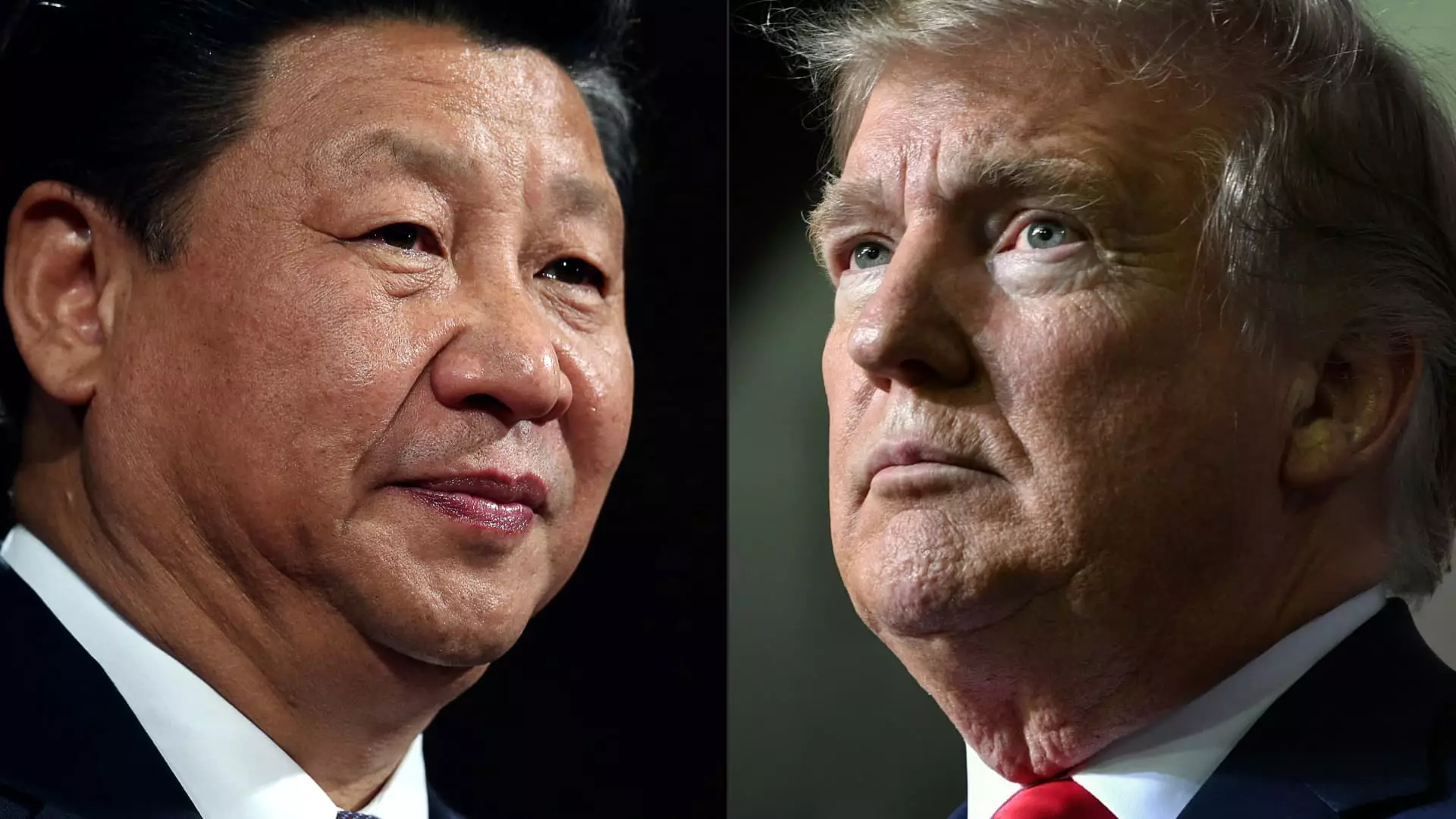
The geopolitical landscape surrounding technology has never been as fragmented as it is today, particularly in the semiconductor sector, where the U.S. and China are embroiled in a heated confrontation. The essence of this conflict lies in the distribution of power and control over critical technologies that are integral to national security and economic supremacy. China has formally raised accusations against the United States, accusing it of implementing “discriminatory restrictions” related to export controls on semiconductors that disproportionately impact Beijing. This escalation comes amid a backdrop of ongoing trade disputes that have become increasingly complex since the onset of the Trump administration and continues to resonate under President Biden’s governance.
The Context of Trade Agreements
The recent exchanges of barbs between the two economic giants highlight a significant strain in their trade relations. In a notable turn of events, U.S. Trade Representative Jamieson Greer claimed that China is stalling in complying with a preliminary trade agreement. This claim not only reaffirms the lack of trust that has developed between the two nations but also indicates the fragility of any diplomatic arrangements made during high-stakes discussions, such as those held in Geneva earlier this year. The temporary suspension of tariffs was an attempt to stabilize relations, but China’s swift backlash against U.S. actions speaks volumes about the underlying tensions that remain unresolved.
The Impact of Export Controls
New export controls enacted by the U.S., particularly those targeting the sales of advanced AI chips such as those made by Nvidia and AMD, have profound implications. These restrictions have led to a loss of billions in potential sales for American companies while simultaneously forcing China to hasten its efforts toward self-sufficiency in semiconductor production. The Biden administration’s decision to cut Chinese access to critical technologies has vast repercussions for the global market, where limited access to these components could hamper technological development. China’s reaction—asserting that the U.S. is abusing its position—indicates a growing awareness that these measures are not just economic maneuvers but strategic moves in a far-reaching game of dominance.
Nvidia’s Stance: A Voice of Concern
Nvidia’s position sheds light on the challenges posed by these export controls. The company’s CEO, Jensen Huang, categorically stated that the U.S. assumption that China is incapable of producing competitive AI chips is fundamentally flawed. His remark resonates with industry sentiment that U.S. policies may inadvertently bolster Chinese innovation in chip manufacturing. By attempting to constrain China, the U.S. risks creating an environment where the latter accelerates its indigenous capabilities, thus undermining American tech leadership. Nvidia’s struggle with unsold inventory and potential revenue losses serves as a cautionary tale, highlighting the unintended consequences of overly aggressive trade policies.
Future of International Collaboration
As tensions escalate, the U.S. faces a pivotal moment in diplomatically navigating this predicament. Rather than entrenching itself in a combative stance, a recalibration toward constructive dialogue might foster international collaboration. Building consensus on fair trade practices and technology exchange could serve as a foundation for a more stable economic relationship. However, achieving this requires both sides to acknowledge the complexities and interdependencies of global supply chains, particularly in the technology sector, where an antagonistic approach risks outright isolation.
The Unfolding Narrative of Technology Rivalry
Ultimately, the narrative surrounding U.S.-China relations in the semiconductor industry goes beyond negotiated trade deals and export controls. It reflects a broader struggle for technological supremacy that resonates on the global stage. The implications of this struggle extend beyond bilateral relations, affecting nations and companies around the world. As the battle continues, it remains imperative for both the U.S. and China to reassess their strategies and engage in collaborative dialogues that prioritize innovation while addressing mutual concerns over national security. The stakes are extraordinarily high, and the future of technological advancement hangs in the balance.
Leave a Reply